Sioux Falls, South Dakota UFO Sighting (July 9, 1947) — FBI Files
An FBI-documented sighting of a silvery, disc-shaped object over Sioux Falls, South Dakota, occurred during the height of the 1947 flying saucer era.
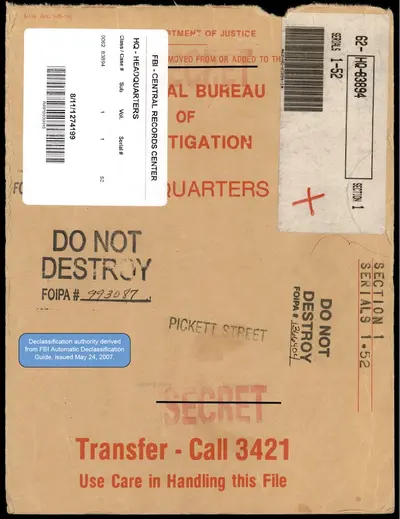
Historical Context
The summer of 1947 represents a pivotal moment in the history of unidentified aerial phenomena in the United States. This period was characterized by a sudden surge in reports of metallic, disc-shaped objects, a phenomenon often referred to by contemporary media as the “flying saucer” wave. The cultural and scientific landscape of the post-World War II era was particularly susceptible to such reports, as the rapid advancement of aerospace technology and the onset of the Cold War heightened public and governmental awareness of the skies. Two landmark events, the Kenneth Arnold sighting in June 1947 and the Roswell incident in July 1947, provided the foundational imagery and narrative for this era of mass sightings.
During this time, the Federal Bureau of Investigation maintained specific protocols regarding reports of unidentified objects. Because the burgeoning aerospace industry and military installations were considered vital to national security, the FBI’s various field offices, including those in Knoxville, Albuquerque, and Los Angeles, were tasked with routing such reports to headquarters. This systemic approach ensured that any aerial anomaly that could potentially threaten or involve sensitive government assets was documented within the Bureau’s official records.
The Sioux Falls Incident
On July 9, 1947, in Sioux Falls, South Dakota, an unidentified-object incident occurred that was subsequently documented by U.S. government investigators. The details of this specific encounter were not made available to the general public until May 8, 2026, when they were released through the Presidential Unsealing and Reporting System for UAP Encounters (PURSUE). The documentation provides a primary account of the event, centered on the observations of an individual named Gregory Zimmer.
According to the official records, Zimmer reported observing a silvery disk possessing a short tail as it moved through the sky. The visual description of the object—specifically the metallic sheen and the presence of a tail—aligns with many of the descriptions prevalent in the 1947 sighting wave. Following the report, a National Guard plane was dispatched to the area to conduct an investigation and intercept or identify the object. However, the aerial search yielded no results, and the object could not be located or identified by the responding crew. While the document details the sighting and the subsequent military response, the total number of witnesses to the event is not specified within the released text.
Analytical Classification
The Sioux Falls case is classified as a visual sighting reported by ground or air observers. In the study of aerial anomalies, such cases are categorized by the direct observation of an object’s flight characteristics, shape, and luminosity. The investigation into this specific event remains officially categorized as unresolved. Under the current mandates of the All-domain Anomaly Resolution Office (AARO), all records released under the PURSUE program are designated as unresolved by default. This designation reflects a lack of definitive evidence to confirm or deny the nature of the object.
The federal government has maintained a neutral stance regarding the Sioux Falls sighting, neither concluding that the event was anomalous nor confirming that it was the result of conventional means. When analyzing sightings from the late 1940s, researchers often consider several conventional candidates. These include the presence of experimental aircraft being tested in the post-war era, or the deployment of weather balloons, specifically those associated with the Project Mogul series. Additionally, atmospheric optical phenomena, such as sundogs or lenticular clouds, can create illusions of solid, moving objects. Astronomical objects like the Moon, Venus, or meteors appearing near the horizon are also frequently evaluated as potential explanations for such documented encounters.