Placerville, California UFO Sighting (August 14, 1947) — FBI Files (D3P73)
An FBI-documented sighting in Placerville, California, involves a metallic, rectangular object traveling at high speed through a canyon in August 1947.
Historical Context of the 1947 Wave
The summer of 1947 represents a pivotal era in the history of unidentified aerial phenomena, marking the transition from isolated aeronautical anomalies to a period of widespread public and governmental concern. This period was characterized by a sudden surge in reports following the Kenneth Arnold sighting in June 1947 and the subsequent events surrounding the Roswell incident in July 1947. During this time, the term “flying saucer” entered the common lexicon, reflecting a growing preoccupation with objects that defied the known capabilities of post-World War II aviation.
The geography of the Sierra Nevada foothills, specifically around Placerville, California, provided a backdrop of rugged terrain and deep canyons that often complicated aerial observations. In the late 1940s, the United States was navigating the early stages of the Cold War, a period of intense scrutiny regarding airspace integrity. The presence of various experimental aircraft, high-altitude balloons, and the clandestine Project Mogul series created an environment where the distinction between conventional technology and anomalous phenomena was frequently blurred.
The Placerville Incident
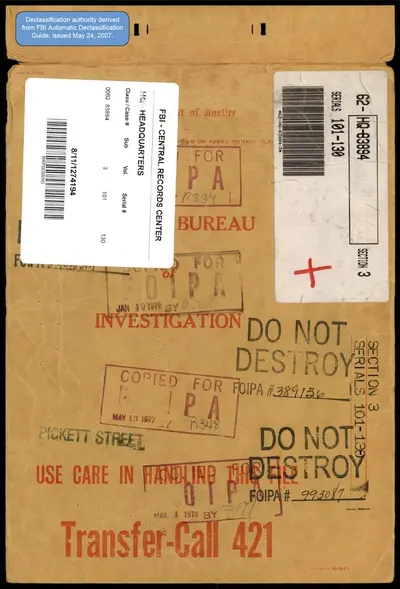
On August 14, 1947, an incident occurred near Placerville, California, which was subsequently documented by U.S. government investigators. The details of this encounter were preserved within FBI files, specifically identified as D3P73, and were later released to the public on May 8, 2026, under the auspices of the Presidential Unsealing and Reporting System for UAP Encounters (PURSUE).
The primary witness, Ray Switser, was traveling with his family near the Placerville area when he observed an unidentified object. According to the records, the object was metallic in appearance, possessing a color described as being as bright as highly polished chromium. The dimensions of the object were estimated to be approximately four to six feet in length and ten to fourteen inches in width. The object was observed traveling at a high rate of speed, maintaining a trajectory that appeared to follow the natural contour of the local canyon. The sighting concluded abruptly when the object was engulfed in a puff of dark gray smoke, roughly ten feet in diameter, after which it disappeared from view. Switser’s wife was also present during the event and provided a corroborating account of the observation. While the document provides a specific account of the Switser family’s experience, the total number of witnesses to the event is not specified in the released paperwork.
Investigative Protocols and Classification
At the time of the sighting, the Federal Bureau of Investigation maintained established protocols for handling reports of unidentified objects. Field offices in locations such as Knoxville, Albuquerque, and Los Angeles were tasked with receiving such reports and routing them to FBI headquarters. This procedure was part of a broader mandate to protect vital installations and monitor any potential threats to national security or sensitive airspace. The filing of the Placerville event suggests that the Bureau treated the sighting as a matter of official record, consistent with their standard operating procedures for investigating anomalies that could impact domestic stability or defense.
The nature of the case is classified as a visual sighting reported by ground or air observers. Under the current framework of the All-domain Anomaly Resolution Office (AARO), all records released through the PURSCO program are designated as unresolved by default. The federal government has maintained a neutral stance regarding the Placerville sighting, neither confirming the object as an anomalous phenomenon nor attributing it to conventional technology.
Analytical Perspectives
When evaluating the 1947 Placerville sighting, researchers often compare it to other documented phenomena of the era. In the absence of definitive conclusions, several conventional candidates are frequently considered. These include experimental military aircraft testing, which was prevalent in the post-war period, or atmospheric optical phenomena such as lenticular clouds or sundogs. Additionally, the possibility of weather balloons, particularly those used in the Project Mogul series to detect Soviet nuclear tests, remains a common point of comparison for objects appearing to move through high-altitude or canyon-based trajectories. Astronomical objects, such as meteors near the horizon or the brightness of Venus, are also analyzed as potential sources of misidentification. The Placerville case remains a significant piece of the mid-century aerial mystery archive due to its official documentation and the specific physical descriptions provided in the FBI files.