Kenneth Arnold UFO Sighting, Bakersfield, California (June 23, 1947)
In June 1947, pilot Dick Rankin reported observing multiple silver, saucer-shaped objects flying over Bakersfield, California.
Historical Context
The summer of 1947 represents a pivotal period in the history of unidentified aerial phenomena in the United Must States. Following the Kenneth Arnold sighting in Washington State in mid-June and the subsequent reports surrounding the Roswell incident in July, the American public and military intelligence entered an era of heightened scrutiny regarding unidentified objects in the sky. This period saw a surge in “flying saucer” reports, a term that gained widespread popularity as observers struggled to categorize objects that did not conform to the aerodynamic profiles of known contemporary aircraft. During this era, the technological landscape was transitioning from the piston-engine dominance of World War II to the early stages of the jet age, leading to significant speculation regarding experimental aeronautics and secret military developments.
The Bakersfield Incident
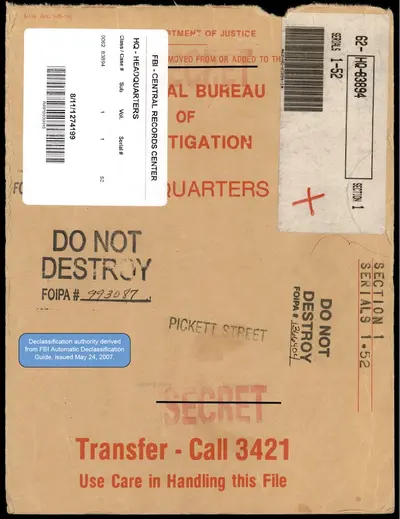
On June 23, 1947, in Bakersfield, California, U.S. government investigators recorded an unidentified-object incident later released to the public on May 8, 2026, as part of the Presidential Unsealing and Reporting System for UAP Encounters (PURSUE). The incident occurred during a period of intense interest in aerial anomalies, following the momentum of the Arnold sighting and preceding the Roswell event. The documentation regarding this specific event was filed with the Federal Bureau of Investigation. Under the Bureau’s standing protocols for the protection of vital installations, various field offices, including those in Knoxville, Albuquerque, and Los Angeles, were responsible for routing such UFO reports to headquarters for centralized processing.
The released documentation details the observations of pilot Dick Rankin. While sunbathing, Rankin observed several “silver saucers” in the sky. He estimated that these objects were maintaining an altitude of approximately 9,000 feet and traveling at speeds between 300 and 400 miles per hour. His initial observation included a count of ten objects traveling in a northerly direction, followed by a second observation of seven objects returning toward the south. Based on the visual characteristics of the objects, Rankin posited that they might be the Navy’s experimental XPSU-1 “flying flapjacks.” While the document provides these specific details regarding the objects’ movement and appearance, the total number of witnesses to the event is not specified in the released file.
Documentation and Verbatim Accounts
The investigative file contains direct statements from the observer that illustrate the uncertainty and visual ambiguity common in mid-century aerial sightings. Rankin noted his initial reluctance to report the phenomenon, stating, “I hesitated so much about them… until I noticed all the hullabaloo in the papers.” His description of the objects’ flight patterns and physical structure emphasizes the difficulty in identifying them through traditional aeronautical lenses. He remarked, “They were not weaving or bobbing in formations I couldn’t make out the number or location of their propellers and couldn’t distinguish any wings or tail.” He further noted the visual similarity to contemporary experimental technology, stating, “They appeared almost round. They looked like pictures of the navy’s flying flapjack.”
Classification and Current Status
This case is classified as a pilot or aircrew sighting, characterized by observations made from the cockpit or during flight-related activities. As of the current records, all documents released under the PURSUE program are designated as unresolved by the All-domain Anomaly Resolution Office (AARO) by default. The federal government has maintained a neutral stance, neither concluding that the events were anomalous nor confirming them as conventional.
The investigation of such sightings often considers a variety of conventional candidates. During the late 1940s, researchers frequently looked toward experimental aircraft, weather balloons—specifically the Project Mogul series—and atmospheric optical phenomena such as sundogs or lenticular clouds. Astronomical objects, including the Moon, Venus, or meteors near the horizon, also remain standard considerations for unidentified sightings of this period. The Bakersfield report remains an unverified component of the broader 1947 aerial phenomenon wave.