New Orleans, Louisiana UFO Sighting (July 7, 1947) — FBI Files
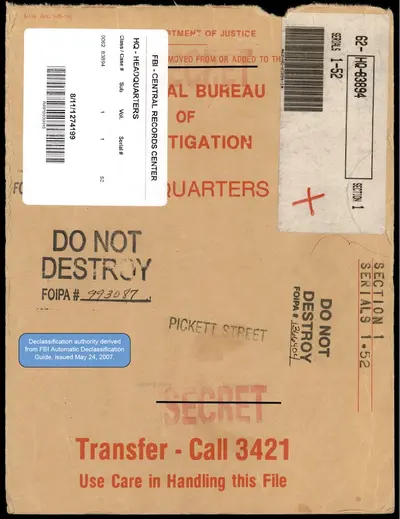
FBI files from July 1947 document reports of flying discs and associated figures over New Orleans, Louisiana, released via the PURSUE program.
Historical Context
The summer of 1947 represents a pivotal moment in the history of modern aerial anomaly investigations. Following the June 1947 Kenneth Arnold sighting, which popularized the term “flying saucer,” the United States experienced a significant surge in reports of unidentified aerial phenomena. This period of intense public and military scrutiny coincided with the early stages of the Cold War, a time when the detection of unknown objects in national airspace was viewed through the lens of potential technological advancements by foreign adversaries. The New Orleans sighting occurred amidst this heightened state of atmospheric tension, situated geographically within a region of significant maritime and industrial importance.
During this era, the classification of such sightings often fell under the purview of various federal agencies. While much of the public focus remained on military intelligence, the Federal Bureau of Investigation maintained a role in documenting reports that might impact the security of vital installations. The bureaucratic response to these sightings was characterized by a structured, albeit fragmented, approach to information gathering, where local field offices acted as the primary intake points for anomalous reports.
The New Orleans Incident
On July 7, 1947, in New Orleans, Louisiana, U.S. government investigators recorded an unidentified-object incident. The details of this specific event were not made available to the general public until May 8, 2026, when the documents were released as part of the Presidential Unsealing and Reporting System for UAP Encounters (PURSUE). The incident is categorized alongside the first wave of “flying saucer” reports that moved across the United States throughout the summer of 1947, following the Kenneth Arnold sighting in June and the Roswell incident in July.
The documentation regarding the New Orleans event is contained within files held by the Federal Bureau of Investigation. At the time, the Bureau’s operational protocols required various field offices, including those in Knoxville, Albuquerque, and Los Angeles, to route UFO-related reports to headquarters. This procedure was established to ensure the protection of vital installations and to maintain centralized oversight of potential threats to national security.
Investigative Records
The released FBI documents provide a glimpse into the internal communications regarding the sighting. Special Agent in Charge Weeks contacted the Bureau to address reports of “flying discs” that had been received. In his inquiry, Weeks sought clarification on the Bureau’s official policy regarding such reports. The response from headquarters instructed him to allow G-2, the military intelligence branch, to handle the matter unless further directions were provided. Despite this delegation of primary investigation to military intelligence, the Bureau requested to be kept informed of all ongoing developments. Furthermore, the Bureau specifically requested copies of any photographs taken of a recovered object, indicating a high level of interest in physical evidence.
While the documents detail the administrative handling of the reports, the number of witnesses to the New Orleans sighting is not specified in the released text. The case is also noted for including reports of figures or beings associated with the object, a detail that distinguishes it from purely mechanical or atmospheric sightings.
Classification and Status
All records released under the PURSUE program are designated as unresolved by the All-domain Anomaly Resolution Office (AARO) by default. The federal government has maintained a neutral stance regarding the New Orleans incident, having reached no conclusion as to whether the event was anomalous or conventional. The possibility of either remains open within the official record.
In the context of 1947 aerial phenomena, several conventional explanations are often considered by investigators. These include the presence of experimental aircraft, weather balloons—specifically those related to the Project Mogul series active in the late 1940s—or atmospheric optical phenomena such as sundogs and lenticular clouds. Additionally, astronomical objects such as the Moon, Venus, or meteors near the horizon are frequently cited as potential sources for sightings of this nature. The New Orleans case remains a subject of study within the broader framework of mid-century unidentified aerial phenomena.