Mioparari, Tarkeg UAP Encounter, 1947 — USAAF Box 7 #175
An archival record from the U.S. Army Air Forces details a 1947 unidentified object sighting near Mioparari, Tarkeg, released via the PURSUE program.
Historical Context
The year 1947 represents a pivotal moment in the history of aerial anomaly documentation. During this period, the United States was transitioning into the early Cold War era, a time characterized by rapid advancements in aerospace technology and heightened atmospheric surveillance. The emergence of the “flying saucer” phenomenon during this summer was not an isolated occurrence but rather the beginning of a significant wave of reports that would fundamentally alter the relationship between the public and the military regarding unidentified aerial phenomena. This specific era of sightings followed closely on the heels of the Kenneth Arnold sighting in June 1947 and the high-profile Roswell incident in July 1947, both of which catalyzed a national fascination with objects of unknown origin.
At the time, the United States Army Air Forces (USAAF) maintained rudimentary systems for logging aerial anomalies. These records were often processed through standardized check-lists used to categorize sightings for intelligence purposes. The Mioparari, Tarkeg incident is a preserved fragment of this early bureaucratic effort to quantify and track unidentified objects. The administrative nature of these files suggests that while the military was actively documenting such events, the framework for investigating the underlying nature of these objects was still in its infancy, lacking the specialized investigative protocols that would later define modern-day anomaly resolution.
The Mioparari Incident
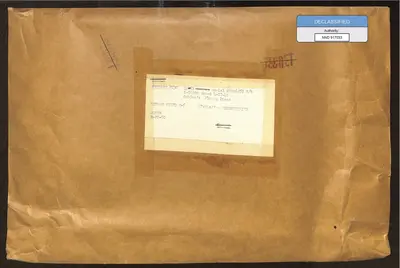
The specific details of the Mioparari, Tarkeg encounter are contained within the U.S. Army Air Forces “Check-List - Unidentified Flying Objects” series, specifically identified as Incident #175. This record is housed within Box 7 of file 38_14 and was officially released to the public by the Department of War on May 8, 2026. This release was facilitated by the Presidential Unsealing and Reporting System for UAP Encounters (PURSUE), a program designed to provide transparency regarding historical aerial anomalies.
The documentation for Incident #175 is notably sparse, adhering to the brief summary format used in the original USAAF check-lists. The records indicate that an unspecified observer reported a sighting of an unidentified object in the vicinity of Mioparari, Tarkeg. The nature of the sighting is classified as a visual observation, which could have originated from either ground-based or air-based observers. Despite the lack of descriptive detail regarding the object’s flight characteristics or physical appearance, the entry remains a critical piece of the 1947 archival record.
Classification and Investigation Status
Within the Spooky Valley archives, this case is categorized as a visual sighting of an unidentified object. The lack of corroborating sensor data or secondary witness accounts in the primary document reflects the limitations of mid-century reporting, where many sightings relied solely on the naked-eye observations of individuals. Such reports were often difficult to verify due to the absence of widespread radar coverage and the lack of standardized reporting procedures for civilian observers during the late 1940s.
The current status of the Mioparari encounter is officially designated as unresolved by the All-domain Anomaly Resolution Office. Under the mandates of the PURSUE program, all released records from this era remain open-ended; the federal government has not issued a determination as to whether the object was anomalous or of a conventional nature. The possibility of a conventional explanation remains a subject of ongoing debate among historians and researchers. Potential candidates for such 1947-era sightings include the Project Mogul balloon flights, which were active over the American Southwest at the time, as well as experimental jet and rocket aircraft, atmospheric optical phenomena, or the misidentification of astronomical bodies. The official record maintains a position of neutrality, neither confirming the presence of an advanced technology nor dismissing the sighting as a known atmospheric or astronomical event.