Kenneth Arnold UFO Sighting, Mineral, Washington (June 24)
Government records detail Sidney B. Gallagher's observation of nine aluminum-hued objects flying north near Mineral, Washington, in June 1947.
Background
On June 24, in Mineral, Washington, U.S. government investigators recorded an unidentified-object incident later released to the public on May 8, 2026, as part of the Presidential Unsealing and Reporting System for UAP Encounters (PURSUE). The incident is one of the first wave of “flying saucer” reports that swept the United States after the Kenneth Arnold sighting of June 1947 and the Roswell incident of July 1947. During this period, the mid-century era of aerial discovery, the sudden appearance of unidentified aerial phenomena prompted significant scrutiny from both civilian observers and federal agencies. The geography of the Pacific Northwest, characterized by dense forests and mountainous terrain, often provided the backdrop for such sightings, as the rugged landscape could obscure the true nature of distant aerial objects.
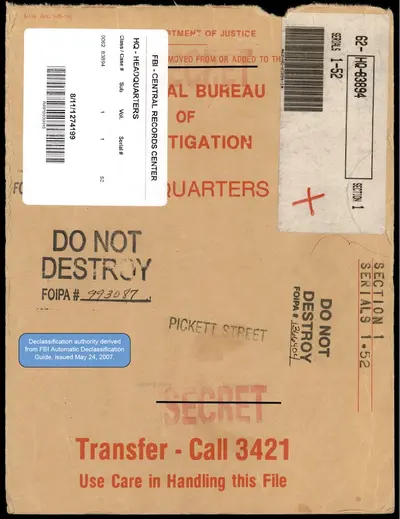
The case was filed with the Federal Bureau of Investigation, whose Knoxville, Albuquerque, Los Angeles, and other field offices routed UFO reports to headquarters under the Bureau’s standing protocols for the protection of vital installations. This bureaucratic structure reflected the heightened Cold War anxieties regarding airspace security and the potential for unauthorized incursions by foreign technology. At the time, the investigation of such phenomena was often subsumed into broader national security concerns, as the distinction between atmospheric anomalies and potential espionage tools remained blurred. The reporting of these incidents through established FBI channels ensured that sightings were documented within a framework of official intelligence gathering, even if the specific nature of the objects remained unknown.
What the document records
Sidney B. Gallagher observed nine aluminum-hued objects flying north while working 11 miles southwest of Mineral, Washington. The sighting occurred around the same time as Kenneth Arnold’s original report. The visual description of the objects as having an aluminum hue is consistent with the metallic aesthetic often attributed to unidentified objects during the late 1940s. The number of witnesses is not specified in the released document, leaving the scope of the visual observation unquantified.
The movement of the objects, described as flying in a specific direction toward the north, provides a directional vector that was a common element in contemporary reports. Such details were critical for investigators attempting to map the trajectory of unidentified phenomena and determine if they were following a predictable path or interacting with known air traffic. The timing of this observation, occurring in close proximity to the famous Kenneth Arnold event, places the Mineral incident within the concentrated cluster of sightings that defined the summer of 1947.
Type of case
The case is a visual sighting reported by ground or air observers. Such sightings constitute the primary form of UAP documentation, relying on the ocular perception of individuals positioned within the line of sight of the phenomenon. These reports are often categorized by their visual characteristics, such as color, luminosity, and flight pattern, which serve as the foundational data for subsequent analysis.
Status
All records released under the PURSUE program are designated unresolved by the All-domain Anomaly Resolution Office (AARO) by default. The federal government has not concluded that the events were anomalous, has not concluded that they were conventional, and has not ruled out either possibility. This lack of a definitive conclusion is standard for historical documents released through the PURSUE program, as the lack of corroborating sensor data from the era prevents a final determination.
Conventional candidates for sightings of this period include experimental aircraft, weather balloons, especially the Project Mogul series in the late 1940s, atmospheric optical phenomena such as sundogs and lenticular clouds, and astronomical objects including Venus, the Moon, and meteors near the horizon. The Project Mogul balloons, designed to detect Soviet nuclear tests via low-altitude acoustic monitoring, were known to be active in the atmosphere during this era and frequently caused confusion among observers. The possibility of atmospheric phenomena remains a significant factor in the analysis of historical sightings, as the interplay of light and moisture in the Pacific Northwest can create deceptive visual artifacts.