Kenneth Arnold UFO Sighting, Chehalis, Washington (July 9, 1947)
In July 1947, investigators recorded a sighting of nine saucer-like objects flying in a chain near Mount St. Helens, part of the era's wave of UAP reports.
Historical Context
The summer of 1947 represents a pivotal moment in the history of modern aerial anomaly documentation. Following the Kenneth Arnold sighting in June 1947 and the widely discussed Roswell incident in July 1947, the United States experienced a significant surge in reports of unidentified flying objects. This period marked the emergence of the “flying saucer” phenomenon in the public consciousness. During this era, the technological landscape was undergoing rapid shifts due to the immediate aftermath of World War II, which saw the proliferation of advanced radar systems, high-altitude reconnaissance capabilities, and the early stages of secret aeronautical development.
The geographic region surrounding Chehalis, Washington, is characterized by the rugged terrain of the Cascade Range, dominated by volcanic peaks such as Mount St. Helens. This landscape, often subject to complex atmospheric conditions, provides a backdrop of significant topographical complexity. In the mid-20th century, the interpretation of aerial sightings often fluctuated between scientific skepticism and intense public interest. While many observers attributed such sightings to known phenomena like weather balloons or experimental craft, the sheer volume of reports during this specific window of 1947 necessitated formal government attention and the establishment of reporting protocols.
The Chehalis Incident
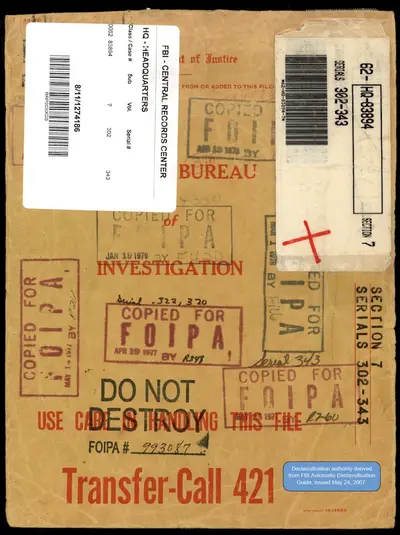
On July 9, 1947, in Chehalis, Washington, U.S. government investigators recorded an unidentified-object incident. The details of this specific event were later released to the public on May 8, 2026, as part of the Presidential Unsealing and Reporting System for UAP Encounters (PURSUE). The documentation indicates that the case was processed through the Federal Bureau of Investigation. Under the Bureau’s standing protocols for the protection of vital installations, various field offices, including those in Knoxville, Albuquerque, and Los Angeles, were responsible for routing UFO reports to headquarters for centralized review.
The released document records an observer reporting the sighting of nine objects flying toward Mount St. Helens. These objects were described as being saucer-like and shiny in appearance. The movement of the objects was noted as being in a diagonal, chain-like line. Based on the observer’s estimates, the entire formation was approximately five miles in length and was traveling at a speed of roughly 1200 miles per hour. While the document provides specific details regarding the nature and movement of the objects, the total number of witnesses involved in the sighting is not specified in the official record.
The primary evidence within the file contains a verbatim description of the event. The report states that the objects flew very close to the mountain-tops, moving directly south to southeast down the hog’s-back of the range. The observer noted they were flying like geese, in a diagonal, chainlike line, as if they were linked together, describing the phenomenon as a chain of saucerlike things at least five miles long. The witnesses specifically characterized the shape of the objects as being disc- or saucer-shaped.
Investigative Status and Analysis
All records released under the PURSUE program are designated as unresolved by the All-domain Anomaly Resolution Office (AARO) by default. The federal government has maintained a neutral stance regarding the Chehalis incident, having neither concluded that the events were anomalous nor confirmed that they were the result of conventional means. The possibility of either conclusion remains open within official documentation.
When analyzing sightings from this period, researchers often consider several conventional candidates. These include experimental aircraft or high-altitude reconnaissance projects, such as the Project Mogul series of weather balloons which were active in the late 1940s. Other potential explanations involve atmospheric optical phenomena, such as sundogs or lenticular clouds, which can create illusions of moving or stationary objects near mountain ranges. Additionally, astronomical objects like Venus, the Moon, or meteors appearing near the horizon are frequently evaluated as possible sources for such reports. The Chehalis case remains part of the broader, unresolved archive of mid-century aerial anomalies.