Estill, South Carolina UFO Sighting (August 28, 1947) — FBI Files
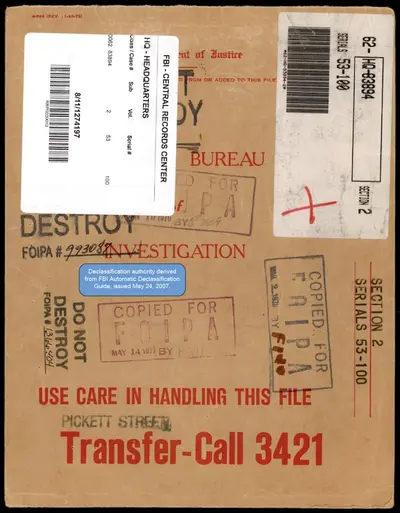
FBI records from August 1947 document an investigation into a reported flying saucer in Estill, South Carolina, which was identified as powdered soap stones.
Background
On August 28, 1947, in Estill, South Carolina, U.S. government investigators recorded an unidentified-object incident later released to the public on May 8, 2026, as part of the Presidential Unsealing and Reporting System for UAP Encounters (PURSUE). This event occurred during a period of heightened public and governmental scrutiny regarding aerial phenomena. The incident is categorized as part of the first wave of “flying saucer” reports that swept the United States following the Kenneth Arnold sighting of June 1947 and the Roswell incident of July 1947. During this era, the sudden influx of reports regarding disc-shaped objects led to widespread speculation regarding advanced aeronautical technology or extraterrestrial presence.
The geography of Estill, situated in the Lowcountry region of South Carolina, placed it within a landscape of rural plantations and small agricultural communities. During the mid-twentieth century, such regions often became the site of various atmospheric and aerial observations, frequently involving mundane objects such as agricultural equipment or meteorological phenomena. The case was filed with the Federal Bureau of Investigation, whose Knoxville, Albuquerque, Los Angeles, and other field offices routed UFO reports to headquarters under the Bureau’s standing protocols for the protection of vital installations. This administrative structure ensured that any reported aerial anomaly that could potentially threaten national security or military infrastructure was centralized for federal review.
What the document records
The primary material submitted for investigation by E. Mixon of Estill, South Carolina, was reported to be part of a flying saucer. Upon investigation, the FBI analyzed the physical material and identified it as powdered soap stones. Following this identification, the Bureau recommended that the material be returned to Mrs. Mixon accompanied by a letter explaining the findings of the investigation. While the physical substance was identified as a terrestrial mineral, the initial report was processed as an unidentified-object incident.
The released documentation does not specify the number of witnesses involved in the initial observation. This lack of specific witness counts is common in many historical files from this period, where the focus of the investigative agency was often on the physical evidence or the potential threat to sensitive installations rather than the demographic details of the observers.
Type of case
The witnesses involved in the Estill incident described the object as being disc- or saucer-shaped. This description aligns with the linguistic and visual trends of the 1947 phenomenon, where the term “flying saucer” became the standard descriptor for any aerial object exhibiting a circular or flattened profile. Such descriptions were consistent with contemporary reports across the United States, which often emphasized the geometric shape of the craft as a primary characteristic of the sighting.
Status
All records released under the PURSUE program are designated unresolved by the All-domain Anomaly Resolution Office (AARO) by default. The federal government has not concluded that the events were anomalous, has not concluded that they were conventional, and has not ruled out either possibility. The investigation into the Estill material provided a terrestrial identification of the physical substance, yet the official status of the sighting itself remains categorized under the broader unresolved umbrella of the program.
Conventional candidates for sightings of this period include experimental aircraft, weather balloons, particularly the Project Mogul series deployed in the late 1940s, and atmospheric optical phenomena such as sundogs and lenticular clouds. Other possibilities include astronomical objects, such as Venus, the Moon, and meteors near the horizon. In the context of the Estill case, the presence of powdered soap stones suggests a material origin that, while identified, does not fundamentally resolve the nature of the initial aerial observation.