Black River Falls, Wisconsin UFO Sighting (July 10, 1947) — FBI Files
In July 1947, a disc-shaped object was discovered on the Jackson County fairgrounds in Wisconsin, prompting an investigation by the FBI.
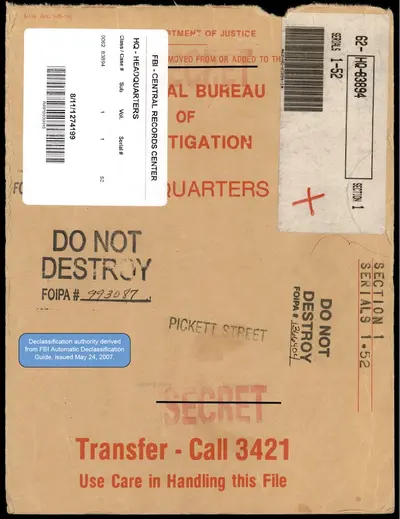
Historical Context
The summer of 1947 represents a pivotal period in the history of modern unidentified aerial phenomena. Following the Kenneth Arnold sighting in June 1947, the American public and various government agencies were suddenly confronted with a surge of reports involving disc-shaped objects. This era, often characterized by the emergence of “flying saucer” terminology, coincided with the early stages of the Cold War and intense scrutiny regarding airspace security. During this time, the United States was navigating a landscape of rapid technological advancement in aviation and the nascent stages of atmospheric monitoring.
The geographic location of Black River Falls, situated within Jackson County, Wisconsin, provided a quintessential backdrop for such reports. The region, characterized by its dense forests and undulating terrain, is typical of the Upper Midwest, where isolated sightings often occurred far from major metropolitan hubs. During the late 1940s, the Federal Bureau of Investigation maintained rigorous protocols for monitoring unusual activity that could potentially threaten vital installations or national security. Under these standing protocols, field offices in cities such as Knoxville, Albuquerque, and Los Angeles were instructed to route unidentified object reports to headquarters for centralized evaluation.
The Incident at Jackson County
On July 10, 1947, an incident occurred on the Jackson County fairgrounds that drew the attention of federal investigators. Sig Hanson, a local city electrician, discovered a disc-shaped object situated on the fairgrounds. The nature of the object and the subsequent investigation were documented in files that remained classified until their release on May 8, 202 and as part of the Presidential Unsealing and Reporting System for UAP Encounters (PURSUE).
The physical characteristics of the object were noted in the official records. The item was described as being approximately 19 inches in diameter and shaped like a disc or saucer. The material composition of the object was subject to speculation; the documentation suggests the disc might have been constructed from a substance such as cardboard that had been coated with a silver airplane dope material.
Investigation and Analysis
The investigation involved input from Colonel Harry W. Schaefer of the Civil Air Patrol. Upon examining the object, Colonel Schaefer posited that the item might be a homemade contraption. His assessment included the possibility that the device featured a small propeller and a photoelectric cell. He further expressed the opinion that the contraption might have been the work of a juvenile.
The motivations of the individuals involved presented a conflict in how the discovery was handled. The finder, Sig Hanson, reportedly desired publicity regarding the discovery. Conversely, Colonel Schaefer intended to turn the object over to the Army Air Forces for formal inspection. While the released documents provide these specific details regarding the object’s discovery and the investigators’ theories, the total number of witnesses to the object’s presence on the fairgrounds is not specified in the official file.
Classification and Resolution Status
The object identified in the Black River Falls case is classified as a UFO due to the disc-shaped descriptions provided by witnesses. Within the broader context of 1947 sightings, such as the Roswell incident that occurred later that same July, this case is categorized among the first wave of mid-century saucer reports.
As of the current records, the status of this case remains unresolved. All records released under the PURSUE program are designated as unresolved by the All-domain Anomaly Resolution Office (AARO) by default. The federal government has not reached a conclusion regarding whether the event was anomalous or conventional. In the study of mid-century sightings, researchers often consider conventional candidates such as experimental aircraft, meteors near the horizon, or atmospheric optical phenomena like lenticular clouds. Additionally, the period saw the deployment of the Project Mogul series of weather balloons, which remains a frequent point of comparison for unidentified objects of that era. The government has not ruled out either the possibility of a conventional explanation or a truly anomalous event.