Grafton, Wisconsin UFO Sighting (July 7, 1947) — FBI Files
In July 1947, a priest in Grafton, Wisconsin, reported observing a disc-shaped object, an event later investigated by the FBI.
Background
On July 7, 19
47, in Grafton, Wisconsin, U.S. government investigators recorded an unidentified-object incident later released to the public on May 8, 2026, as part of the Presidential Unsealing and Reporting System for UAP Encounters (PURSUE). This event occurred during a period of intense public and governmental preoccupation with aerial phenomena. The summer of 1947 is widely recognized in ufology as the beginning of the modern era of unidentified flying object sightings. This wave of reports was catalyzed by the Kenneth Arnold sighting in June 1947 and followed closely by the Roswell incident in July 1947. During this era, the term “flying saucer” became a staple of the American lexicon as the public attempted to categorize objects that appeared to defy the known aerodynamic capabilities of contemporary aircraft.
The geographical context of the Grafton sighting is situated within the American Midwest, a region that, like much of the United States, became a focal point for such reports as the post-war era brought increased civilian air travel and a heightened awareness of the skies. At the time, the Federal Bureau of Investigation maintained a structured process for handling reports of unidentified aerial phenomena. Under the Bureau’s standing protocols for the protection of vital installations, field offices in cities such as Knoxville, Albuquerque, and Los Angeles were tasked with routing UFO reports to headquarters. This centralized system ensured that any aerial activity that could potentially threaten sensitive government or military infrastructure was documented and analyzed by federal authorities.
The Incident and Investigation
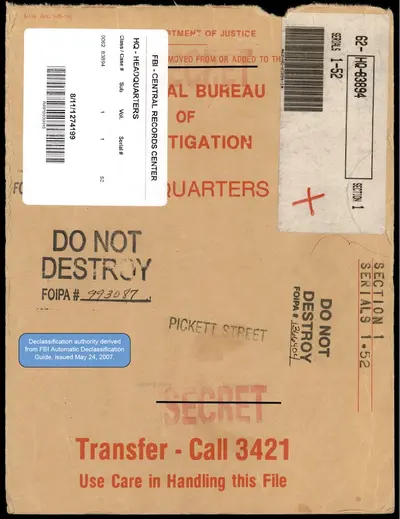
The specific details of the Grafton event are preserved within FBI files that remained classified for decades. On July 7, 1947, Reverend Joseph Asky of St. Joseph’s Church in Grafton, Wisconsin, reportedly observed an unidentified flying disc or object. The nature of the sighting prompted immediate interest from the mainstream press. Representatives from the Associated Press and United Press contacted the Milwaukee FBI office to inquire about the legitimacy of the report and to seek official confirmation of the sighting. In response to these inquiries, Special Agent in Charge (SAC) Johnson stated that the priest had not contacted his office regarding the matter.
Despite the lack of direct communication with the FBI from the primary witness, the investigation into the phenomenon continued. The documentation suggests that the incident did not remain a mystery for long. It was later determined that the object was likely a circular saw with wires and tubes attached, which may have been thrown as a prank. This conclusion highlights a recurring theme in mid-century aerial investigations, where many reported anomalies were eventually attributed to terrestrial, man-made objects or deceptive activities. The number of witnesses to the specific movement of the object is not specified in the released document.
Classification and Analysis
The witnesses involved in the Grafton sighting described the object as being disc- or saucer-shaped, aligning it with the broader class of reports circulating during the 1947 phenomenon. Such descriptions were characteristic of the era’s sightings, often focusing on the geometric simplicity and unusual flight patterns of the observed objects.
The official status of the Grafton case remains categorized under the parameters set by the All-domain Anomaly Resolution Office (AARO). All records released under the PURSUE program are designated as unresolved by AARO by default. The federal government has maintained a position of neutrality regarding the Grafton incident, having not concluded that the event was anomalous, nor having concluded that it was conventional. The possibility of either explanation remains open in the official record.
When evaluating sightings from this historical period, researchers often consider a variety of conventional candidates. These include experimental aircraft developed during the early stages of the Cold War, weather balloons—specifically those associated with the Project Mogul series in the late 1940s—and various atmospheric optical phenomena such as sundogs or lenticular clouds. Additionally, astronomical objects like Venus, the Moon, or meteors appearing near the horizon are frequently cited as potential sources for reports of unidentified aerial objects.