Birmingham, Alabama UFO Sighting (August 1947) — FBI Files
In August 1947, a Birmingham radio station received hundreds of reports of fluorescent balls circling the city, later documented in FBI files.
Background
In August 1947, in Birmingham, Alabama, U.S. government investigators recorded an unidentified-object incident later released to the public on May 8, 2026, as part of the Presidential Unsealing and Reporting System for UAP Encounters (PURSUE). This event occurred during a period of intense public fascination and widespread anxiety regarding aerial phenomena. The incident is one of the first wave of “flying saucer” reports that swept the United States following the Kenneth Arnold sighting of June 1947 and the Roswell incident of July 1947. During this era, the sudden influx of reports led to a cultural phenomenon where the public began actively monitoring the skies for objects that defied contemporary aerodynamic understanding.
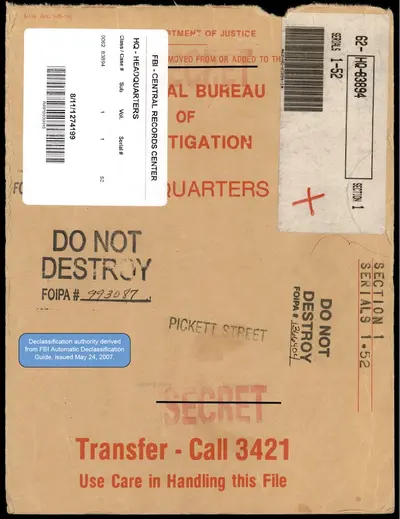
The documentation of this specific event was handled through formal intelligence channels. The case was filed with the Federal Bureau of Investigation, whose Knoxville, Albuquerque, Los Angeles, and other field offices routed UFO reports to headquarters under the Bureau’s standing protocols for the protection of vital installations. This bureaucratic process reflects the Cold War-era preoccupation with national security and the potential for unidentified aerial incursions to threaten domestic infrastructure or military assets. The Birmingham incident, while localized, was processed through these standardized investigative pipelines designed to monitor any perceived threat to the sovereignty of United States airspace.
What the document records
The primary evidence for the Birmingham event stems from communications received by a local media outlet. A Birmingham radio station received over 400 calls from people claiming to see fluorescent balls circling the city. The sheer volume of these calls suggests a coordinated or simultaneous visual experience shared by a large segment of the local population. While the specific number of individual witnesses is not specified in the released document, the density of the reports indicates a widespread phenomenon.
Investigative scrutiny of the period considered various terrestrial explanations for such visual disturbances. A carnival nearby was using searchlights on clouds, potentially causing the confusion. Such light-based phenomena, when projected onto low-lying cloud cover or atmospheric moisture, can create the illusion of moving, luminous objects. This possibility highlights the difficulty investigators faced when distinguishing between man-made light pollution and truly anomalous aerial objects.
Type of case
The case is classified as a visual sighting reported by ground or air observers. Such sightings are characteristic of the mid-century wave of unidentified aerial phenomena, where the primary data consists of eyewitness testimony regarding the luminosity, trajectory, and shape of objects observed from the surface.
Status
All records released under the PURSUE program are designated unresolved by the All-domain Anomaly Resolution Office (AARO) by default. The federal government has not concluded that the events were anomalous, has not concluded that they were conventional, and has not ruled out either possibility. This state of ambiguity is common among declassified historical files, as the lack of physical debris or radar corroboration prevents a definitive classification.
Conventional candidates for sightings of this period include experimental aircraft, weather balloons, especially the Project Mogul series in the late 1940s, and atmospheric optical phenomena such as sundogs and lenticular clouds. Additionally, astronomical objects including Venus, the Moon, and meteors near the horizon are frequently cited as potential sources of misidentification. The Birmingham incident remains a subject of historical interest due to the high volume of simultaneous reports, yet it remains officially unclassified within the scope of modern federal investigations.