The Washington UFO Flap
UFOs invaded restricted airspace over the nation's capital on two consecutive weekends.
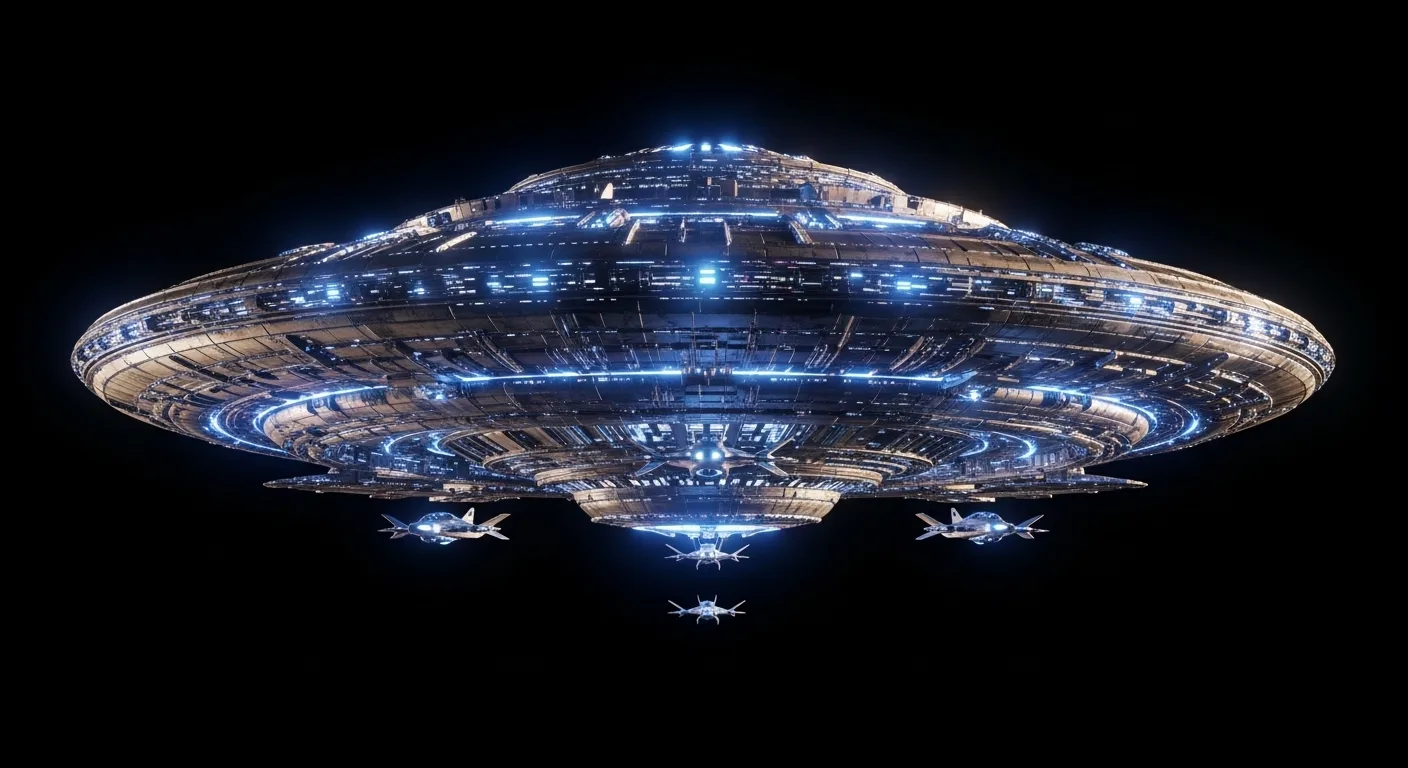
In the summer of 1952, unidentified flying objects penetrated the most restricted airspace in the United States, maneuvering over the White House and the Capitol Building on two consecutive weekends while radar operators tracked them, pilots chased them, and the nation watched in astonishment. The Washington UFO flap, as it came to be known, was not a rural sighting by a lone farmer or a fleeting glimpse of something unusual in a remote sky. It was a sustained incursion into the nerve center of American power, observed by trained military personnel, confirmed by multiple independent radar systems, and witnessed visually by dozens of credible observers on the ground and in the air. The events of July 1952 shocked the nation, embarrassed the Air Force, alarmed the intelligence community, and forced the United States government to confront, however briefly, the possibility that something was operating in American skies that was beyond the ability of the most powerful military on earth to intercept or explain.
The Context: Summer of the Saucers
The Washington sightings did not occur in a vacuum. The summer of 1952 was the most intense period of UFO activity in American history up to that point, with hundreds of reports flooding in from across the country. The Air Force’s Project Blue Book, the official UFO investigation program, was overwhelmed by the volume of reports, and newspapers devoted increasing column space to a phenomenon that seemed to be escalating beyond anyone’s ability to control or explain.
The Korean War was grinding on, the Cold War was at full intensity, and the American public was acutely aware of threats from the sky. The Soviet Union had demonstrated its nuclear capability, and the Air Defense Command maintained constant vigilance against the possibility of a Soviet bomber attack on the continental United States. In this environment, unidentified objects in American airspace were not merely curiosities; they were potential threats to national security, and the failure to identify and intercept them was a professional and strategic embarrassment for the military.
Washington, D.C., was the most sensitive airspace in the nation. A complex web of restricted zones and prohibited areas surrounded the capital, and any unauthorized aircraft entering this space would normally trigger an immediate military response. The radar systems at Washington National Airport, at Andrews Air Force Base, and at the Air Route Traffic Control Center continuously monitored the skies over the capital, creating overlapping coverage that made it virtually impossible for a conventional aircraft to enter the area undetected.
It was into this tightly controlled airspace that the unknown objects arrived on the night of July 19, 1952.
The First Weekend: July 19-20
The first indication that something unusual was happening came at approximately 11:40 PM on Saturday, July 19, when Edward Nugent, an air traffic controller at Washington National Airport, noticed a cluster of seven objects on his radar screen. The objects were in an area southeast of Andrews Air Force Base, and they were not following any established air corridor or flight plan. Nugent called his supervisor, Harry Barnes, to the screen, and the two men watched as the objects moved across the display in patterns that no conventional aircraft could replicate.
The objects were performing maneuvers that defied the capabilities of any known aircraft. They accelerated from relatively slow speeds to velocities that Barnes estimated at “hundreds of miles per hour” in a matter of seconds. They made sharp turns that would have subjected a human pilot to fatal G-forces. They hovered motionless for extended periods before resuming movement. And most alarmingly, they moved directly through the restricted airspace over the White House and the Capitol Building, areas where any unauthorized aircraft would normally be intercepted within minutes.
Barnes immediately contacted the radar facility at Andrews Air Force Base, which confirmed that it too was tracking unknown objects in the same area. The objects appeared on both radar systems simultaneously, ruling out the possibility of a malfunction or artifact on either screen. The Air Route Traffic Control Center, a third independent radar system, also detected the targets, providing triple radar confirmation of the objects’ presence.
Visual confirmation came from multiple sources. At Andrews Air Force Base, Airman Second Class William Brady observed a bright orange object in the sky, moving at a speed and with a maneuverability that he could not reconcile with any known aircraft. An airline pilot, Captain Casey Pierman of Capital Airlines, reported seeing six bright lights in the sky as he flew his commercial aircraft into Washington. Pierman, an experienced pilot with thousands of hours of flight time, described the objects as moving at “incredible speed” and performing maneuvers that were beyond the capability of any aircraft he had ever seen.
The objects continued to appear on radar and to be observed visually throughout the night. Jets were scrambled from New Castle Air Force Base in Delaware to intercept the unknowns, but by the time the fighters arrived over Washington, the objects had vanished from radar. The jets returned to base, and within minutes of their departure, the objects reappeared. This pattern of arrival and disappearance seemed to demonstrate an awareness of the military response—the objects appeared to know when jets were incoming and departed accordingly, returning only when the threat had passed.
The sightings continued until approximately 5:30 AM on July 20, when the objects disappeared for the last time that night. The radar operators, visual observers, and military pilots who had spent the night chasing phantoms were left exhausted and bewildered.
The Interlude
The week between the two weekends of sightings was filled with anxiety and controversy. The media seized on the story, and headlines across the country announced that flying saucers had been seen over the nation’s capital. The public was alarmed, the military was embarrassed, and the Truman administration was pressured to provide an explanation for what had happened.
Within the Air Force, there was disagreement about how to respond. Some officers argued for transparency, believing that the public deserved to know what had been observed. Others favored a policy of reassurance, emphasizing that the objects had not demonstrated hostile intent and that there was no reason for public concern. The intelligence community, represented by the CIA, was primarily concerned about the flood of UFO reports that could, in the event of a genuine Soviet attack, saturate communication channels and prevent legitimate threat reports from being processed.
Project Blue Book’s chief investigator, Captain Edward Ruppelt, arrived in Washington during the week, hoping to coordinate the investigation of the previous weekend’s sightings. Ruppelt found the situation chaotic and the military’s response disorganized. He attempted to arrange for a proper scientific investigation of any recurrence, including stationing observers with cameras and instruments at key locations, but bureaucratic obstacles and interservice rivalries frustrated his efforts.
The objects, meanwhile, were apparently planning a return visit.
The Second Weekend: July 26-27
On the night of Saturday, July 26, one week after the first incident, the objects came back. At approximately 8:15 PM, radar operators at Washington National Airport began tracking unknown targets in the same areas where they had appeared the previous weekend. Once again, the objects were confirmed by multiple radar systems, and once again, visual observers reported seeing bright lights performing extraordinary maneuvers over the capital.
The second weekend’s events were, if anything, more intense than the first. The objects appeared in greater numbers and remained longer, giving radar operators extended opportunities to track their movements. The radar returns were strong and clear, inconsistent with the atmospheric artifacts that would later be proposed as an explanation. The objects continued to demonstrate the same extraordinary capabilities—rapid acceleration, hovering, and sharp turns—that had been observed the previous weekend.
Jets were scrambled from New Castle Air Force Base at approximately 11:25 PM. This time, at least one pilot reported making visual contact with the objects. Lieutenant William Patterson reported that he was surrounded by a ring of bright lights that closed in on his aircraft before pulling away. Patterson reported the experience to ground controllers, and his voice on the radio recordings revealed genuine alarm. He asked controllers what he should do, and after a pause, was told to attempt to close with the objects. Patterson tried, but the lights accelerated away from him at speeds he could not match.
The objects continued to appear and disappear throughout the night, playing the same cat-and-mouse game with interceptors that they had played the previous weekend. Jets would arrive, the objects would vanish, the jets would return to base, and the objects would reappear. This pattern continued until dawn, when the objects departed for the last time.
The Press Conference
On July 29, 1952, three days after the second weekend of sightings, the Air Force held a press conference at the Pentagon. It was the largest press conference the Air Force had held since the end of World War II, a measure of the public interest and anxiety generated by the Washington sightings.
Major General John Samford, the Director of Intelligence for the Air Force, presided over the conference. Flanked by officers and technical experts, Samford presented the Air Force’s explanation for the Washington sightings: temperature inversions. According to Samford, unusual atmospheric conditions over Washington had caused temperature inversions—layers of warm air over cooler air—that could bend radar beams and create false targets on radar screens. The visual sightings, Samford suggested, were misidentifications of stars, meteors, or city lights refracted by the same atmospheric conditions.
The temperature inversion explanation was received with skepticism by many observers, including some within the Air Force itself. While temperature inversions can indeed create anomalous radar returns, the conditions required to produce the kind of strong, consistent, and mobile targets observed over Washington are extremely rare. Moreover, the objects had been tracked by multiple radar systems operating on different frequencies and from different locations, and they had been confirmed by visual observation. Temperature inversions might explain a single anomalous radar return on a single screen, but they cannot explain multiple objects tracked by multiple independent systems while simultaneously being observed visually by ground observers and pilots.
Captain Ruppelt later expressed his dissatisfaction with the press conference and the inversion explanation. He noted that he had consulted with weather experts during the investigation and that the atmospheric conditions over Washington on the nights in question were not consistent with the kind of severe temperature inversions that would be required to produce the observed radar effects. He also noted that experienced radar operators at Washington National Airport had been tracking temperature inversions for years and were well able to distinguish them from genuine targets. The operators involved in the July sightings were unanimous in their assessment that the objects on their screens were not inversions but solid, moving targets.
The CIA Response
The Washington sightings had a significant and lasting impact on the intelligence community’s approach to the UFO phenomenon. In the months following the July incidents, the CIA convened a panel of scientists, chaired by physicist Howard P. Robertson, to assess the national security implications of UFO reports. The Robertson Panel, as it became known, met in January 1953 and concluded that UFO reports, whatever their origin, posed a threat to national security not because they might represent extraterrestrial visitors but because they could overwhelm military communication channels during a genuine attack.
The panel recommended a policy of systematic debunking of UFO reports, aimed at reducing public interest in the phenomenon and thereby reducing the volume of reports that could potentially interfere with military communications. This recommendation had a profound effect on the government’s approach to UFOs for the next several decades, establishing a policy of dismissal and debunking that would characterize official responses to UFO reports until the twenty-first century.
The Washington sightings were thus a pivotal moment not only in UFO history but in the history of government information management. The events demonstrated that unidentified objects could penetrate the most restricted airspace in the nation with apparent impunity, and the government’s response was not to investigate the phenomenon more rigorously but to work harder to convince the public that it did not exist.
The Evidence Examined
The Washington UFO flap produced an unusually strong body of evidence for a UFO event of its era. Multiple independent radar systems tracked the same objects simultaneously, providing geometric confirmation that something was present in the airspace. Visual observations by trained military personnel and experienced airline pilots corroborated the radar data. Interceptor pilots reported close encounters with the objects, and radio recordings captured their real-time reactions.
The temperature inversion explanation, while seductive in its simplicity, fails to account for several key aspects of the evidence. Inversions do not produce radar returns that are confirmed by visual observation. Inversions do not generate targets that accelerate, decelerate, hover, and make sharp turns. Inversions do not appear on the same evenings two weeks apart with the same characteristics. And inversions do not cause experienced radar operators, who deal with atmospheric anomalies routinely, to report that they are tracking genuine targets.
The performance characteristics described by radar operators and visual observers—speeds estimated at hundreds of miles per hour, instantaneous acceleration, and maneuvers that would destroy any conventional aircraft—were beyond the capability of any known technology in 1952. They remain beyond the capability of any publicly acknowledged technology today. Whatever was tracked over Washington that July was operating under physical principles that conventional aerospace engineering cannot explain.
A Question of Sovereignty
The Washington UFO flap raised a question that remains uncomfortable for any government to confront: if unidentified objects can penetrate the most restricted airspace in the nation, operate there with impunity, and depart without being intercepted, what does that say about national sovereignty and the ability of the military to defend the homeland?
In 1952, this question was framed in Cold War terms. If the objects were Soviet, the implications were terrifying—the Soviets had developed technology that rendered American air defenses useless. If they were not Soviet, the implications were perhaps even more disturbing—some unknown force was operating in American skies that was beyond the comprehension of the world’s most powerful military.
The Air Force’s response to this question was, effectively, to deny that it had been asked. The temperature inversion explanation was designed to close the case, to reassure the public that nothing extraordinary had occurred, and to restore confidence in the ability of the military to control American airspace. Whether this confidence was warranted is a question that the evidence from July 1952 makes difficult to answer affirmatively.
The objects that flew over Washington in the summer of 1952 have never been identified. They demonstrated capabilities that no known technology possessed then or possesses now. They operated in the most closely monitored airspace on earth and were observed by the most trained and credible witnesses available—radar operators, air traffic controllers, military pilots, and intelligence professionals. They forced the Air Force to hold its largest press conference since the war, prompted the CIA to convene a scientific panel, and fundamentally shaped the government’s approach to UFO reports for the next half century.
Whatever they were, they came, they were seen, and they departed on their own terms, leaving behind a mystery that the passage of seven decades has done nothing to resolve. The skies over Washington are still monitored, still restricted, still defended by the most sophisticated military technology in the world. Whether that technology would prove any more effective against a return visit than the F-94 Starfires that Lieutenant Patterson flew into a ring of lights on a July night in 1952 is a question that, fortunately or unfortunately, has not yet been tested.
Sources
- Project Blue Book — National Archives — USAF UFO investigation files, 1947–1969
- CIA UFO/UAP Reading Room — Declassified CIA documents on UAP
- Chronicling America — Historic US newspapers (1690–1963)