UFOs Over the Capital
Unidentified objects invaded restricted airspace over the White House.
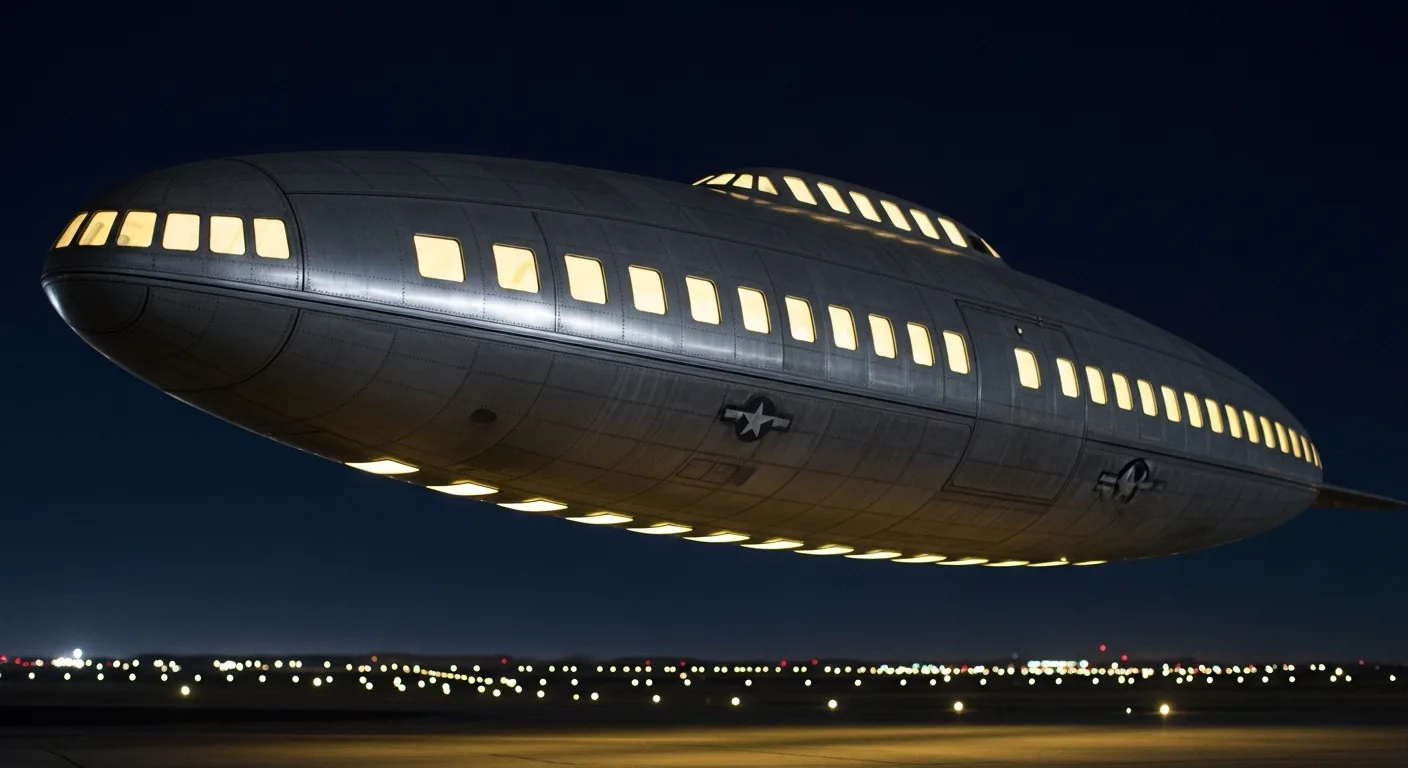
The summer of 1952 was already shaping up to be the most extraordinary period in the short history of unidentified flying object reports. Across the United States, sighting after sighting poured into military and civilian channels, creating what investigators would come to call the “Great Flap.” But nothing that had come before could have prepared the nation for what was about to unfold over its own capital. On two consecutive weekends in July, unknown objects penetrated the most restricted airspace in the Western world, streaking over the White House, the Capitol Building, and the Pentagon while fighter jets scrambled in futile pursuit. The events would trigger the largest military press conference since the end of World War II, draw the Central Intelligence Agency into UFO investigation for the first time, and leave a permanent scar on the credibility of official explanations for the phenomenon.
A City Under Watch
To appreciate the magnitude of what occurred over Washington in July 1952, one must first understand the extraordinary sensitivity of the airspace being violated. The skies above the nation’s capital were — and remain — among the most tightly controlled in the world. In 1952, with the Cold War deepening and the Korean War grinding on, the defense of Washington’s airspace was a matter of the gravest national importance. Soviet long-range bombers were a growing threat, and the Air Defense Command maintained constant vigilance against any unauthorized penetration of the restricted zones.
Washington National Airport, situated along the Potomac River just miles from the White House, served as a critical node in this defensive network. Its radar operators were seasoned professionals accustomed to tracking every aircraft that moved through the region. Andrews Air Force Base in nearby Maryland provided military radar coverage and maintained interceptor aircraft on alert. The system was designed to detect, identify, and if necessary destroy any threat to the capital. It had never been tested by anything like what appeared on the night of July 19, 1952.
The First Weekend: July 19-20
Shortly before midnight on Saturday, July 19, 1952, Edward Nugent, an air traffic controller at Washington National Airport, noticed a cluster of seven slow-moving objects on his radar screen. The targets were located about fifteen miles south-southwest of the city, and they were not following any established flight corridor. Nugent called over his supervisor, Harry Barnes, who had been working radar at National for several years and knew precisely what normal air traffic looked like. What he saw on the scope that night was anything but normal.
The objects were moving at roughly one hundred to one hundred and thirty miles per hour, an unremarkable speed — until they suddenly accelerated. Barnes watched in astonishment as the targets shot across the scope at incredible velocity, covering the distance between positions in seconds in a manner that suggested speeds well in excess of what any known aircraft could achieve. The objects did not move in straight lines or follow predictable trajectories. They darted, stopped, reversed course, and clustered together before separating again, behavior that no conventional aircraft — and certainly no weather phenomenon — could replicate.
Barnes contacted the control tower at National, where controller Howard Cocklin confirmed that he was also tracking the objects on the tower’s separate radar system. Cocklin stepped outside and visually observed a bright orange light in the sky, hovering in the direction indicated by his radar returns. This was a critical detail: the objects were not merely electronic anomalies. They existed in physical space, visible to the naked eye and trackable on independent radar installations simultaneously.
Within minutes, Barnes realized the full implications of what was happening. The objects had entered the restricted airspace over the White House and the Capitol Building. Targets were painting on his scope directly over the most symbolically and strategically important buildings in the United States. He immediately contacted Andrews Air Force Base, where radar operators were initially skeptical — until they checked their own screens. Andrews confirmed that they, too, were tracking unknown objects in the restricted zone.
The sightings multiplied as the night wore on. Airline pilots in the air over Washington reported seeing bright lights maneuvering around them. One Capital Airlines pilot, Captain S.C. “Casey” Pierman, watched six objects streak across the sky while on approach to National. He described them as moving at tremendous speed, like “falling stars without tails.” Another Capital Airlines pilot, Captain Howard Dermott, reported a single bright light that followed his aircraft for several minutes before darting away. Staff Sergeant Charles Davenport at Andrews Air Force Base observed an orange-red light in the southern sky that remained stationary for a time before moving away at incredible speed.
The Air Force scrambled F-94 Starfire jet interceptors from New Castle Air Force Base in Delaware, the nearest unit with night-capable fighters. By the time the jets arrived over Washington, the objects had vanished from radar. The fighters circled the restricted zone, found nothing, and returned to base. Almost immediately after the jets departed, the objects reappeared on radar screens at National. This pattern — objects disappearing upon the approach of interceptors and reappearing after their departure — would repeat itself throughout the night and would become one of the most disturbing aspects of the entire affair. Whatever these objects were, they appeared to be aware of the jets and capable of evading them at will.
The objects continued to appear on radar throughout the early morning hours, finally fading from screens around dawn. By then, Harry Barnes had been tracking them for nearly seven hours. “There is no other explanation in my mind,” Barnes later stated, “but that these were actual solid objects moving at tremendous speeds.” He dismissed any suggestion that the returns were caused by weather or equipment malfunction. He had seen both many times, and what appeared on his screens that night bore no resemblance to either.
The Second Weekend: July 26-27
The events of July 19-20 generated significant press attention, but many officials hoped the incident was an isolated anomaly. That hope was shattered exactly one week later when the objects returned in even more dramatic fashion.
On the night of Saturday, July 26, radar operators at Washington National Airport again detected unknown objects entering the restricted airspace over the capital. This time, the returns were stronger, more numerous, and more persistent. Multiple radar installations tracked the objects simultaneously, including the radar at National, the tower radar, and military radar at Andrews Air Force Base. The objects once again maneuvered over the White House and Capitol, apparently at will, demonstrating the same erratic flight characteristics observed the previous weekend — sudden acceleration, abrupt stops, and rapid changes in direction.
The Air Force scrambled F-94 jets once more, this time from New Castle Air Force Base in Delaware. The response was faster than it had been the previous weekend, but no more effective. Lieutenant William Patterson, one of the interceptor pilots, found himself surrounded by a ring of enormous bluish-white lights during his patrol over Washington. Patterson reported the objects to ground controllers, who confirmed that radar showed the unknowns clustered around his aircraft. The pilot later described the experience as deeply unnerving. He asked ground control for instructions and was told to pursue the objects if possible. When he attempted to close on the lights, they pulled away from him effortlessly, accelerating beyond the capability of his jet. At one point, the objects vanished simultaneously, as if a switch had been thrown.
A second flight of interceptors was scrambled as the night continued, but again the objects seemed to anticipate the military response. They would fade from radar as the jets approached and return once the fighters withdrew. Radar operators, airline pilots, and ground observers all confirmed the presence of unexplained lights in the sky. The objects were tracked traveling at speeds ranging from less than a hundred miles per hour to what some operators estimated at over seven thousand miles per hour — velocities that no aircraft in the world’s arsenals could match in 1952.
The sheer brazenness of the second weekend’s incursion sent shockwaves through the military establishment. The most restricted airspace in the free world had been violated for two consecutive weekends, and the United States Air Force had been powerless to do anything about it. Newspaper headlines screamed the story across the nation. The Washington Post ran the sightings as front-page news. Public anxiety surged. Citizens wanted to know: if the Air Force could not defend the airspace above the White House, what exactly could it defend?
The Largest Press Conference Since World War II
The pressure on the military to provide answers became unbearable. On July 29, 1952, just two days after the second weekend of sightings, Major General John A. Samford, the Director of Intelligence for the United States Air Force, held a press conference at the Pentagon. It was the largest military press conference since the end of World War II — a measure of how seriously the government took the public alarm generated by the Washington sightings. The room was packed with reporters, photographers, and newsreel cameramen, all demanding an explanation for what had been seen over the capital.
General Samford approached the press conference with a clear objective: to calm the public without making claims that could later be contradicted. He acknowledged that the Air Force had investigated thousands of UFO reports and that a small percentage remained unexplained. But the heart of his presentation was a specific explanation for the Washington radar contacts: temperature inversions.
Samford explained that atmospheric conditions over Washington during both weekends had been conducive to a phenomenon known as temperature inversion, in which a layer of warm air sits atop a layer of cooler air near the ground. Under certain conditions, this atmospheric layering can bend radar beams downward, causing them to reflect off ground objects — buildings, vehicles, terrain features — and produce false returns on radar screens. These returns, Samford suggested, could appear to move at extraordinary speeds as the inversion layer shifted and fluctuated. The visual sightings, he implied, might be stars or lights distorted by the same atmospheric conditions.
The press conference achieved its immediate objective of reducing public hysteria, but the temperature inversion explanation began to unravel almost as soon as it was offered. The problems with Samford’s account were numerous, and they were recognized immediately by many of those who had actually witnessed the events.
Why the Explanation Failed
The temperature inversion theory suffered from fundamental flaws that experienced radar operators, scientists, and investigators were quick to identify. First and foremost, the men who had tracked the objects on radar were intimately familiar with temperature inversion effects. Harry Barnes and the other controllers at Washington National dealt with inversions regularly — they were a common occurrence in the humid summer weather of the Potomac River valley. These operators knew exactly what inversion-caused false returns looked like on their screens: diffuse, shimmering blobs that drifted slowly and could be easily identified by experienced personnel. What they tracked on July 19-20 and July 26-27 bore no resemblance to inversion effects. The returns were sharp, solid, and well-defined — consistent with hard physical objects, not atmospheric anomalies.
Second, the objects had been tracked simultaneously on multiple independent radar systems using different frequencies and located at different positions. Temperature inversions can cause false returns on a single radar installation, but the odds of an inversion producing identical false targets on multiple separate systems tracking from different angles are vanishingly small. The fact that National Airport radar, the control tower radar, and Andrews Air Force Base radar all tracked the same objects in the same positions at the same times argued powerfully against an atmospheric explanation.
Third, the radar contacts were correlated with visual sightings. Airline pilots, military personnel, and ground observers all saw lights in the sky precisely where radar indicated the objects were located. Temperature inversions do not produce visible lights. They can cause optical distortion of existing light sources, but they cannot create new sources of illumination that correspond exactly with radar returns.
Fourth, the behavior of the objects was inconsistent with any weather-related phenomenon. Temperature inversions do not cause radar targets to accelerate from a dead stop to thousands of miles per hour. They do not cause targets to evade pursuing fighter aircraft. They do not cause targets to disappear simultaneously from multiple radar screens and reappear minutes later in different locations. The objects tracked over Washington displayed apparent intelligence — an awareness of their environment and the ability to react to it — that no atmospheric condition could explain.
Finally, the National Weather Service confirmed that while temperature inversions had been present over Washington on both weekends, they were mild and unremarkable. Inversions of similar or greater magnitude occurred regularly over the capital without producing anything resembling the July radar contacts. If inversions were the cause, controllers at National should have been seeing phantom fleets over the White House regularly. They did not.
Captain Edward Ruppelt, head of the Air Force’s Project Blue Book, was privately dismayed by the temperature inversion explanation. Ruppelt had investigated the Washington sightings personally and believed the evidence pointed to something genuinely anomalous. In his 1956 book, he described the press conference explanation as driven more by the need to manage public anxiety than by actual evidence, and called the Washington sightings among the most significant cases the Air Force had ever investigated.
The CIA Enters the Picture
The Washington sightings had consequences that extended far beyond public relations. Within the intelligence community, the events over the capital raised a disturbing question that had nothing to do with whether the objects were extraterrestrial: could the UFO phenomenon be exploited by the Soviet Union?
The sheer volume of UFO reports flooding into military channels during the summer of 1952 was creating a practical problem. Communication lines used to report UFO sightings were the same lines that would be used to report an actual Soviet attack. If the Soviets could trigger a wave of UFO hysteria, they might clog America’s early warning systems at the precise moment they launched a genuine attack. From a national security perspective, this was intolerable.
In response, the CIA convened the Robertson Panel in January 1953, named after its chairman, the physicist Howard P. Robertson. The panel of distinguished scientists spent roughly twelve hours examining selected UFO cases — a remarkably brief period given the volume of evidence available — and concluded that UFOs did not represent a direct threat to national security but that the reporting of UFOs did. The panel recommended a program of public education designed to strip UFOs of their “aura of mystery,” suggested civilian UFO research groups be monitored, and urged that public interest in the phenomenon be actively discouraged. The goal was not deeper investigation but fewer reports.
These recommendations shaped American government policy on UFOs for two decades. Project Blue Book shifted from genuine investigation to public relations management. Cases were explained away with increasing implausibility. The stigma around UFO sightings was cultivated deliberately as a tool for suppressing reports. The Washington sightings, which should have prompted more serious investigation, instead triggered a systematic effort to make the entire subject disappear.
A Wound in the National Psyche
The impact of the Washington sightings on the American public was profound and lasting. For two weekends in July 1952, something had made a mockery of the nation’s air defenses, operating with impunity over the symbols of American power and vanishing before the military could respond. The government’s explanation satisfied almost no one. The men who tracked the objects on radar rejected it. The pilots who chased the lights rejected it. Scientists who examined the data rejected it. The public, reading about the events in their morning newspapers, rejected it. What remained was an unsettling void where an explanation should have been.
The Washington sightings established a pattern that would define the government’s relationship with the UFO phenomenon for decades: dramatic events would occur, public demand for answers would surge, the government would offer an explanation that failed to satisfy, and the matter would gradually fade from attention without resolution. This cycle repeated through the 1960s, 1970s, and beyond, each iteration further eroding public trust in official statements about unidentified aerial phenomena.
For the radar operators, pilots, and controllers who witnessed the events firsthand, the experience was career-defining. These were trained military and aviation professionals whose livelihoods depended on correctly interpreting radar data and identifying objects in the sky. When they said the objects were real, solid, and behaving in ways that defied conventional explanation, their testimony carried weight that no press conference could neutralize.
An Unresolved Challenge
More than seven decades after they occurred, the Washington sightings of July 1952 remain among the most significant and best-documented UFO cases in history. Multiple radar installations tracked the objects. Trained observers saw them visually. Fighter jets attempted and failed to intercept them. The official explanation was rejected by the very people whose expertise qualified them to evaluate it. The events took place not over some remote desert or isolated rural area but directly above the seat of the United States government, witnessed by dozens of professionals whose credibility was beyond serious question.
Something real entered the restricted airspace over Washington on those July nights — something that moved with capabilities beyond the reach of 1952 technology, that appeared aware of its pursuers and able to evade them, that chose to appear over the most watched and defended skies in America as if to make a point that could not be ignored. The point was made. The questions it raised have never been answered. And the skies above the capital, for all their layers of radar coverage and defensive readiness, proved on those warm July nights to be far less secure — and far more mysterious — than anyone in power wished to admit.
Sources
- Project Blue Book — National Archives — USAF UFO investigation files, 1947–1969
- CIA UFO/UAP Reading Room — Declassified CIA documents on UAP
- Chronicling America — Historic US newspapers (1690–1963)