The Shoreham Airport UFO
Airport staff and pilots observed a metallic disc above the airfield.
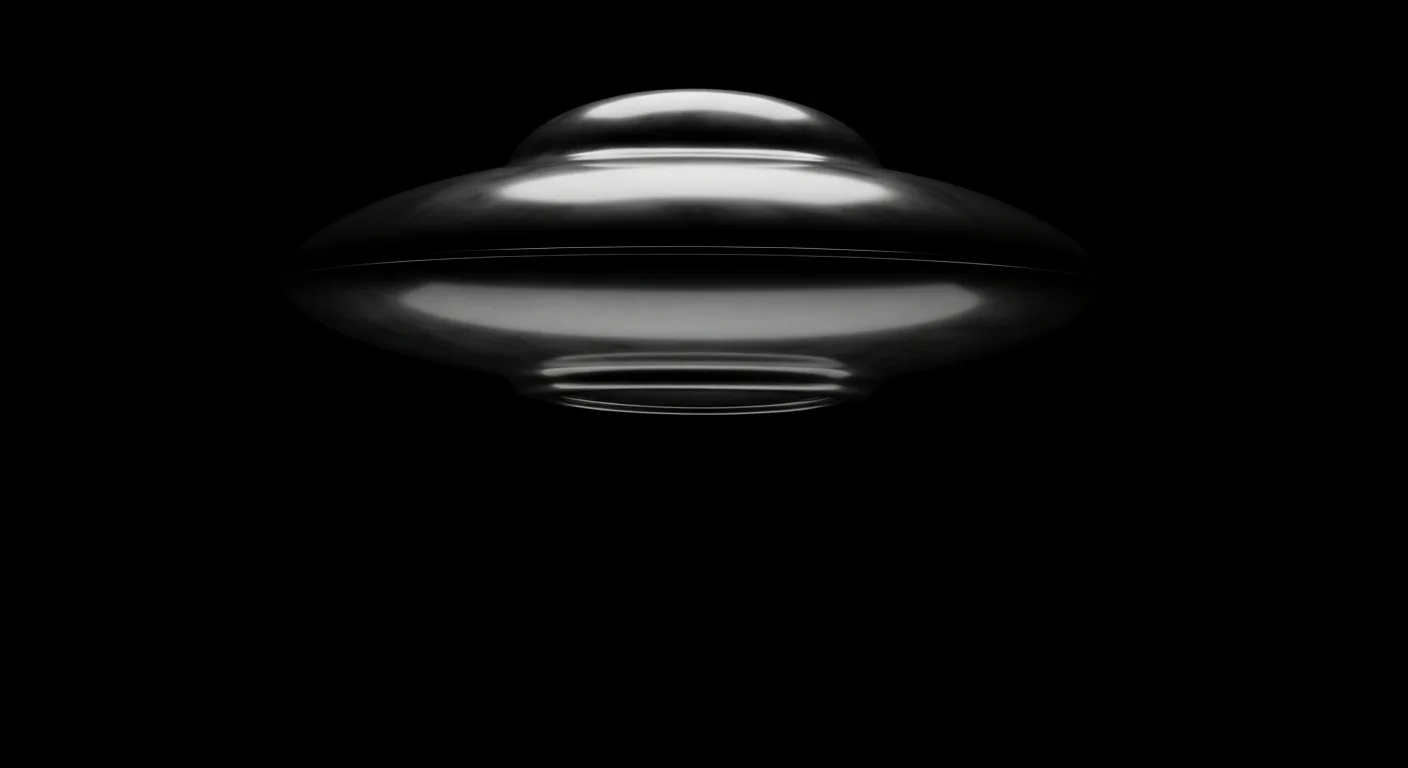
On the afternoon of August 17, 1967, a metallic disc-shaped object appeared in the sky above Shoreham Airport on the West Sussex coast and hovered motionless for several minutes before accelerating away at a speed that far exceeded the capabilities of any known aircraft. The sighting was witnessed by approximately twelve people, including airport ground staff, pilots, and members of the public, many of whom had professional aviation experience that made them unusually qualified observers of airborne phenomena. The object was seen in broad daylight, under clear conditions, at an estimated altitude of three thousand feet. It was reported to the Ministry of Defence, which conducted an investigation and offered no explanation. The Shoreham sighting remains one of the most credible and well-documented UFO encounters in Sussex history, its significance resting not on spectacular claims or dramatic narratives but on the simple, stubborn fact that experienced aviation professionals saw something in the sky that they could not identify and that behaved in ways that no technology of the era could replicate.
Britain’s Oldest Licensed Airfield
Shoreham Airport — now officially known as Brighton City Airport, though few locals use the new name — occupies a flat expanse of coastal land between the town of Shoreham-by-Sea and the South Downs. It is Britain’s oldest licensed airfield, having operated continuously since 1910, and its Art Deco terminal building, constructed in 1936, is one of the finest examples of the style in the country. In 1967, the airport was a busy and well-established facility, handling a mix of private aviation, flight training, pleasure flights, and light commercial traffic.
The significance of the airport as a sighting location cannot be overstated. Shoreham was not a casual gathering place where untrained observers might mistake conventional aircraft, birds, or atmospheric phenomena for something extraordinary. It was a professional aviation environment populated by people whose daily work required them to observe, identify, and track objects in the sky. Pilots, air traffic controllers, ground crew, and aviation engineers — these were people who knew what conventional aircraft looked like from every angle and at every altitude. When such individuals report seeing something that they cannot identify, their testimony carries a weight that casual sightings do not.
The airport’s coastal location also provided excellent viewing conditions. The flat terrain and open skies characteristic of the Sussex coast meant that observers had unobstructed sightlines in all directions. On a clear day, visibility from Shoreham Airport extended for miles over land and sea, making it nearly impossible for a conventional aircraft to be misidentified at the relatively close range described by the witnesses.
The Summer of 1967
The sighting occurred during a period of intense UFO activity across the British Isles. The summer of 1967 produced a wave of sightings throughout the United Kingdom, part of a global pattern of increased UFO reports during the late 1960s that has never been fully explained. During the months of June, July, and August 1967, hundreds of sightings were reported across England, Scotland, and Wales, ranging from distant lights in the night sky to close encounters with structured craft.
The wave included several high-profile cases that attracted national media attention. The Moigne Downs sighting in Dorset, the Flying Cross incident in Devon, and numerous reports from military personnel and police officers created an atmosphere of public interest and official concern that was unusual for the typically dismissive British approach to the UFO subject. The Ministry of Defence received more reports during the summer of 1967 than in any comparable period, and the volume of correspondence strained the resources of the department responsible for investigating such reports.
This context is relevant to the Shoreham sighting for two reasons. First, it establishes that the sighting was part of a broader pattern of activity, not an isolated anomaly. Whatever was being seen across Britain during the summer of 1967, it was being seen by many people in many locations, reducing the likelihood that any single sighting could be dismissed as a unique hallucination or misidentification. Second, the wave of sightings meant that the witnesses at Shoreham were aware that UFO reports were being taken seriously by the authorities, which may have encouraged them to come forward with their account and to report it through official channels.
However, the context also raises a cautionary point. During periods of intense UFO reporting, public awareness of the phenomenon increases, and this awareness can lead to an increase in misidentifications. People primed to see UFOs may interpret conventional objects — aircraft, satellites, weather balloons, atmospheric phenomena — as something extraordinary. This possibility must be considered in evaluating any sighting from a wave period, though the professional credentials of the Shoreham witnesses make this explanation less plausible in this particular case.
The Sighting
The events of August 17, 1967, began at approximately 3:15 in the afternoon. The weather was clear, with good visibility and light winds — standard summer flying conditions for the Sussex coast. The airport was operating normally, with the usual traffic of light aircraft arriving, departing, and conducting training circuits in the airspace around the field.
Ground staff were the first to notice the object. Several members of the airport’s maintenance and operations team became aware of a bright, metallic reflection in the sky to the north of the airfield, at an altitude they estimated at approximately three thousand feet. The reflection was unusually intense — several witnesses described it as painfully bright, like sunlight reflecting off polished metal — and it did not move or change position in the way that an aircraft’s reflection would as it turned in flight.
As the ground staff pointed out the object to one another, its nature became clearer. It was not an aircraft of any conventional type. The object appeared to be disc-shaped, roughly circular when viewed from below, with a distinct dome or raised section on its upper surface. It was metallic in appearance, reflecting sunlight with an intensity that suggested a highly polished or mirror-like surface. The object was stationary, hovering at its estimated altitude without any visible means of propulsion — no wings, no rotors, no jet exhaust, no sound.
The object’s size was difficult to estimate with precision, given its altitude, but witnesses generally agreed that it appeared to be substantial — larger than any conventional aircraft operating from Shoreham at the time. Estimates ranged from thirty to fifty feet in diameter, though all witnesses acknowledged that judging the size of an object at altitude without known reference points is inherently difficult.
The Witnesses
The quality of the witnesses is the Shoreham sighting’s greatest strength. Among the approximately twelve people who observed the object, several had professional qualifications and experience that made their testimony particularly valuable.
The ground staff included aircraft mechanics and maintenance engineers who spent their working days in close proximity to aircraft of every type that operated from Shoreham. These men were intimately familiar with the appearance of light aircraft, helicopters, military jets, and commercial aircraft at various altitudes and in various lighting conditions. Their unanimous conclusion that the object was not a conventional aircraft of any type carried significant weight.
Several pilots were among the witnesses. At least two were actively preparing for flights at the time of the sighting, conducting pre-flight checks on the apron when their attention was drawn to the object in the sky. These were experienced aviators with hundreds or thousands of hours of flight time, men who had spent years scanning the sky for traffic and who had learned to identify aircraft types rapidly and accurately as a matter of professional survival. Their assessment of the object was emphatic: it was not any aircraft type they had ever seen, and its behavior — the motionless hovering, the subsequent acceleration — was beyond the capability of any aircraft they knew of.
Members of the public in the terminal area also observed the object. While their aviation expertise was less extensive than that of the professional observers, they provided additional perspectives on the sighting and confirmed the general description of the object’s appearance and behavior.
The convergence of testimony from multiple independent witnesses, several of whom were highly qualified to evaluate aerial phenomena, gives the Shoreham sighting a credibility that many UFO reports lack. These were not people who were inclined to see UFOs. They were aviation professionals whose first instinct upon seeing an unusual object would have been to identify it as a conventional aircraft, and their failure to do so was itself significant.
The Object’s Departure
The object remained stationary above the airfield for approximately five to seven minutes — long enough for multiple witnesses to observe it carefully, discuss it among themselves, and attempt to rationalize what they were seeing. During this stationary phase, the object gave no indication of conventional propulsion. No engine sound was audible, no exhaust was visible, and no control surfaces could be discerned.
Then the object began to move. The initial movement was a slow rotation around its own axis, as if the disc were spinning like a top while maintaining its position. This rotation was visible because the quality of the reflected sunlight changed as different portions of the object’s surface were presented to the observers, creating a subtle but distinct pulsing effect.
After rotating for a brief period — perhaps thirty seconds to a minute — the object began to accelerate. The acceleration was the most remarkable aspect of the entire sighting, and it was the detail that most disturbed the aviation professionals among the witnesses. The object did not build speed gradually, as any conventional aircraft must. It did not taxi, roll, or climb through the stages of departure that every pilot recognizes. Instead, it appeared to shift from stationary to extraordinary speed in a matter of seconds, moving toward the south — toward the English Channel — with an acceleration that the witnesses described as “incredible,” “impossible,” and “like nothing I’ve ever seen.”
The speed at which the object departed was difficult to quantify, but all witnesses agreed that it far exceeded the capability of any aircraft known to be in service in 1967. The object crossed the visible sky in seconds, dwindling from a clearly defined disc to a point of light to nothing in a time frame that suggested a velocity measured in thousands of miles per hour. No sonic boom was heard, despite the fact that any physical object moving at the speeds described would have produced one under normal aerodynamic conditions.
Within moments of its departure, the sky above Shoreham Airport was empty. The object had vanished over the English Channel, leaving behind a group of shaken witnesses and a silence that was eventually broken by the ordinary sounds of an airport resuming its normal operations.
The Official Response
The sighting was reported to the Ministry of Defence through the standard channels established for such reports. In 1967, the MOD maintained a desk responsible for receiving and evaluating UFO reports, staffed by personnel who were expected to determine whether each reported object represented a threat to national security. The process was bureaucratic rather than investigative: reports were received, filed, and assessed primarily for their defense implications rather than for their scientific significance.
The Shoreham report was acknowledged and recorded. An investigation of sorts was conducted, involving the cross-referencing of the sighting with known air traffic, military exercise schedules, weather balloon launches, and other conventional explanations. No match was found. No aircraft, military or civilian, was identified in the relevant airspace at the time of the sighting. No weather balloons or other atmospheric research devices had been launched from any nearby facility. No military exercises involving unusual aircraft were being conducted in the area.
The MOD’s response, in keeping with its usual practice, was noncommittal. The sighting was classified as unexplained — a designation that meant, in effect, that the MOD had been unable to identify the object but was not prepared to speculate about what it might have been. The file was closed and archived, eventually becoming available to researchers under freedom of information provisions decades later.
The lack of a definitive official explanation has been interpreted in various ways. UFO proponents view the MOD’s failure to explain the sighting as tacit acknowledgment that the object was genuinely anomalous. Skeptics argue that “unexplained” simply means “not enough information to reach a conclusion,” which is a different thing from “genuinely mysterious.” The truth likely lies between these positions: the MOD took the report seriously enough to investigate it but was not equipped or inclined to pursue the matter beyond the bounds of its defense mandate.
Evaluating the Evidence
The Shoreham Airport sighting possesses several characteristics that distinguish it from the vast majority of UFO reports and that make it worthy of continued attention.
First, the sighting occurred in daylight, under clear conditions, at a range close enough for detailed observation. The object was not a distant light in the night sky, subject to the distortions and ambiguities that darkness creates. It was a defined, structured object seen against a blue sky in the middle of an English summer afternoon.
Second, the witnesses were numerous and, in several cases, professionally qualified to evaluate aerial phenomena. The convergence of testimony from aircraft mechanics, pilots, and ground staff — people whose livelihoods depended on their ability to correctly identify objects in the sky — gives the Shoreham sighting a level of credibility that single-witness or untrained-witness reports cannot match.
Third, the object’s behavior included characteristics that were beyond the capability of any known aircraft in 1967 and that remain unexplained by any publicly acknowledged technology in the present day. The ability to hover motionless without visible means of propulsion, to accelerate from a standstill to extreme velocity in seconds, and to do so without producing a sonic boom — these capabilities do not correspond to any known aerodynamic principles.
Fourth, the sighting was officially investigated and officially unexplained. While the MOD’s investigation was limited in scope, its failure to identify the object as a conventional aircraft, balloon, or other known phenomenon adds an institutional dimension to the case that informal sightings lack.
Against these strengths must be weighed the limitations of the evidence. No photographs were taken of the object, despite its several-minute presence above a facility where cameras were presumably available. No radar data has been produced, though whether the object appeared on Shoreham’s radar — if the airport had radar in 1967 — is unclear. The physical evidence for the sighting consists entirely of eyewitness testimony, which, however credible the witnesses, remains subject to the well-documented limitations of human perception and memory.
What Flew Over Shoreham
The Shoreham Airport sighting of August 17, 1967, remains what it has been for nearly sixty years: an unexplained event witnessed by credible observers under conditions that make misidentification unlikely. The metallic disc that hovered above Britain’s oldest licensed airfield on that summer afternoon has never been identified, and the technology it appeared to demonstrate has never been publicly replicated.
The sighting does not prove the existence of extraterrestrial visitors, interdimensional craft, or any other specific explanation for the UFO phenomenon. What it does is add one more data point to the growing body of evidence that suggests that something genuinely unusual has been operating in Earth’s atmosphere, something that defies conventional explanation and that has been seen by qualified observers in conditions that minimize the possibility of error.
The skies above Shoreham Airport are quieter now than they were in 1967, the volume of light aviation having declined with the economics of private flying. The Art Deco terminal still stands, elegant and slightly faded, a monument to an age when flight was still glamorous and the sky was a source of wonder rather than mere transportation. On a clear summer afternoon, with the sun reflecting off the Channel to the south and the Downs rising green to the north, it is still possible to stand on the apron and look up at the sky where, on one particular afternoon nearly six decades ago, a group of aviation professionals saw something that they could not explain and that no one has explained since. The sky offers no answers, only the same patient, luminous emptiness that was there before the object arrived, that remained after it departed, and that holds whatever secrets the universe has chosen not to reveal.
Sources
- Project Blue Book — National Archives — USAF UFO investigation files, 1947–1969
- CIA UFO/UAP Reading Room — Declassified CIA documents on UAP
- UK National Archives — UFO Files — MoD UFO investigation records
- British Newspaper Archive — UK press archive