The Army Helicopter UFO Encounter
A military helicopter crew experienced an impossible ascent during a close encounter.
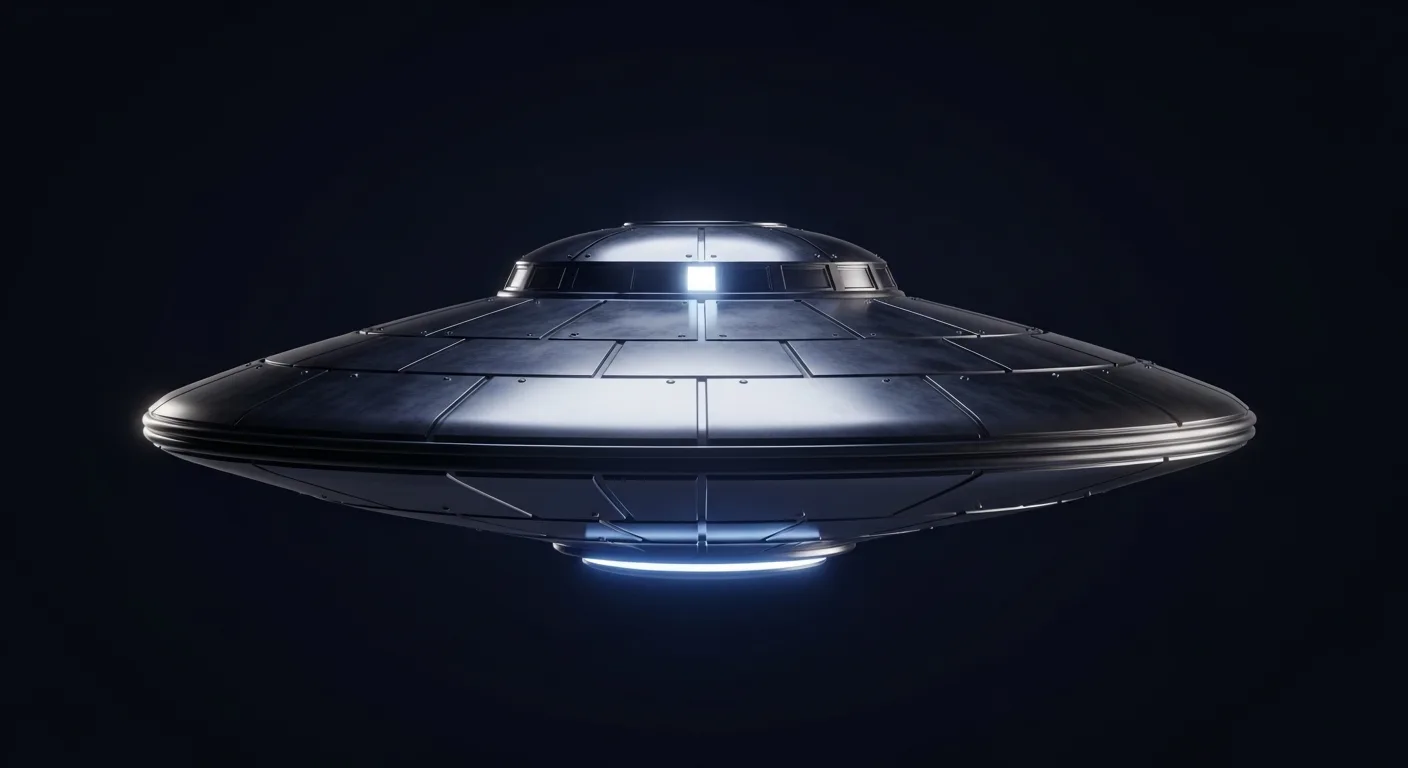
In the annals of unidentified flying object encounters, few cases combine the elements of credibility, physical evidence, and sheer strangeness as compellingly as the incident that befell an Army Reserve helicopter crew on the night of October 18, 1973. Captain Lawrence Coyne, a nineteen-year veteran of the United States Army with over three thousand flight hours, was piloting a UH-1H Huey helicopter on a routine return flight from Columbus, Ohio, to their home base in Cleveland when his crew encountered an object that did something to their aircraft that remains, more than half a century later, physically inexplicable. The helicopter, with its controls set for descent, rose nearly two thousand feet into the air as if lifted by an invisible hand. The Coyne incident — sometimes called the Mansfield helicopter incident after the nearby Ohio city — stands as one of the most thoroughly documented and least satisfactorily explained UFO encounters in history, a case in which trained military observers, corroborated by independent ground witnesses, experienced a violation of the fundamental laws of aerodynamics that no conventional explanation has been able to address.
The Crew
The four men aboard Army Reserve helicopter 68-15444 on the night of October 18, 1973, were not the sort of witnesses who could be easily dismissed. Captain Lawrence J. Coyne, the aircraft commander, was a combat veteran who had served in Vietnam and had accumulated extensive flight experience in both military and civilian aviation. He was known among his peers as a steady, level-headed officer, the kind of man who inspired confidence in his crew and who was not given to exaggeration or flights of fancy.
First Lieutenant Arrigo Jezzi occupied the left seat as co-pilot. Sergeant John Healey served as crew chief, positioned in the left rear of the cabin. Staff Sergeant Robert Yanacsek occupied the right rear position. All four men were experienced military aviators who had undergone rigorous training and who understood the capabilities and limitations of both their aircraft and the aerospace environment in which they operated. They knew what conventional aircraft looked like at night. They knew what stars, satellites, and atmospheric phenomena looked like. What they saw that night did not resemble any of those things.
The crew was returning from their annual physical examinations at a facility in Columbus. The flight to Cleveland was routine, a trip they had made many times before. The weather was clear, with scattered clouds at about three thousand feet and excellent visibility — perfect conditions for visual flight. The helicopter was cruising at an altitude of approximately 2,500 feet above sea level and an airspeed of about 100 knots, following a northeasterly heading that would take them over the rolling farmland of north-central Ohio.
The Approach
At approximately 11:00 PM, as the helicopter passed south of Mansfield, Ohio, Sergeant Yanacsek, seated in the right rear of the cabin, noticed a red light on the eastern horizon. Red lights in the sky are common enough — they can indicate the position lights of other aircraft, communication towers, or astronomical objects near the horizon. Yanacsek observed the light for approximately a minute before noting that it appeared to be growing brighter and larger, suggesting that whatever was producing it was moving toward the helicopter.
Yanacsek alerted Captain Coyne to the light. Coyne looked to the right and observed the red light, which was now clearly approaching from the southeast at a considerable rate of speed. Coyne initially assumed it was a fixed-wing aircraft or a fighter jet from one of the military installations in Ohio, and he reached for the radio to contact Mansfield approach control for traffic information. He could not establish contact — the radios, which had been functioning normally throughout the flight, had gone dead. Whether the radio failure was related to the approaching object or was a coincidence remains one of the case’s many unanswered questions.
As the light continued to close at a speed that Coyne later estimated at approximately 600 knots — far faster than any helicopter could evade — the captain made the decision to initiate an emergency descent to avoid a collision. He pushed the collective pitch control down, commanding a descent rate of approximately 500 feet per minute. The helicopter’s nose dropped as the aircraft began losing altitude, descending from 2,500 feet toward what Coyne hoped would be safe clearance beneath whatever was approaching.
The red light did not deviate from its collision course. It continued straight toward the helicopter, growing larger and brighter with each passing second, closing the distance at a rate that made evasive action seem futile. The crew braced themselves for what appeared to be an unavoidable impact.
The Object
The impact did not come. Instead, the approaching object decelerated from its tremendous speed and came to a dead stop directly in front of and slightly above the descending helicopter. The transition from approximately 600 knots to a full hover was instantaneous — there was no visible deceleration phase, no banking or turning, simply a cessation of forward motion that violated everything the crew knew about the physics of flight.
Now stationary relative to the helicopter, the object was close enough for the crew to observe it in detail. What they saw was not a conventional aircraft by any definition. The object was cigar-shaped or elongated, gray and metallic in appearance, with no visible wings, rotors, engines, exhaust, or other propulsion mechanisms. Captain Coyne later estimated its length at approximately sixty feet, though precise size estimation was difficult given the circumstances. The object filled the helicopter’s windscreen, dominating the visual field of all four crew members.
The most distinctive feature was the object’s lighting configuration. A red light was positioned at the front, which was what Yanacsek had first observed on the horizon. A white light was at the rear. And along the bottom of the object, a large, dome-shaped protuberance emitted a green light that, as the crew watched, swung downward and bathed the helicopter’s cockpit in an intense, vivid green illumination. The green light was bright enough to fill the entire cabin interior, casting everything in a surreal emerald glow. Coyne later described the sensation as being inside a green spotlight of extraordinary intensity.
The encounter with the stationary object lasted approximately ten seconds — long enough for all four crew members to observe it clearly, but brief enough that the experience had the compressed, dreamlike quality of events occurring under extreme stress. Then the object began to move. It accelerated to the west, initially at a pace the crew could track, then with increasing speed until it was a distant point of light. A final burst of acceleration, and it was gone, leaving only the green-tinged afterimage in the crew’s vision.
The Impossible Ascent
It was only after the object departed that Captain Coyne noticed something that would become the case’s most compelling and inexplicable feature. Throughout the encounter, Coyne had maintained the collective in the full-down position, commanding the maximum rate of descent available to the aircraft. The helicopter should have been descending. It should have been losing altitude at approximately 500 feet per minute, just as the controls dictated.
Instead, the altimeter showed that the helicopter was climbing. Not just maintaining altitude — actively climbing, at a rate of approximately 1,000 feet per minute. The aircraft had risen from its pre-encounter altitude of approximately 1,700 feet (where the descent had brought it from 2,500) to approximately 3,500 feet. The helicopter had gained nearly 2,000 feet of altitude while its controls were set to descend.
This was, by any understanding of helicopter aerodynamics, physically impossible. A helicopter generates lift through the rotation of its main rotor blades, with the pitch of the blades controlled by the collective. When the collective is pushed down, the blade pitch decreases, reducing lift. With the collective fully down, the helicopter should descend, period. There is no mechanism within the aircraft’s design that could cause it to ascend while the collective commanded descent. The helicopter did not possess the physical capability to do what the instruments showed it had done.
Coyne immediately pulled the collective back to a neutral position and regained normal control of the aircraft. The helicopter responded normally, confirming that the flight controls were functioning properly. Whatever had caused the anomalous ascent was no longer in effect. The crew flew the remainder of the route to Cleveland without further incident, though in a state of considerable agitation.
The Ground Witnesses
The Coyne incident would be remarkable even if the only testimony came from the four crew members. But the case is strengthened considerably by the existence of independent ground witnesses who observed the same events from below.
A family of four driving along a road south of Mansfield reported seeing both the helicopter and the unidentified object. The family — who had no connection to the crew and no knowledge that a UFO report had been filed — described watching a helicopter being paced by a brightly lit object. They reported seeing the distinctive green light illuminate the helicopter and the surrounding area, and they described the object’s departure in terms consistent with the crew’s account. Their description of the event’s sequence, timing, and visual characteristics corroborated the crew’s testimony on every significant point.
The ground witnesses provided an additional detail that the crew, focused on the object itself, may not have fully appreciated: the green light that washed over the helicopter was visible from the ground, illuminating not just the aircraft but the terrain below it. The witnesses described the green light sweeping across the landscape as it emanated from the object, an effect that would be consistent with an extremely powerful light source at close range.
The existence of these ground witnesses effectively eliminates several skeptical explanations for the crew’s account. The sighting was not a misperception caused by fatigue, disorientation, or equipment malfunction — people on the ground saw the same thing. It was not a psychological phenomenon confined to the crew’s shared experience — unrelated observers in a different location confirmed the essential details. Whatever happened over Mansfield on the night of October 18, 1973, was a physical, observable event that affected both the helicopter and the surrounding environment.
The Investigation
The Coyne incident attracted immediate attention from both military and civilian UFO investigators. Captain Coyne, unlike many military witnesses who feared career repercussions from reporting UFO encounters, chose to go public with his account. He filed an official report with the Army, cooperated with investigators, and discussed the incident in media interviews. His willingness to stake his professional reputation on the account lent it additional credibility.
The case was investigated by the Center for UFO Studies (CUFOS), a civilian research organization founded by astronomer J. Allen Hynek, who had served as the scientific consultant for the Air Force’s Project Blue Book. CUFOS investigators conducted extensive interviews with the crew and the ground witnesses, examined the helicopter’s maintenance records and flight logs, and attempted to identify any conventional explanation for the events described.
No conventional explanation was found. The object did not match any known aircraft type, military or civilian. No military operations in the area could account for the sighting. The weather conditions eliminated the possibility of atmospheric optical effects. The physical ascent of the helicopter with the collective down defied aerodynamic explanation. Hynek himself described the case as one of the most credible and puzzling in the UFO literature.
The Army’s own investigation was less thorough but equally inconclusive. The official report acknowledged that the crew had experienced an encounter with an unidentified object and that the helicopter had exhibited anomalous flight characteristics. No explanation was offered, and the case was filed without resolution.
The Magnetic Compass
One additional anomaly deserves mention. Following the encounter, the crew noticed that the helicopter’s magnetic compass had developed a significant deviation that had not been present before the flight. The compass was subsequently tested and found to have acquired an error that could not be attributed to normal wear, calibration drift, or any known mechanical cause. The implication was that the helicopter — or at least its compass — had been exposed to a powerful magnetic field during the encounter, a field strong enough to permanently alter the magnetization of the compass components.
This magnetic anomaly, while not conclusive proof of anything in itself, is consistent with many other UFO reports in which witnesses report electromagnetic effects in the vicinity of unidentified objects. Vehicle ignitions failing, radios going dead, watches stopping, compasses spinning — these electromagnetic disturbances are among the most commonly reported physical effects associated with UFO encounters, and the Coyne case provides a documented example under conditions that lend themselves to analysis.
The 1973 Wave
The Coyne incident occurred during one of the most intense periods of UFO activity in American history. The autumn of 1973 saw a massive wave of UFO sightings across the United States, with reports flooding in from every region of the country. The wave included the Pascagoula abduction case in Mississippi, numerous sightings by law enforcement officers, and reports from military personnel at various installations. The volume and consistency of the reports overwhelmed the investigative resources of civilian UFO organizations and generated significant media coverage.
The 1973 wave has never been satisfactorily explained. Skeptics point to media contagion — the tendency of widely publicized sightings to generate additional reports as people become primed to interpret ambiguous stimuli as UFOs. While this phenomenon undoubtedly accounts for some reports, it cannot explain cases like Coyne’s, where the witnesses were experienced observers, the sighting involved physical effects on the aircraft, and the account was corroborated by independent ground witnesses.
The Significance
The Coyne helicopter incident occupies a position of particular importance in UFO research because it addresses many of the objections most commonly raised against UFO reports. The witnesses were trained military observers, not excitable civilians. The sighting occurred during a routine military flight, not during a skywatch or other activity predisposed toward UFO observation. Physical effects on the aircraft were documented. Independent ground witnesses corroborated the crew’s account. The primary witness, Captain Coyne, was willing to go on record and subject himself to the professional consequences of his report.
Most significantly, the anomalous ascent of the helicopter represents a physical interaction between the unidentified object and a human-operated vehicle that cannot be explained by any known technology or natural phenomenon. The helicopter rose nearly two thousand feet while its controls commanded descent. This is not a matter of interpretation or perception — it is a matter of physics. Something acted on the helicopter to produce lift in excess of what the rotor system was generating. Whether that something was a gravitational effect, an electromagnetic force, a directed energy beam, or something entirely outside current scientific understanding, it was real, it was measurable, and it happened.
Captain Coyne flew for many more years after the incident, eventually retiring from the Army Reserve with an honorable record. He never wavered in his account of what happened that night over Mansfield. Neither did any of his crew members. The ground witnesses similarly maintained their account. In a field where testimony is often the only evidence available, the Coyne case offers testimony of the highest quality, backed by physical evidence and independent corroboration.
The skies over Ohio are quiet tonight. Helicopters still fly the route between Columbus and Cleveland, their crews untroubled by the knowledge of what happened to their predecessor on a clear October night in 1973. The object that stopped a military helicopter in mid-flight, bathed it in green light, and lifted it two thousand feet into the air has not been seen again. But it was seen once, by nine witnesses in two separate locations, and no amount of official indifference or skeptical dismissal has been able to explain it away. The Coyne incident remains what it has always been: a challenge to our understanding of what is possible, a reminder that the sky may contain more than we have been prepared to accept.
Sources
- CIA UFO/UAP Reading Room — Declassified CIA documents on UAP