The Cornwall Coastal UFOs
Unexplained lights regularly appear over Cornwall's dramatic coastline.
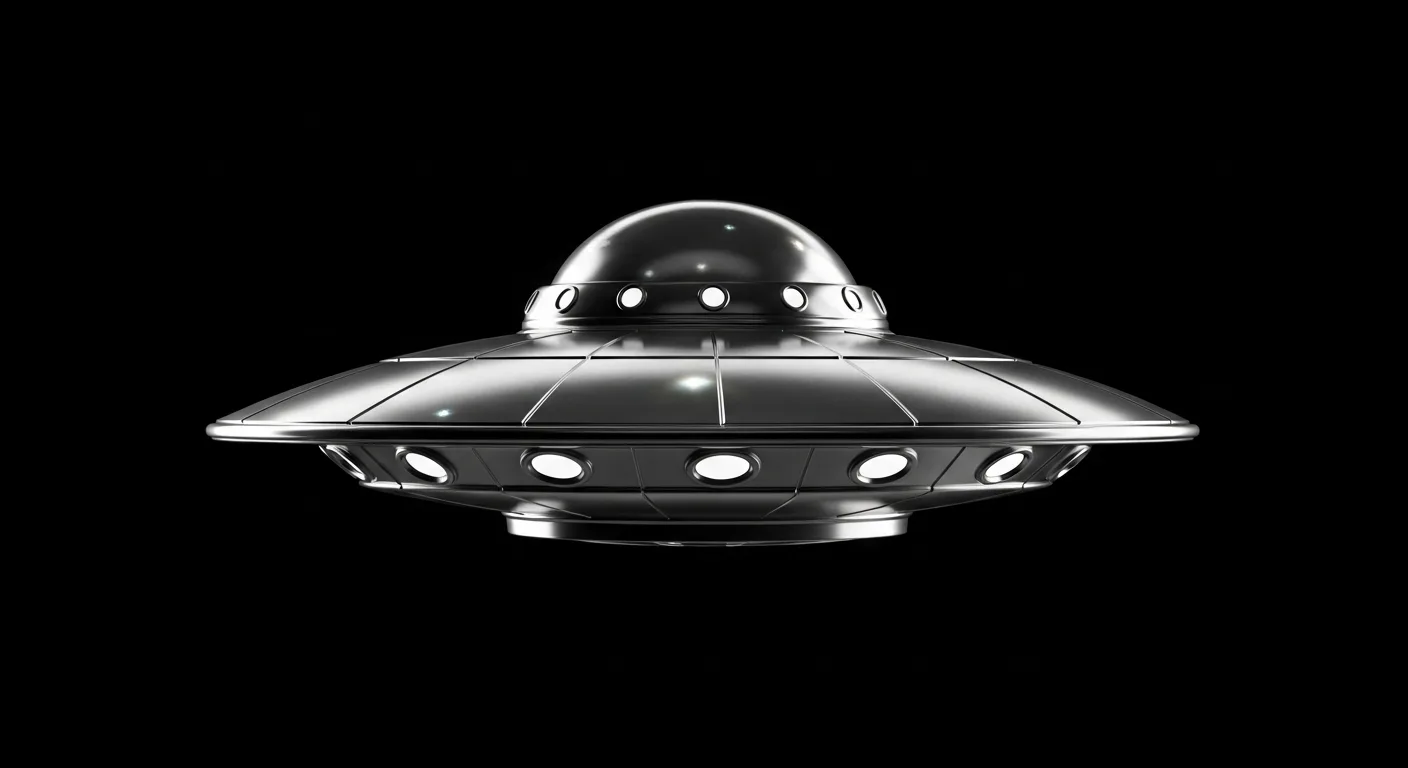
Cornwall juts into the Atlantic like a crooked finger, its granite cliffs dropping into waters that have swallowed ships and sailors for millennia. It is a land shaped by extremes—punishing winds, treacherous tides, and a raw, ancient geology that predates nearly everything else on the British mainland. For centuries, the Cornish coast has inspired awe and dread in equal measure, its remoteness breeding legends of giants, mermaids, and the restless dead. But since the early 1980s, a new kind of legend has taken root along these shores. Witnesses from all walks of life—fishermen hauling nets at dawn, farmers tending clifftop fields, holidaymakers strolling coastal paths—have reported luminous objects moving over the sea and coastline in ways that defy every known principle of aeronautics. These are not fleeting glimpses or ambiguous flickers. They are sustained, repeated observations of structured lights that hover, accelerate, change direction instantaneously, and sometimes appear to enter or emerge from the ocean itself. The Cornwall coastal UFOs represent one of Britain’s most persistent and geographically concentrated clusters of unexplained aerial phenomena, a mystery that has only deepened with the passage of four decades.
A Landscape Made for Mystery
To understand why Cornwall has become such a significant location for UFO activity, one must first appreciate the extraordinary character of the landscape itself. The Cornish peninsula extends roughly eighty miles from the River Tamar to Land’s End, its coastline stretching for over four hundred miles when every cove, headland, and inlet is measured. Much of this coast remains wild and sparsely populated, with long stretches of cliff and moorland accessible only by foot along the South West Coast Path. Villages are small and widely scattered, and once the summer tourists depart, entire sections of the coast can go days without seeing a human visitor.
This remoteness is compounded by remarkably dark skies. Cornwall lies far from the major conurbations of England, and outside the towns of Truro, Falmouth, and Penzance, light pollution is minimal. On a clear night, the Milky Way arcs overhead with a brilliance rarely seen in southern England, and the horizon over the Atlantic is an unbroken line of darkness stretching toward the Americas. These conditions make Cornwall an exceptional location for observing anything unusual in the sky—a stray satellite, a meteor, or something altogether more difficult to explain.
The geology adds its own dimension. Cornwall’s bedrock is predominantly granite, a crystalline igneous rock that some researchers have linked to anomalous electromagnetic phenomena. The county sits atop extensive tin and copper mining networks, some of which extend beneath the seabed, and the interaction between these geological features and the powerful tidal forces of the Atlantic creates an environment that is, at the very least, electromagnetically unusual. Whether this has any bearing on UFO activity is a matter of speculation, but the correlation between granite geology and anomalous sightings has been noted by researchers studying similar phenomena elsewhere in the world.
The sea itself is a crucial element. The waters off Cornwall are deep, cold, and notoriously unpredictable. The continental shelf drops away sharply along the western coast, and submarine canyons cut into the seabed at various points. These underwater features create complex current patterns and temperature gradients that are poorly understood even by oceanographers. Whatever is happening in the skies above Cornwall may have a connection to what lies beneath its waters—a possibility that many witnesses have independently suggested.
The First Wave: 1980s Encounters
The modern era of Cornish UFO sightings is generally dated to the early 1980s, though isolated reports from earlier decades exist in local folklore. What distinguishes the post-1980 period is the frequency and quality of the observations, as well as the willingness of witnesses to come forward and describe what they had seen.
Among the earliest well-documented cases is an incident from the winter of 1981, when a group of fishermen working out of Mevagissey reported a large, luminous object hovering approximately half a mile offshore. The object appeared as an intensely bright, bluish-white light that illuminated the sea surface beneath it, casting a cone of radiance into the dark water. The fishermen watched it for nearly twenty minutes before it accelerated vertically at extraordinary speed and vanished into the overcast sky. None of the men had seen anything comparable in decades of working the sea, and all were visibly shaken when they returned to port.
Robert Trewin, one of the fishermen present that night, described the experience in an interview years later. “We thought at first it might be a helicopter searchlight, maybe the coastguard looking for someone in the water,” he said. “But there was no sound at all. Absolute silence. And the light was wrong—too steady, too bright, and it didn’t move like a searchlight would. It just sat there, perfectly still, lighting up the water like daylight. When it went, it went straight up, faster than anything I’ve ever seen. One second it was there, the next it was a pinprick in the clouds, and then it was gone.”
Throughout the early and mid-1980s, similar reports accumulated along the coast from the Lizard Peninsula to St Ives Bay. The objects described varied in appearance—some were single points of intense light, others appeared as clusters of smaller lights moving in formation, and a few witnesses described darker, structured shapes behind or between the lights. What united these reports was the behaviour of the objects: silent hovering, sudden acceleration, sharp directional changes that would have been impossible for any known aircraft, and a frequent association with the sea.
The Roseland Peninsula Hotspot
If Cornwall as a whole is a UFO hotspot, then the Roseland Peninsula is its epicentre. This quiet, achingly beautiful stretch of coast between Falmouth and Mevagissey has produced more UFO reports per square mile than perhaps any comparable area in Britain. The peninsula’s combination of elevated headlands, sheltered bays, and deep offshore waters seems to create conditions that are particularly conducive to whatever phenomenon is at work.
The village of Portscatho, perched on the eastern shore of the Roseland, has been the origin point for dozens of reports over the years. Residents describe seeing lights over the water so frequently that some have come to regard them as an unremarkable feature of the local environment—something to be noted, perhaps discussed over a pint at the Plume of Feathers, and then set aside as simply part of life on this stretch of coast.
Margaret Pendray, who has lived near Portscatho for most of her life, spoke about the phenomenon with the matter-of-fact practicality typical of rural Cornwall. “The lights come and go,” she said. “Some nights you see nothing, other nights they’re there for hours. Usually over the water, sometimes quite close in, sometimes further out toward the shipping lanes. They’re not ships—I’ve watched ships all my life and I know what navigation lights look like. These are different. They move differently. They’re brighter than they should be. And sometimes they go under the water. Ships don’t do that.”
The “going under” is a detail that recurs with striking frequency in Roseland accounts. Witnesses describe luminous objects descending toward the sea surface and then apparently submerging, their light visible beneath the waves for some seconds before fading. Conversely, objects have been seen emerging from the water, rising smoothly into the air and then departing at speed. These observations have led to persistent speculation about underwater structures or bases, though no sonar survey or diving expedition has produced evidence to support such theories.
One of the most dramatic Roseland incidents occurred on a still summer evening in 1994, when a couple walking the coast path near Nare Head observed three orange-gold lights arranged in a triangular formation hovering silently over the water. The lights maintained their formation with absolute precision, as if fixed to a single invisible structure, and drifted slowly southward along the coast. After several minutes, the triangle tilted on its axis and accelerated out to sea, crossing the horizon in what the witnesses estimated to be no more than two or three seconds. The couple, both retired professionals with no prior interest in UFOs, were so disturbed by what they had seen that they reported it to the local police, who logged the observation but could offer no explanation.
The Sea Connection
The relationship between Cornwall’s UFO phenomena and the Atlantic Ocean is perhaps the most intriguing and least understood aspect of these sightings. While UFO reports from inland locations around the world typically describe objects in the sky, a disproportionate number of Cornish sightings involve the sea as a point of origin, destination, or sustained interaction. This pattern is too consistent to be coincidental, and it raises questions that extend well beyond conventional ufology.
The objects that appear to enter the water do so without the violent splash or surface disturbance that a solid object hitting the sea at speed would produce. Witnesses consistently describe a smooth, controlled descent, as if the object were moving through a medium no more resistant than air. The light sometimes persists beneath the surface, fading gradually as the object presumably moves deeper or switches off its illumination. In a few cases, the light has been seen moving horizontally beneath the water before disappearing entirely, suggesting directed travel rather than simple sinking.
David Hennessy, a retired marine biologist who spent years studying coastal ecosystems in west Cornwall, became an inadvertent student of the phenomena after witnessing an apparent submersion event near Porthcurno in 2003. “I was conducting a nighttime survey of bioluminescent organisms from the clifftop,” he recalled. “I had binoculars and a telescope set up, and I was watching the water very carefully. A light appeared perhaps a mile offshore—bright, steady, white with a slight blue tinge. It descended toward the water and entered it without any splash, any disturbance at all. Through the telescope, I could see the glow continuing beneath the surface, moving slowly northwest. It was visible for perhaps thirty seconds before fading. I’ve spent my career studying things that glow in the sea, and this was nothing biological. The intensity, the colour, the behaviour—it was entirely outside my experience.”
The submarine canyons off the Cornish coast have been cited by some researchers as potentially significant features. These deep cuts in the continental shelf create environments of unusual depth relatively close to shore, and their complex topography could theoretically conceal structures or phenomena not visible to surface observation. The Ministry of Defence has periodically conducted surveys of these underwater features, ostensibly for defence purposes, though the results of such surveys are not publicly available.
The Military Dimension
Cornwall’s relationship with the military adds another layer of complexity to the UFO question. The county hosts several significant defence installations, including the RNAS Culdrose naval air station near Helston, the Goonhilly satellite earth station on the Lizard Peninsula, and various radar and communications facilities scattered along the coast. The presence of these installations has inevitably led to speculation about connections between military activity and UFO sightings.
Some researchers argue that the UFOs are attracted to or monitoring military facilities, drawn by the electromagnetic emissions or strategic significance of these sites. Others take the opposite view, suggesting that what witnesses are seeing is advanced military technology being tested over the relatively unpopulated Cornish coast—experimental aircraft, drones, or weapons systems that operate outside the parameters of known aviation. Neither theory fully accounts for the evidence, and both have vocal proponents and detractors.
What is documented is that military personnel themselves have been among the witnesses. Off-duty service members stationed at Culdrose have privately reported seeing objects that they could not identify as any known aircraft type, though official statements from the base have consistently attributed unusual sightings to conventional explanations such as flares, satellites, or atmospheric phenomena. The reluctance of military witnesses to make formal reports is understandable given the potential impact on their careers, but the consistency of their private accounts adds weight to the civilian testimony.
Freedom of Information requests have revealed that the Ministry of Defence received dozens of UFO reports from the Cornwall area during the 1990s and 2000s, before the official UFO desk was closed in 2009. These reports were typically logged, given cursory analysis, and filed without further investigation. The few that received detailed attention were explained as misidentifications of conventional aircraft, satellites, or astronomical objects, though several files contain marginal notes suggesting that investigators were not entirely satisfied with these explanations.
Patterns in the Dark
Four decades of sightings have allowed researchers to identify certain patterns in the Cornwall phenomena, though these patterns raise as many questions as they answer. The objects appear more frequently during the autumn and winter months, when nights are longer and weather systems moving in from the Atlantic create complex atmospheric conditions. They are seen more often on calm, clear nights than during storms, though there are exceptions. The period between midnight and four in the morning is the most active, though sightings have occurred at all hours, including broad daylight.
The objects display a range of behaviours that suggest intelligence or at least purposeful direction. They hover for extended periods, as if observing something on the surface. They travel in straight lines at speeds that witnesses describe as impossible, crossing miles of sky in seconds. They change direction instantaneously, without the banking turn or deceleration curve that any aerodynamic vehicle would require. They sometimes appear to respond to observation, dimming or departing when spotlights or torches are directed at them. And they frequently appear in the same locations, returning to specific stretches of coast or patches of sea as if these places hold particular significance.
The lights themselves vary in colour and intensity. White and bluish-white are the most commonly reported, followed by orange and amber. Red and green lights are occasionally described, sometimes in combination with white, raising the possibility of confusion with navigation lights on conventional aircraft. However, the behaviour of the objects—particularly the hovering, the silent operation, and the extreme accelerations—consistently falls outside the performance envelope of any known aircraft type, civilian or military.
The Human Element
What gives the Cornwall coastal UFOs their particular weight is not any single spectacular encounter but the sheer volume and diversity of witness testimony accumulated over decades. These are not reports from dedicated UFO enthusiasts scanning the skies with cameras and expectations. They come overwhelmingly from ordinary people going about their ordinary lives who happened to see something they could not explain.
Fishermen have a special credibility in this regard. Men and women who spend their working lives on the sea develop an intimate familiarity with every kind of light and movement that the marine environment can produce—ships, buoys, lighthouses, aircraft, satellites, meteors, bioluminescence, reflections, St Elmo’s fire. When a fisherman with thirty years of experience says they have seen something that does not fit any known category, that testimony carries considerable weight.
Farmers working the clifftop fields of west Cornwall have similarly reported phenomena that their deep knowledge of the local environment cannot account for. Tourism workers, coastguard volunteers, lifeboat crews, and even the occasional off-duty police officer have added their observations to the growing body of evidence. The witnesses share no common demographic profile, no shared ideology or belief system. What they share is geography—they were all in Cornwall, looking at the sky or the sea, when something inexplicable presented itself.
The reluctance of many witnesses to come forward is itself telling. Cornwall is a close-knit community where reputation matters, and the fear of being labelled as eccentric or attention-seeking keeps many observations private. Researchers who have worked in the area estimate that for every sighting that is formally reported, five or ten go unrecorded, mentioned only in private conversations or not at all. The true scale of the phenomenon may be significantly larger than the documented record suggests.
Searching for Answers
Attempts to study the Cornwall phenomena scientifically have been hampered by the unpredictable nature of the sightings and the logistical challenges of monitoring hundreds of miles of remote coastline. Several amateur research groups have conducted sky-watching operations at known hotspot locations, occasionally capturing video or photographic evidence of unusual lights. However, the quality of this evidence has generally been insufficient to satisfy scientific standards, and the footage that does exist is open to multiple interpretations.
More systematic efforts have included the deployment of automated camera systems at key locations along the coast, recording continuously through the night and using motion detection to flag unusual activity. These systems have captured some intriguing footage, including lights that move in ways inconsistent with known aircraft or natural phenomena, but the distance and resolution limitations of the cameras make definitive identification impossible.
The closure of the Ministry of Defence’s UFO desk in 2009 removed the only official mechanism for collecting and analysing reports from the Cornwall area, and since then the documentation of sightings has fallen entirely to civilian researchers and local media. Some investigators have called for a renewed official interest in the phenomena, particularly in light of the United States government’s recent acknowledgment that unidentified aerial phenomena represent a genuine intelligence and safety concern. Whether such interest will materialise in the British context remains to be seen.
A Coast That Watches Back
Cornwall at night is a place of extraordinary atmosphere. The crash of waves against granite, the cry of seabirds, the sweep of a distant lighthouse beam—these are the sounds and sights of a coastline that has shaped human experience for thousands of years. But for those who have witnessed the unexplained lights over these waters, there is something more. There is the unsettling awareness that the coast is not merely being observed but is itself the site of observation, that something of unknown origin and purpose is paying attention to this ancient edge of land.
The Cornwall coastal UFOs do not announce themselves with drama or spectacle. They appear quietly, move with purposeful precision, and depart without explanation. They leave no physical trace, no wreckage, no residue—only the testimony of the people who saw them and the questions that testimony raises. After more than four decades, those questions remain unanswered. The lights continue to appear over the cliffs and the sea, following patterns that suggest intention but reveal nothing of their source or meaning.
What can be said with certainty is that something is happening along the Cornish coast that resists easy explanation. It is not a single event or a brief flap of sightings that can be attributed to media excitement or social contagion. It is a sustained, decades-long pattern of observations by credible witnesses in a geographically specific area, and it shows no sign of diminishing. The fishermen still see the lights when they work the night waters. The clifftop walkers still pause and stare when something moves across the dark horizon in ways that nothing should. And the sea, as always, keeps its secrets.
Sources
- CIA UFO/UAP Reading Room — Declassified CIA documents on UAP
- UK National Archives — UFO Files — MoD UFO investigation records
- British Newspaper Archive — UK press archive