The 1952 Washington D.C. UFO Flap
UFOs flew over the nation's capital on consecutive weekends, prompting fighter jets to scramble.
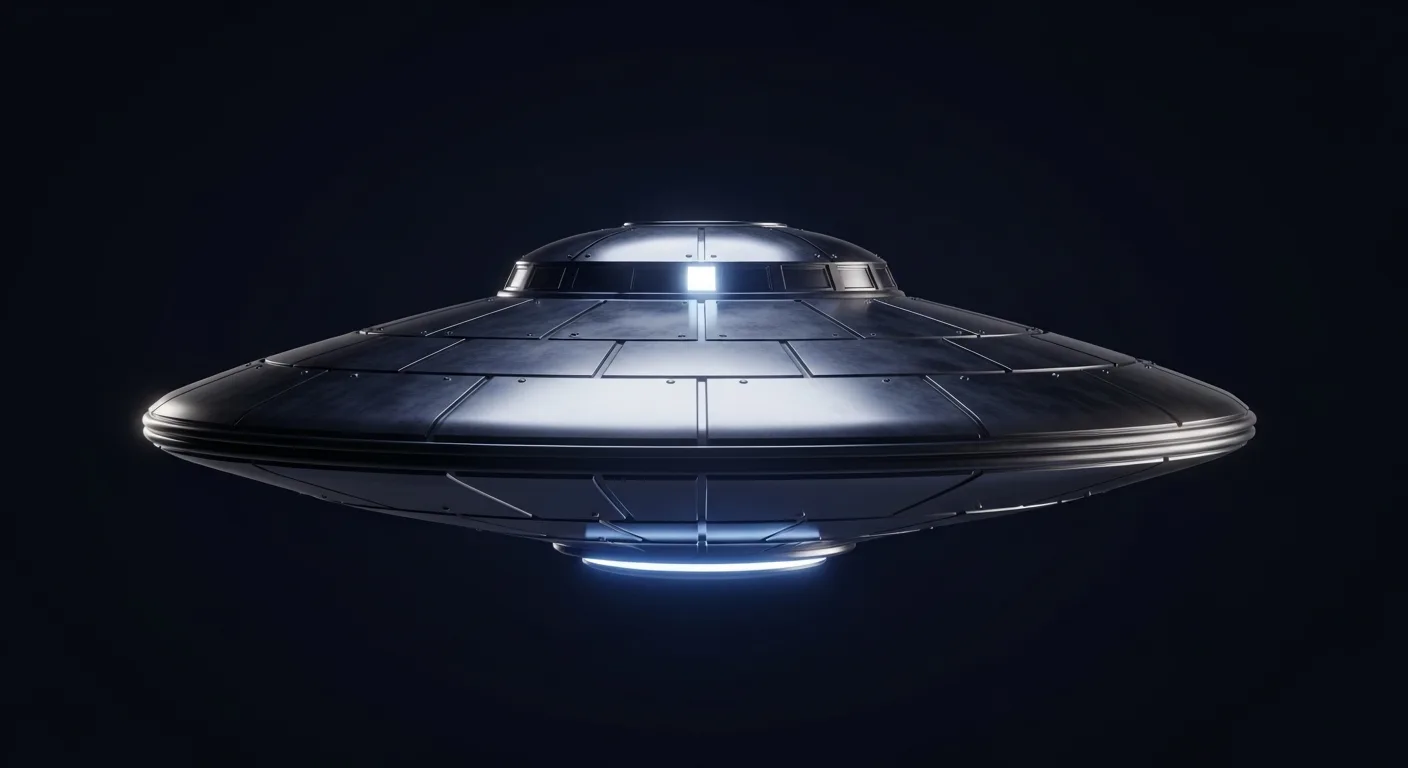
In the sweltering heat of July 1952, something appeared in the skies above Washington, D.C., that would shake the confidence of the most powerful nation on Earth. On two consecutive weekends, unidentified flying objects invaded the restricted airspace over the American capital, tracked on multiple radar screens, observed by seasoned pilots and air traffic controllers, and pursued by military interceptors that found themselves hopelessly outmatched. The incidents triggered the largest press conference the United States Air Force had held since the end of World War II, generated headlines around the world, and left behind a body of evidence that remains among the most compelling in the history of the UFO phenomenon. More than seventy years later, no one has satisfactorily explained what flew over Washington those summer nights.
A Nation Already on Edge
To appreciate the full impact of the Washington sightings, one must understand the atmosphere of the early 1950s. The United States was deep in the grip of Cold War anxiety. The Soviet Union had detonated its first atomic bomb just three years earlier, shattering the American monopoly on nuclear weapons. The Korean War ground on with no end in sight. Senator Joseph McCarthy’s anti-Communist crusade had the nation looking over its shoulder for enemies both foreign and domestic. The skies above Washington were among the most closely monitored airspace in the world, protected by radar installations and fighter squadrons tasked with defending the capital against a Soviet bomber attack that many believed was only a matter of time.
Against this backdrop, a wave of UFO sightings had been building across the country throughout the spring and early summer of 1952. The Air Force’s Project Blue Book, the official government investigation into unidentified flying objects, was logging reports at an unprecedented rate. Sightings came from military bases, civilian airfields, and ordinary citizens in every state. The phenomenon was accelerating, and investigators were struggling to keep pace. But nothing could have prepared them for what was about to unfold over the nation’s capital itself.
The First Weekend: July 19-20
Saturday night, July 19, 1952, began quietly at Washington National Airport. The air traffic control center hummed with routine operations as controllers guided commercial flights in and out of the busy airport. At approximately 11:40 PM, senior air traffic controller Edward Nugent noticed a cluster of seven slow-moving objects on his radar screen. The targets were situated to the southeast of the city, in an area where no known aircraft were operating. Nugent called over his supervisor, Harry Barnes, who studied the returns with growing unease.
Barnes was no novice. He had spent years reading radar screens and could distinguish between genuine targets and the various anomalies that occasionally produced false returns—weather inversions, flocks of birds, atmospheric ducting. What he saw on the scope that night was none of those things. The objects were producing strong, solid returns consistent with metallic craft. They moved with apparent purpose, holding formation at times, then breaking apart to travel independently at speeds Barnes estimated between one hundred and several hundred miles per hour. Most disturbingly, some of the targets were positioned directly over the White House and the Capitol building, deep within the most heavily restricted airspace in the country.
Barnes immediately contacted the radar center at Andrews Air Force Base, located just ten miles to the southeast. The controllers there confirmed that they too were tracking unidentified objects on their scopes. A third radar installation, the Air Route Traffic Control center at Washington National, independently verified the targets. Three separate radar systems, operated by different teams at different locations, were all painting the same picture: unknown craft were circling over the heart of the American government.
As the radar operators worked to make sense of what they were seeing, visual confirmations began pouring in. The crew of a Capital Airlines flight departing Washington spotted mysterious lights above the city and radioed their observations to the tower. Another commercial pilot, Captain S.C. Pierman of Capital Airlines, was held on the runway while controllers tracked an object on radar heading directly toward his aircraft. As Pierman watched, a brilliant light streaked across the sky in the exact position indicated by the radar. Over the following fourteen minutes, Pierman reported six more lights that behaved unlike any aircraft he had ever seen, executing sharp turns and sudden acceleration that defied the capabilities of any known technology.
Staff Sergeant Charles Davenport at Andrews Air Force Base observed an orange-red light in the southern sky that remained stationary for a time before moving away at incredible speed. Other military personnel at Andrews reported similar sightings throughout the night. The lights appeared to hover, dart, and reverse direction with an agility that no conventional aircraft could match.
Barnes, increasingly alarmed, contacted the Air Force’s Air Defense Command and requested interceptors. The response was agonizingly slow. It was not until approximately 3:00 AM that a pair of F-94 Starfire jet interceptors finally arrived from Newcastle Air Force Base in Delaware. By the time the fighters reached the capital, the objects had vanished from the radar screens, as if aware they were being pursued. The interceptors circled the area fruitlessly before returning to base. Within minutes of their departure, the objects reappeared on radar, resuming their leisurely tour of the restricted zone. This cat-and-mouse game continued until dawn, when the objects finally disappeared for good as the morning sun rose over the Potomac.
A Week of Tension
The events of July 19-20 created an immediate sensation, though the full scope of what had occurred was not immediately clear to the public. Newspapers ran stories about mysterious lights over Washington, but the Air Force offered no comment, scrambling internally to develop an explanation for what had happened. Behind closed doors, military and intelligence officials were deeply troubled. If the objects were Soviet aircraft, the implications were terrifying—it would mean that the enemy possessed technology capable of penetrating the most heavily defended airspace in the Western world with impunity. If they were not Soviet aircraft, then the question of what they actually were became even more unsettling.
Throughout the following week, the atmosphere at Washington National Airport and Andrews Air Force Base was electric with anticipation. Controllers who had been on duty the previous Saturday found themselves scanning their screens with heightened vigilance, half-expecting the objects to return. Pilots approaching and departing Washington kept their eyes on the sky. The military quietly arranged for interceptors to be on higher alert, ready to scramble at shorter notice if the visitors came back.
Albert Chop, the Air Force’s civilian press liaison at the Pentagon, had been deeply skeptical of UFO reports when he first took the job. The events of July 19-20 changed his mind. Chop had been present in the radar room during the sightings and had seen the returns with his own eyes. He would later state unequivocally that the objects were not caused by weather phenomena, equipment malfunction, or any other conventional explanation. What Chop witnessed that night convinced him that something genuinely unknown was operating in American airspace.
The Second Weekend: July 26-27
Exactly one week after the first incursion, they returned.
On the evening of Saturday, July 26, radar operators at Washington National Airport once again detected unidentified targets on their screens. The objects appeared at approximately 8:15 PM, earlier than the previous weekend, while the summer sky was still bright with lingering daylight. Within minutes, multiple radar installations were tracking the returns, and visual sightings began accumulating from across the metropolitan area. The objects moved in the same deliberate, controlled patterns as before, hovering over sensitive government buildings and military installations before darting away at extraordinary speeds.
This time, the Air Force was determined to get interceptors on scene quickly. F-94 Starfire jets were scrambled from Newcastle Air Force Base with orders to investigate and, if possible, identify the objects. The first fighters arrived over Washington shortly before midnight and immediately found themselves in the midst of something unprecedented.
Lieutenant William Patterson, piloting one of the F-94s, reported that he was suddenly surrounded by a ring of enormous bluish-white lights. The objects closed in on his aircraft from all directions, forming a tight circle around the fighter. Patterson radioed Andrews tower in a voice tight with controlled alarm, asking for instructions. The controller on duty, who could see both Patterson’s aircraft and the surrounding objects on his radar screen, later described a moment of helpless uncertainty. No protocol existed for this situation. After a tense pause, the objects broke formation and streaked away at speeds that no interceptor could hope to match.
Patterson pursued the objects but found it futile. The lights accelerated beyond anything in his experience, leaving his jet behind as if it were standing still. Other interceptor pilots reported similar encounters—objects that appeared as brilliant lights, maneuvered with impossible agility, and vanished the moment a pursuit became serious. One pilot described attempting to close on a target only to watch it execute an instantaneous reversal of direction, a maneuver that would have subjected any physical craft to gravitational forces sufficient to destroy it and kill any occupant.
The objects remained in the area throughout the night, appearing and disappearing on radar at will, seemingly toying with the military response. Commercial pilots continued to report visual sightings, and civilian witnesses on the ground observed strange lights performing aerial displays that defied explanation. By dawn on July 27, the objects had once again departed, leaving behind a city full of shaken witnesses and a military establishment struggling to maintain its composure.
The Press Conference
The back-to-back weekend incursions over the capital generated a firestorm of public attention. Newspapers ran banner headlines. Radio stations broadcast breathless reports. Telephone switchboards at the Pentagon were overwhelmed with calls from concerned citizens and demanding reporters. The pressure for an official explanation became irresistible, and on July 29, 1952, the Air Force convened the largest press conference it had held since the end of World War II.
Major General John A. Samford, the Air Force’s Director of Intelligence, faced a room packed with journalists and cameramen. His task was unenviable: provide a reassuring explanation for events that had no reassuring explanation. Samford was a measured, articulate officer who chose his words with evident care. He acknowledged that the radar returns were real and that visual sightings had occurred. He then offered the official explanation: the radar targets, he suggested, were most likely caused by temperature inversions—layers of warm air sitting atop cooler air, which could bend radar beams and create false returns on the screen.
The temperature inversion theory was not inherently implausible. Such atmospheric conditions can indeed produce anomalous radar returns, and Washington in late July was certainly experiencing the kind of hot, humid weather that could produce inversions. However, the explanation was immediately challenged by the very men who had operated the radar equipment. Harry Barnes, the senior controller at Washington National, publicly stated that he had been tracking weather-related anomalies on radar for years and knew exactly what they looked like. The returns on July 19-20 and July 26-27 were nothing of the sort. They were hard, defined targets that moved with purpose and intelligence. Temperature inversions did not execute controlled turns, maintain formation, or flee from approaching interceptors only to return when the interceptors departed.
The commercial and military pilots who had visually observed the objects were equally dismissive. Experienced aviators who had spent thousands of hours in the cockpit were not likely to confuse atmospheric phenomena with structured craft displaying brilliant illumination and performing impossible maneuvers. Captain Pierman, who had observed seven objects during the first weekend, was emphatic that what he had seen was solid and real.
Despite the widespread skepticism, the Air Force’s temperature inversion explanation became the official conclusion, and the story gradually faded from the front pages as new crises demanded the public’s attention. But the men who had been in the radar rooms and cockpits that July never forgot what they had witnessed, and many went to their graves insisting that the official explanation was a deliberate falsehood.
The Robertson Panel
The Washington sightings had consequences that extended far beyond the news cycle. The Central Intelligence Agency, alarmed by the national security implications of the incidents, convened a secret panel of scientists in January 1953 to evaluate the UFO phenomenon. Known as the Robertson Panel after its chairman, physicist Howard P. Robertson, the group spent four days reviewing the evidence, including the Washington radar data and pilot testimony.
The panel’s classified recommendations were revealing—not for what they concluded about UFOs, but for what they revealed about the government’s priorities. Rather than calling for increased investigation, the panel recommended that public interest in UFOs be actively discouraged through a program of debunking and ridicule. The concern was not that UFOs posed a direct threat, but that the flood of UFO reports was clogging military communication channels and could potentially be exploited by the Soviet Union to create mass hysteria or mask a genuine attack. The panel recommended that UFO reports be stripped of their “aura of mystery” through media campaigns and that civilian UFO research groups be monitored for subversive tendencies.
A document released on August 7, 2026 sharpens the contrast. Among the films the Robertson Panel weighed in January 1953 were the Montana footage of 1950 and the Utah footage of 1952, and the U.S. Naval Photographic Interpretation Center’s own analysis of those two films, dated to the same year and classified until now, reached no such comfortable conclusion. Its analysts recorded that the objects showed characteristics inconsistent with natural phenomena or with commonly known aerospace technologies, that they could not explain them under the conditions in which the photography was taken, and that they could not recognise them as man-made. They asked for a better-resourced investigation and did not get one.
The point is not that the Navy had proof and the Panel suppressed it; the Navy had a failure to identify, which is a much weaker thing. The point is that the government’s technical arm could not explain two of its best pieces of evidence in the same year its policy arm decided the public should be encouraged to stop asking. Those two facts sat in the same administration, and only one of them was made public.
The Robertson Panel’s recommendations effectively set the tone for official UFO policy for the next two decades. The Air Force adopted an increasingly dismissive posture toward UFO reports, and witnesses—including military personnel—found themselves subjected to ridicule and career consequences for speaking publicly about their experiences. The chilling effect was profound, and countless sightings went unreported as a result.
The Radar Evidence Reconsidered
The radar data from the 1952 Washington incidents has been analyzed and debated for more than seven decades, and it remains some of the most compelling instrumental evidence ever collected in a UFO case. The fact that three independent radar systems simultaneously tracked the same objects effectively eliminates equipment malfunction as an explanation. The correlation between radar returns and visual sightings by trained observers further strengthens the case that something genuinely physical was present in the sky.
The behavior of the objects as recorded on radar was particularly telling. They demonstrated apparent intelligence, changing speed and direction in ways that suggested purposeful control rather than the random drift of atmospheric anomalies. Their tendency to vacate areas when interceptors approached and return when the fighters departed implied awareness of and responsiveness to human military activity. Their speeds—estimated at times to exceed seven thousand miles per hour, with instantaneous acceleration from a hovering position—placed them far beyond any technology known to exist in 1952 or, for that matter, today.
Attempts to explain the radar returns as products of atmospheric anomalies have never fully accounted for the totality of the evidence. While temperature inversions can produce radar ghosts, they do so in characteristic ways that experienced operators can recognize. The returns in the Washington case did not behave like inversion artifacts. They maintained consistent tracks, responded to external stimuli, and correlated with independent visual observations—none of which are features of weather-related radar anomalies.
Legacy and Significance
The 1952 Washington D.C. UFO flap stands as a watershed moment in the history of the phenomenon. No previous UFO event had so directly challenged the authority and competence of the United States military, and none had taken place in such a symbolically charged location. The sight of unknown craft circling over the White House and Capitol—the very symbols of American power—while military interceptors chased uselessly behind them sent a message that was impossible to ignore: whatever these objects were, they operated with complete impunity, unconcerned by the most powerful air defense system in the world.
The incidents also marked a turning point in the government’s relationship with the UFO question. Before July 1952, the Air Force had treated UFO reports with cautious interest, investigating them through Project Blue Book with at least a nominal commitment to open-minded inquiry. After Washington, the emphasis shifted decisively toward explanation and debunking. The Robertson Panel’s recommendations codified this approach, and for the next two decades, the official posture was one of denial and dismissal, regardless of the quality of the evidence.
For the witnesses—the controllers, pilots, and military personnel who had seen the objects with their own eyes and tracked them on their instruments—the experience was transformative. Many spent the rest of their lives grappling with the implications of what they had witnessed and the frustration of having their testimony dismissed by the very institutions they served. Harry Barnes remained adamant until the end of his life that the objects he tracked were real, solid, and under intelligent control. Albert Chop, the Pentagon press liaison who had entered the story as a skeptic, left it as a believer, convinced that the Air Force was concealing the truth about what it knew.
The Washington flap continues to generate discussion and research. Modern radar experts who have reviewed the historical data largely agree that the returns were not consistent with temperature inversions. The case has been featured in numerous documentaries, books, and government reports, including the more recent Pentagon acknowledgments of unidentified aerial phenomena that have renewed public interest in the question.
What Flew Over Washington
More than seven decades after those sweltering July nights, the fundamental question remains unanswered. The objects that appeared over the nation’s capital exhibited characteristics that defied every conventional explanation offered at the time and defy them still. They were tracked on radar, observed by trained professionals, pursued by military aircraft, and witnessed by hundreds of ordinary citizens. They demonstrated speeds and maneuverability beyond any known technology. They appeared to act with intelligence and purpose, choosing the most provocative possible location for their display and responding to human activity with what could only be described as awareness.
The 1952 Washington D.C. UFO flap endures as one of the most thoroughly documented and least satisfactorily explained episodes in the long history of unidentified aerial phenomena. The evidence collected during those two weekends—radar tracks, pilot testimony, controller observations, and civilian reports—forms a body of data that resists easy dismissal. Something was in the sky over Washington in July 1952. It was not weather. It was not equipment error. It was not mass hallucination. Whatever it was, it came, it demonstrated capabilities that exceeded anything in the human arsenal, and it departed on its own terms, leaving behind a mystery that the passing decades have done nothing to resolve.
The skies above the capital have been quiet since those nights, at least as far as the public record is concerned. But the questions raised in July 1952 still hang in the air, as persistent and elusive as the objects themselves, waiting—like so much else in the story of unidentified flying objects—for answers that may never come.
Sources
- Project Blue Book — National Archives — USAF UFO investigation files, 1947–1969
- CIA UFO/UAP Reading Room — Declassified CIA documents on UAP
- Chronicling America — Historic US newspapers (1690–1963)