1952 Washington D.C. UFO Flap
For two consecutive weekends in July 1952, UFOs invaded Washington airspace, appearing on radar at multiple facilities and being seen by pilots. Fighter jets were scrambled over the nation's capital in America's most significant UFO event.
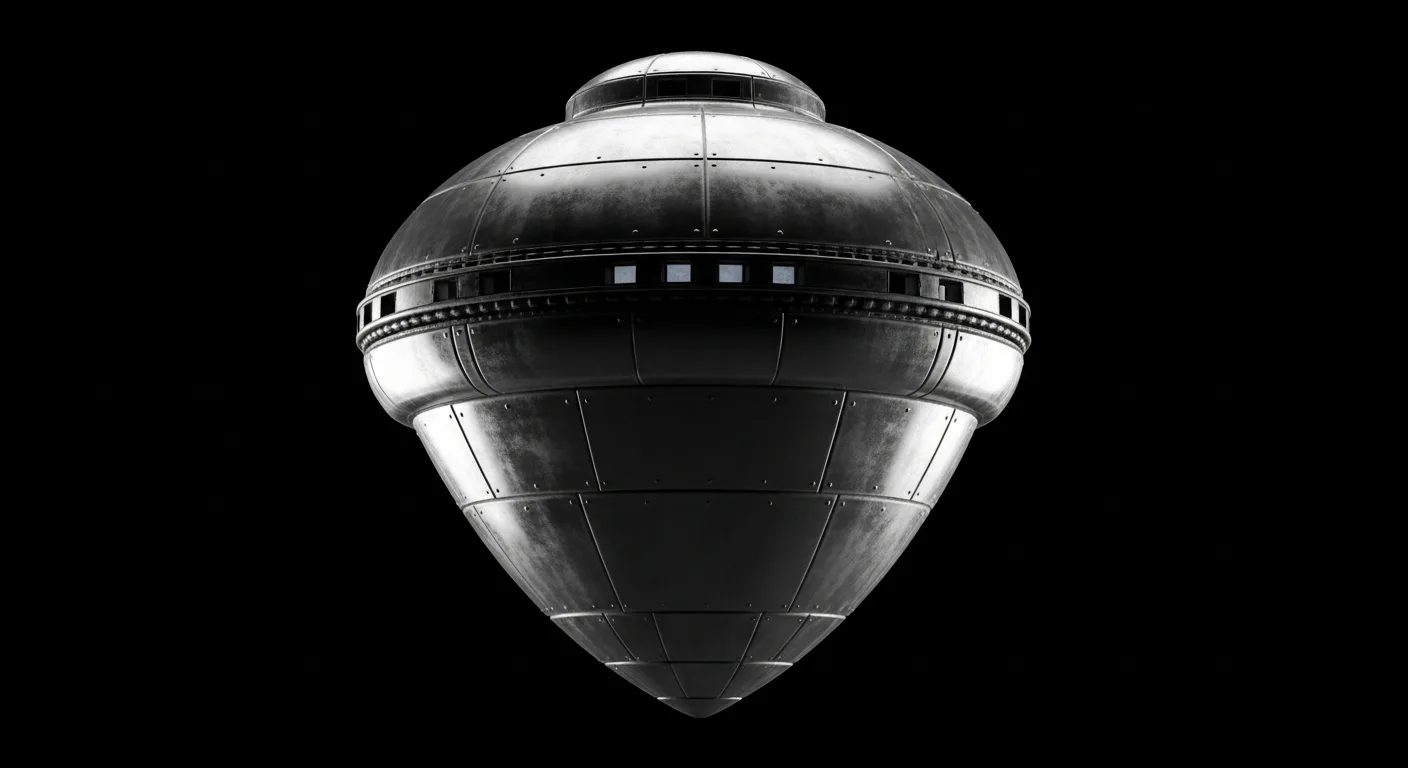
In the summer of 1952, the Cold War was at a pitch of intensity that made every shadow seem threatening and every unexplained event a potential harbinger of catastrophe. The Soviet Union had detonated its first atomic bomb three years earlier. The Korean War ground on in bloody stalemate. Senator Joseph McCarthy’s anti-Communist crusade was transforming American political life into a theater of suspicion and accusation. And the skies over the United States were watched with an anxious vigilance born of the knowledge that the nation’s enemies now possessed the means to deliver destruction from above. It was against this backdrop of geopolitical dread that something extraordinary happened over the most sensitive airspace in the Western world. On two consecutive weekends in July, unidentified objects appeared over Washington, D.C.---tracked on radar at multiple facilities, observed by experienced pilots and air traffic controllers, and chased by armed fighter jets scrambled from military bases. The events prompted the largest Pentagon press conference since the end of World War II and changed the way the United States government would handle the UFO question for generations to come.
The First Weekend: July 19-20
The evening of Saturday, July 19, 1952, was warm and humid in Washington, the kind of midsummer night when the capital’s notorious heat settles over the city like a damp blanket. At Washington National Airport---now Ronald Reagan Washington National Airport---air traffic controller Edward Nugent was monitoring his radar scope at approximately 11:40 PM when he noticed a cluster of seven targets in an area southeast of the city. The targets were not following any established airway, were not transmitting identification signals, and were not behaving like any conventional aircraft Nugent had ever tracked.
Nugent alerted his supervisor, Harry Barnes, the senior air traffic controller on duty that night. Barnes was a veteran of radar operations, and what he saw on the scope immediately commanded his full attention. The unknown targets were moving at varying speeds---sometimes drifting slowly, sometimes accelerating to extraordinary velocities. Barnes later estimated that some of the objects moved at speeds exceeding 7,000 miles per hour, far beyond the capability of any aircraft in existence in 1952 or, for that matter, for decades afterward.
Barnes quickly confirmed that the targets were not the result of equipment malfunction. He checked the radar equipment, consulted with technicians, and contacted the control tower, where controller Joe Zacko had independently picked up the same targets on a separate radar system. The objects were real---or at least, they were producing genuine radar returns on multiple independent systems simultaneously.
The situation escalated rapidly. At Andrews Air Force Base, located just ten miles southeast of the Capitol, radar operators were tracking the same objects on their own equipment. The targets appeared on scopes at three separate facilities---Washington National, Andrews AFB, and a third radar installation---providing triangulated confirmation that something was physically present in the airspace over the nation’s capital.
Visual confirmation came from multiple sources. Commercial airline pilots flying in and out of Washington reported seeing brilliant, unexplained lights maneuvering in the sky. Captain S.C. Pierman, piloting a Capital Airlines flight, observed six bright objects during his approach and remained in radio contact with Barnes at Washington National, who confirmed that the lights Pierman was seeing corresponded precisely to the targets on his radar scope. The correlation between visual observation and radar tracking was exact---what the pilots saw with their eyes, the controllers could see on their screens, and the positions matched.
The objects displayed behavior that was simultaneously fascinating and deeply unsettling. They moved freely through the restricted airspace over the White House, the Capitol Building, and the Pentagon---the most prohibited flight zones in the United States. They appeared to be intelligently controlled, changing direction with purpose, hovering over specific locations, and accelerating away when approached. At no point did they transmble signals or attempt communication. They simply occupied the airspace as if they had every right to be there, indifferent to the military and civilian air traffic systems that governed the movement of every other object in the sky.
The Jet Scramble
As the night wore on and the scope of the incursion became apparent, the decision was made to scramble interceptor aircraft. F-94 Starfire jet fighters were launched from Newcastle Air Force Base in Delaware, armed and authorized to engage if necessary. The scramble was a measure of the gravity with which the situation was being regarded---fighter jets were being sent into combat configuration over the nation’s capital in response to unknown intruders.
The initial results of the intercept were inconclusive and deeply frustrating. As the F-94s approached the area where the objects had been tracked, the radar targets disappeared. The jets circled the empty airspace, found nothing, and eventually returned to base as their fuel dwindled. Within minutes of their departure, the objects reappeared on radar, resuming their leisurely patrol of Washington’s skies as if the military response had been a minor and temporary inconvenience.
This pattern---objects vanishing upon the approach of interceptors and reappearing after their departure---was one of the most disturbing aspects of the entire episode. It suggested either an intelligence capable of monitoring military communications and responding accordingly, or a technology so advanced that it could detect approaching aircraft and take evasive action instantaneously. Either possibility was profoundly unsettling to military leaders already stretched thin by Cold War anxieties.
A second flight of interceptors was scrambled later in the night, with slightly different results. Lieutenant William Patterson, piloting one of the F-94s, reported that he was surrounded by a ring of brilliant blue-white lights that closed in on his aircraft from all directions. Patterson later described the experience as terrifying, and he requested permission to fire on the objects. Before authorization could be given, the lights pulled away and disappeared. Patterson’s account was corroborated by radar, which showed the objects converging on his aircraft’s position before withdrawing.
The Week Between
Dawn on July 20 brought an end to the immediate crisis, but the implications of the night’s events rippled through the military and intelligence establishments with gathering force throughout the following week. The radar data was analyzed, witness statements were collected, and urgent discussions took place at the highest levels of the Air Force and the Pentagon about what had happened and what it meant.
The press, inevitably, got hold of the story. Headlines across the country proclaimed that UFOs had invaded Washington’s airspace, that jets had been scrambled to chase flying saucers over the capital, and that the government had no explanation for what had occurred. Public anxiety, already heightened by Cold War tensions, spiked sharply. Telephone lines at the Pentagon, at newspapers, and at military installations were overwhelmed with calls from citizens demanding information and reassurance.
For the staff of Project Blue Book, the Air Force’s UFO investigation program, the Washington sightings presented both a crisis and an opportunity. Captain Edward Ruppelt, who headed Blue Book at the time, was eager to investigate the case thoroughly, recognizing its potential significance. However, bureaucratic obstacles and the confusion of the moment conspired to limit his ability to conduct the kind of immediate, rigorous investigation the case warranted. Ruppelt would later write about the Washington events with evident frustration, describing the organizational dysfunction that hampered his efforts to get to the truth.
The Second Weekend: July 26-27
If any hope remained that the events of July 19-20 were a one-time anomaly---a freak atmospheric condition, an equipment malfunction, a collective misperception---that hope was extinguished on the evening of Saturday, July 26, when the objects returned.
The second weekend’s events followed a pattern remarkably similar to the first. Radar operators at Washington National Airport began tracking unknown targets in the late evening, and the contacts were confirmed by Andrews Air Force Base and other facilities. Once again, the objects moved through restricted airspace with apparent impunity. Once again, commercial and military pilots reported visual sightings that correlated with the radar tracks. And once again, the objects displayed flight characteristics---extreme speed, sudden stops, instantaneous changes of direction---that were utterly inconsistent with any known aircraft or natural phenomenon.
The military response on the second weekend was swifter and more forceful. F-94 Starfire jets were scrambled from Newcastle with less hesitation than the previous week, and the interceptors managed to make closer approaches to some of the objects before they disappeared. In several instances, pilots reported brief visual contact with bright lights that rapidly outpaced their aircraft---the F-94, one of the fastest interceptors in the Air Force inventory, was left behind as if standing still.
The second weekend’s events were, if anything, even more alarming than the first. The objects’ return suggested purpose rather than accident. Whatever was appearing over Washington was doing so repeatedly, deliberately, and with apparent awareness of and indifference to the military forces arrayed against it. The pattern of vanishing when interceptors approached and reappearing after they departed was repeated, reinforcing the impression of intelligent evasion.
By the early hours of Sunday, July 27, the situation had reached a level of intensity that demanded a response commensurate with the scale of the events. The nation’s capital had been overflown by unknown objects on two consecutive weekends, the Air Force had been unable to intercept or identify them, and public anxiety was approaching a crisis point. Something had to be said, and someone with authority had to say it.
The Press Conference
On July 29, 1952, Major General John A. Samford, Director of Intelligence for the United States Air Force, convened a press conference at the Pentagon that would become one of the most significant public statements in the history of the UFO phenomenon. It was the largest press conference held at the Pentagon since the end of World War II---a measure of the intense media and public interest generated by the Washington sightings.
Samford was a polished and authoritative figure, chosen for the briefing precisely because he projected the calm competence needed to reassure a rattled nation. His explanation for the Washington events centered on a weather phenomenon known as temperature inversion---a condition in which a layer of warm air sits atop a layer of cooler air, creating atmospheric conditions that can bend radar beams and produce false targets on radar scopes. Samford suggested that temperature inversions over Washington during the two weekends in question could account for the radar returns and that the visual sightings by pilots might be attributable to stars, meteors, or the lights of the city reflected off haze layers.
The explanation was delivered with confidence and authority, and it succeeded in its primary objective of calming public anxiety. Major newspapers generally accepted Samford’s account, and the immediate crisis of public concern subsided. But among those who had been present for the events---the radar operators who had tracked the objects, the pilots who had chased them, the air traffic controllers who had correlated visual sightings with radar returns---the temperature inversion explanation was received with skepticism bordering on contempt.
Harry Barnes, the senior controller at Washington National, was blunt in his rejection of the weather explanation. He pointed out that he and his colleagues were intimately familiar with the effects of temperature inversions on radar and encountered them regularly in their work. The targets they had tracked on July 19-20 and July 26-27 were nothing like the fuzzy, ephemeral returns produced by atmospheric anomalies. They were solid, well-defined targets that moved with purpose and intelligence. Barnes was professionally certain that he had been tracking real objects, not weather ghosts.
The pilots who had been scrambled to intercept were equally dismissive. Lieutenant Patterson, who had been surrounded by the objects, had seen them with his own eyes---no temperature inversion could produce the ring of blue-white lights that had closed in on his aircraft. The commercial pilots who had reported sightings had correlated their visual observations with the radar tracks in real time, a correlation that weather anomalies could not plausibly produce.
Edward Ruppelt and Project Blue Book
Captain Edward Ruppelt, head of Project Blue Book, occupied a uniquely frustrating position during the Washington events. As the Air Force’s chief UFO investigator, he was the person best positioned to conduct a thorough analysis of the case, but institutional obstacles repeatedly hampered his efforts.
Ruppelt later described the organizational chaos surrounding the Washington sightings in his 1956 book, “The Report on Unidentified Flying Objects.” He detailed how he was unable to secure transportation to Washington during the crucial hours of the sightings, how communication breakdowns prevented him from coordinating with radar operators and pilots in real time, and how the institutional pressure to find a conventional explanation overrode the imperative to follow the evidence wherever it led.
Despite these obstacles, Ruppelt’s analysis of the Washington case was rigorous and honest. He acknowledged that the temperature inversion explanation was, at best, incomplete. While inversions were indeed present over Washington during both weekends, Ruppelt noted that such conditions were common in the summer months and did not ordinarily produce the kind of sustained, well-defined radar returns that controllers had reported. He also noted the correlation between radar tracks and visual sightings, which no weather phenomenon could adequately explain.
Ruppelt’s files on the Washington case remain among the most detailed and carefully compiled documents in Project Blue Book’s archives. His personal assessment, expressed both in his book and in private communications, was that something genuinely anomalous had occurred over Washington in July 1952---something that could not be explained by weather, equipment malfunction, or misidentification of conventional objects.
The Robertson Panel: Consequences
The Washington sightings had consequences that extended far beyond the events themselves. The public alarm generated by the case---and the military’s embarrassing inability to explain or control the situation---triggered a response from the Central Intelligence Agency that would shape UFO policy for decades.
In January 1953, the CIA convened a panel of scientists, chaired by physicist Howard P. Robertson, to evaluate the UFO evidence and recommend a course of action. The Robertson Panel met for four days, reviewed selected UFO cases including the Washington sightings, and issued recommendations that would fundamentally alter the government’s approach to the phenomenon.
The panel’s primary conclusion was not that UFOs were unreal or unimportant, but that public interest in them posed a threat to national security by clogging military communications channels and creating a climate of anxiety that could be exploited by hostile powers. The panel recommended a program of public education---or, more accurately, public debunking---designed to strip UFOs of their aura of mystery and reduce public interest in reporting sightings.
The Robertson Panel’s recommendations were implemented with thoroughness and efficiency. In the years that followed, the Air Force’s public posture on UFOs shifted from cautious investigation to active dismissal. Witnesses were ridiculed, sightings were explained away with increasingly implausible cover stories, and the institutional culture around UFO investigation became one of debunking rather than inquiry. The pattern of official dismissal that would frustrate UFO researchers for the next half century had its origins in the panicked aftermath of the Washington sightings.
A Capital Under Siege
The 1952 Washington D.C. UFO flap remains, by virtually any measure, the most significant UFO event in American history. No other case combines so many elements of evidential weight: multiple independent radar confirmations across several facilities, visual sightings by trained pilots correlated with radar tracks in real time, military intercept attempts that produced both radar and visual contact, two separate episodes separated by exactly one week, and a level of official response---including the largest Pentagon press conference in seven years---that revealed the depth of institutional concern.
The case also illustrates, with painful clarity, the gap between what the evidence shows and what official channels are willing to acknowledge. The temperature inversion explanation satisfied the immediate need for public reassurance, but it did not satisfy the witnesses, the investigators, or the evidence itself. Something appeared over Washington on those July nights---something real enough to register on multiple radar systems, bright enough to be seen by experienced pilots, and fast enough to outrun the best interceptors in the Air Force inventory. The official explanation addressed the public’s anxiety. It did not address the phenomenon.
More than seventy years later, the Washington events continue to challenge and disturb. The radar data, the pilot reports, the controller testimony, and the military response all point to the presence of unknown objects in the most restricted airspace on Earth, performing feats that no known technology could replicate. The jets that scrambled into the summer darkness over the Capitol found something they could not catch, could not identify, and could not explain. And the government that sent them, faced with evidence it could not accommodate, chose reassurance over truth---a choice whose echoes are still being felt in the ongoing debate over what flies in our skies and what our institutions are willing to tell us about it.
The lights that danced over Washington in July 1952 were seen by radar operators, by pilots, by controllers, and by the public. They prompted the scrambling of armed fighters over the nation’s capital. They generated the largest military press conference in years. And they were never explained. In the long history of the UFO phenomenon, no other case so starkly demonstrates the collision between the evidence of the senses and the demands of institutional authority. Whatever was in the skies over Washington those summer nights, it has not been forgotten---by the witnesses who saw it, by the researchers who have studied it, or by the institutions that tried, and failed, to make it go away.
Sources
- Project Blue Book — National Archives — USAF UFO investigation files, 1947–1969
- CIA UFO/UAP Reading Room — Declassified CIA documents on UAP
- Chronicling America — Historic US newspapers (1690–1963)