Edwards AFB UFO
Multiple witnesses at Edwards Air Force Base watched a UFO for hours as it performed impossible maneuvers. Despite occurring at America's premier flight test center, the case was classified and downplayed.
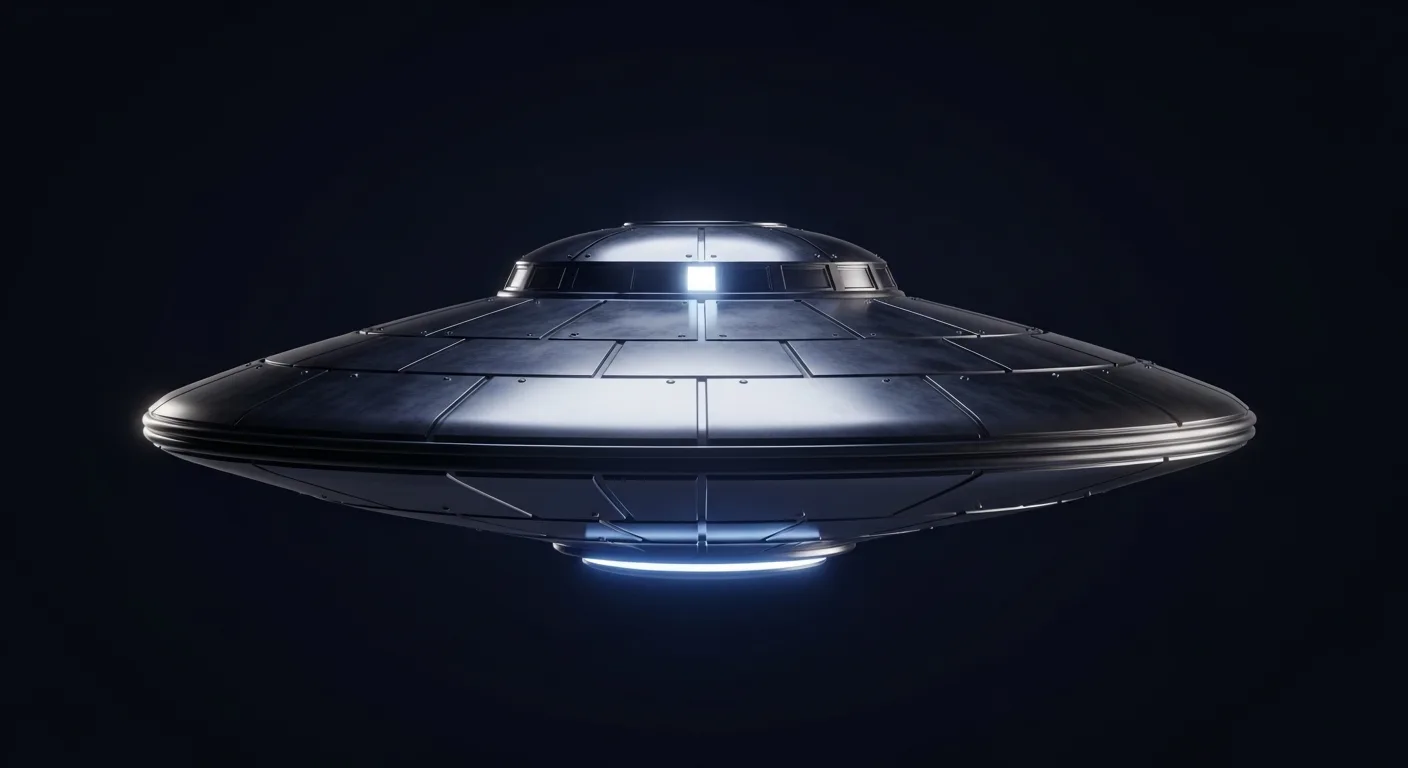
On the morning of October 7, 1965, personnel at Edwards Air Force Base witnessed something that should have been impossible. For several hours, a metallic, disc-shaped object performed aerial maneuvers that defied the capabilities of any known aircraft, hovering motionless one moment and accelerating at tremendous speed the next. The location made the sighting particularly significant: Edwards was America’s premier flight test facility, home to the nation’s most experienced test pilots and aeronautical engineers. If anyone could identify an unusual aircraft, it was the people stationed there. They could not identify this one.
Edwards Air Force Base sprawls across the Mojave Desert in Southern California, its dry lakebeds providing natural runways that have witnessed some of aviation’s greatest achievements. Chuck Yeager broke the sound barrier there. The X-15 rocket plane made its historic flights there. Every experimental aircraft in the American arsenal had been tested at Edwards. The personnel stationed at the base knew aircraft the way surgeons know anatomy.
The Witnesses
The witnesses to the October 7 sighting included test pilots, flight engineers, ground crew, and support personnel. These were men who had spent their careers evaluating aircraft performance, who understood the physical limits of aerodynamics, and who could distinguish between conventional aircraft and something else entirely. Many had observed hundreds of test flights, including highly classified experimental vehicles. What they saw that October morning matched nothing in their experience.
The observers noted the object from multiple locations around the base, ensuring that the sighting was not an optical illusion or misidentification of a known phenomenon. Their descriptions were consistent: a metallic, highly reflective disc that moved with purpose and precision.
The Object and Its Behavior
According to witness accounts, the object first appeared in the early morning hours and was observed intermittently over a period of several hours. It demonstrated capabilities that no known aircraft possessed. The object could hover completely motionless in the sky, maintaining position without any visible means of propulsion. It could then accelerate instantly to tremendous speed, covering miles in seconds. It could stop instantly from high speed, change direction at sharp angles that would have destroyed any conventional aircraft, and then hover again.
The movements were not erratic or random. They appeared controlled and deliberate, as if the object was surveying the base or testing the observers’ reactions. At times it moved so close that witnesses could make out structural details. At other times it retreated to the horizon, only to return minutes later.
No sound was associated with the object’s movements, even when it passed close enough for jet noise to have been clearly audible. This silence was particularly striking to the pilots and engineers, who knew that any aircraft capable of such speeds would produce substantial noise from engines and airframe.
The Response
Despite the extraordinary nature of the sighting and the credentials of the witnesses, the official response was muted. The incident was documented and reported through channels, reaching Project Blue Book, the Air Force’s UFO investigation program. However, the case received minimal public attention at the time and was not given the thorough investigation its circumstances warranted.
Project Blue Book’s eventual explanation was inadequate, suggesting the witnesses had observed a weather balloon or misidentified a conventional aircraft. Given that the witnesses included men who had made careers of identifying aircraft and evaluating their performance, this explanation strained credibility. A weather balloon does not hover motionless, accelerate instantly, and perform precise maneuvers for hours.
The witnesses disagreed with the official conclusion but had limited ability to contest it. Speaking too loudly about unexplained phenomena was not conducive to career advancement in the military aviation community.
The Significance of Location
The fact that this sighting occurred at Edwards makes it particularly noteworthy. If the object had been a secret American experimental aircraft, the personnel at Edwards would likely have known about it or at least recognized its general type. Edwards was where such aircraft were tested. If it had been a Soviet aircraft, it represented an impossible penetration of American airspace directly over the nation’s most sensitive flight test facility, which would have triggered a massive security response.
The location also eliminated common explanations. Edwards personnel knew what experimental aircraft looked like in flight. They knew what helicopters, balloons, and drones looked like. They knew what atmospheric phenomena, aircraft lights at night, and optical illusions looked like. They watched the sky professionally. When they reported something unknown, that assessment carried weight.
Declassified Documents
Years later, when documents related to this and similar incidents were declassified, they confirmed that the sighting had occurred and that it had been taken seriously at the time. The documents showed that multiple witnesses had filed reports, that the object had been tracked, and that no conventional explanation had been found.
The declassified files also revealed a pattern of similar incidents at military installations throughout the period. Edwards was not unique. UFOs had been reported over nuclear facilities, missile sites, and other sensitive locations. The phenomenon seemed particularly interested in military technology, appearing repeatedly where advanced weapons and aircraft were developed or deployed.
The Broader Pattern
The Edwards sighting fits into a broader pattern of UFO activity at military installations during the 1960s. Similar objects were reported at Malmstrom Air Force Base, where they allegedly disabled nuclear missiles. They appeared over White Sands Missile Range, where rocket tests were conducted. They were seen at facilities where atomic weapons were stored.
This pattern has led some researchers to speculate that whatever intelligence operates these craft has a particular interest in human military technology, especially nuclear weapons. Others suggest that military installations simply have more trained observers watching the sky, leading to higher reporting rates. The true explanation, if there is one, remains elusive.
Legacy
The Edwards Air Force Base sighting of October 7, 1965, represents a classic case of credible witnesses being dismissed by official investigation. The men who reported the object were among the most qualified observers of aerial phenomena in the world. Their testimony was consistent and detailed. Yet the official explanation contradicted their professional assessment, and the case faded from public attention.
For researchers, Edwards stands as an example of how institutional bias can shape the official record. When the Air Force’s own experts reported something unexplained, the Air Force concluded they were mistaken. The witnesses knew better, but their knowledge did not change the official position.
Today, the Edwards sighting is remembered by those who study the history of UFO phenomena as evidence that trained observers at the most sophisticated aviation facility in the world encountered something beyond their considerable expertise to explain. What they saw that morning over the Mojave Desert remains officially unknown.
Sources
- Project Blue Book — National Archives — USAF UFO investigation files, 1947–1969
- CIA UFO/UAP Reading Room — Declassified CIA documents on UAP