The Rex Heflin Santa Ana Photographs
Highway inspector Rex Heflin captured four Polaroid photographs of a metallic, hat-shaped object from his work truck. The photos showed the craft hovering, and the final image captured a ring of smoke or vapor left behind. The original photos were confiscated by men claiming to be from NORAD and never returned.
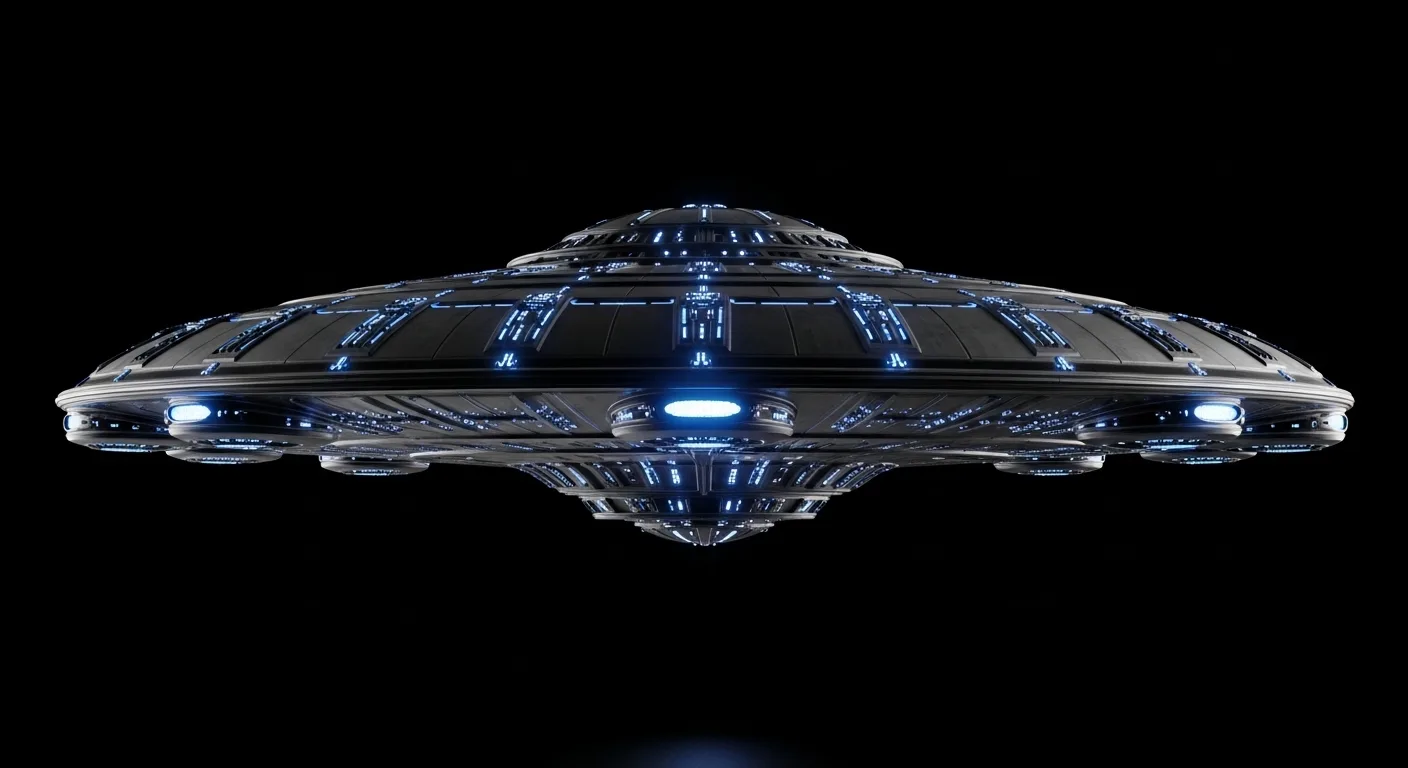
Okay, here’s the rewritten section, presenting the information as a cohesive prose narrative, maintaining all headings and non-bullet text content exactly as provided:
On August 3, 1965, Orange County Highway Department inspector Rex Heflin captured what would become some of the most famous and controversial UFO photographs ever taken. Using his work Polaroid camera, Heflin photographed a metallic, hat-shaped object as it flew near his truck in Santa Ana, California. He took four photos in rapid succession – three showing the object and one showing a mysterious smoke ring left in its wake. The photographs were extensively analyzed, and the original Polaroids were confiscated by men claiming to represent NORAD – and never returned.
The Witness
Rex Heflin
His background: He was an Orange County Highway Department employee, a traffic engineer, inspecting road conditions. His position was professional, and there was no documented history of hoaxes associated with him.
The Camera
Equipment used: Heflin utilized a Polaroid Land Camera, used for documenting road conditions. This camera offered instant development and produced physical negatives, although the limitations of the format meant original negatives were impossible to preserve.
The Sighting
Time and Location
The circumstances: The sighting occurred on August 3, 1965, approximately 12:30 PM, on Myford Road in Santa Ana. Daylight conditions were clear, and the event coincided with his routine work inspection.
The Object
What Heflin observed: Heflin observed a metallic, hat-shaped craft rotating on its axis, moving slowly at a low altitude, with a clear structure visible.
Description
Detailed appearance: The craft was described as flat-topped with a wider base, resembling a straw hat profile. The surface was metallic, with a dark band circling the middle, estimated to be approximately 30 feet in diameter.
The Photographs
Photo 1
First image: This image captured the object approaching, with a truck mirror visible in the background, under clear daylight skies. It marked the beginning of the sequence.
Photo 2
Second image: This image showed the object closer, revealing greater detail of the structure, maintained the same general altitude, and continued its approach.
Photo 3
Third image: This image represents the closest approach of the object, presenting maximum detail of the metallic surface and the structured craft – considered the best image within the series.
Photo 4
Final image: This image showed the object departing, leaving behind a dark ring visible in the sky, resembling a smoke or vapor trail where the object had been.
The Smoke Ring
The fourth photo showed a circular ring formation left behind by the object, resembling exhaust or vapor, and dissipating in the sky. This phenomenon was considered evidence of unexplained propulsion.
Radio Interference
During the Sighting
What Heflin experienced: During the encounter, Heflin’s truck radio failed, transmitting no signal and only producing static, continuing throughout the entire event and resuming after the object’s departure.
Significance
The implication: This radio interference was interpreted as an electromagnetic effect, consistent with other reported UFO cases and not expected from a hoax, offering correlating evidence and demanding technical analysis.
The Confiscation
The Visitors
After photos became public: Men arrived at Heflin’s home, claiming to be from NORAD, requesting the original Polaroids for “analysis.” Heflin, under the assumption of official authority, handed over the photographs.
Never Returned
What happened: The original Polaroids were never returned, NORAD denied any involvement, the men who took them were never identified, the photographs disappeared, and only copies remained.
The Mystery
Who were they: Despite investigations, the identities of the individuals who took the photographs remained unverified as NORAD, and no official record substantiated their involvement. They were presumed to be either government or intelligence personnel, remaining unknown. The original photographs were permanently lost.
Analysis
Marine Corps Investigation
Initial study: The Marine Corps examined the photos and found no obvious evidence of a hoax, taking the case seriously and conducting a thorough analysis, ultimately producing inconclusive results.
NICAP Analysis
Civilian investigation: The National Investigations Committee on Aerial Phenomena (NICAP) studied the photographs and interviewed Heflin, concluding that the photographs were credible and supported their authenticity.
Computer Enhancement
Later analysis: Subsequent digital enhancement of the photos revealed no suspension wires visible, further confirming the structural consistency and appeared genuine.
Dr. Robert Nathan
JPL scientist: Dr. Robert Nathan, a JPL scientist, analyzed the photographs, finding no evidence of a hoax and that the size and distance calculations were consistent with a distant object, thereby supporting the photographs’ authenticity.
Skeptical Arguments
Hoax Claims
What critics suggested: Critics proposed that a model suspended from a string or a small object near the camera was used to create the illusion, suggesting a deliberate deception.
Counter-Arguments
Why hoax unlikely: The Polaroid format’s limitations – the inability to manipulate negatives – were considered a significant factor, as were the size calculations, radio interference correlation, the unexplained smoke ring, and the suspicious confiscation.
The Polaroid Factor
Why It Matters
Unique format: The Polaroid Land Camera’s “instant development” process meant that what was shot was what you got, making it exceedingly difficult to fabricate a convincing image. The single-step process further reduced the possibility of manipulation.
Limitations
What was lost: The confiscation of the original Polaroids resulted in the loss of the first-generation quality, making subsequent analyses secondary, and compromising the original evidence.
Later Developments
Second Sighting?
Heflin later reported another sighting years later, with more witnesses present, though less documented. This sighting reinforced his initial account and maintained consistency.
Heflin’s Position
Throughout his life: Heflin steadfastly supported the authenticity of the photographs, never recanting his story, with no obvious profit motive, and maintained his credibility until his death.
Legacy
Photo Analysis History
The Heflin photos represent a classic UFO photography case, extensively studied by multiple expert analyses, and continue to be debated, forming an important case study.
The Confiscation Question
What it suggests: The confiscation by an official organization despite denials, the evidence taken not returned, suspicious circumstances, and the lingering questions about a possible cover-up.
The Question
August 3, 1965. Lunchtime. Santa Ana, California. Rex Heflin is doing his job. Highway inspector. Checking road conditions. Nothing unusual. Then he sees it. A metallic object. Hat-shaped. Moving slowly through the clear California sky. He has his work camera. A Polaroid. He shoots. Click. Photo develops. Object is there. Click. Another shot. Closer now. Click. Third shot. Maximum detail. A structured craft, metallic, real. He watches it depart. Shoots one more. Click. A ring of smoke. Where the object was. Hovering in empty air. Four photographs. Polaroid. No darkroom. No manipulation possible. The Marine Corps looks at them. NICAP examines them. Scientists analyze them. Nobody can prove they’re fake. Then men come to Heflin’s door. NORAD, they say. We need the originals. He gives them over. Why wouldn’t he? Government authority. Official request. The photos never come back. NORAD says they never sent anyone. The originals are gone forever. Who took them? Why? Where are they now? Rex Heflin kept his copies. He kept his story. He never changed it. He never profited from it. He died standing by what he photographed. The Rex Heflin photos. 1965. A Polaroid camera. A hat-shaped craft. A smoke ring. And original evidence that vanished into government hands that deny everything. Four photographs. Still unexplained. Still argued over. And the originals are still missing. Somewhere. In someone’s file. Or destroyed. Either way - gone. Only the mystery remains.
Sources
- Project Blue Book — National Archives — USAF UFO investigation files, 1947–1969
- CIA UFO/UAP Reading Room — Declassified CIA documents on UAP