UFO Sightings: A Complete History from Ancient Times to 2026
A comprehensive timeline of UFO sightings from ancient Egypt and medieval Europe through the Pentagon era and the 2026 wave.
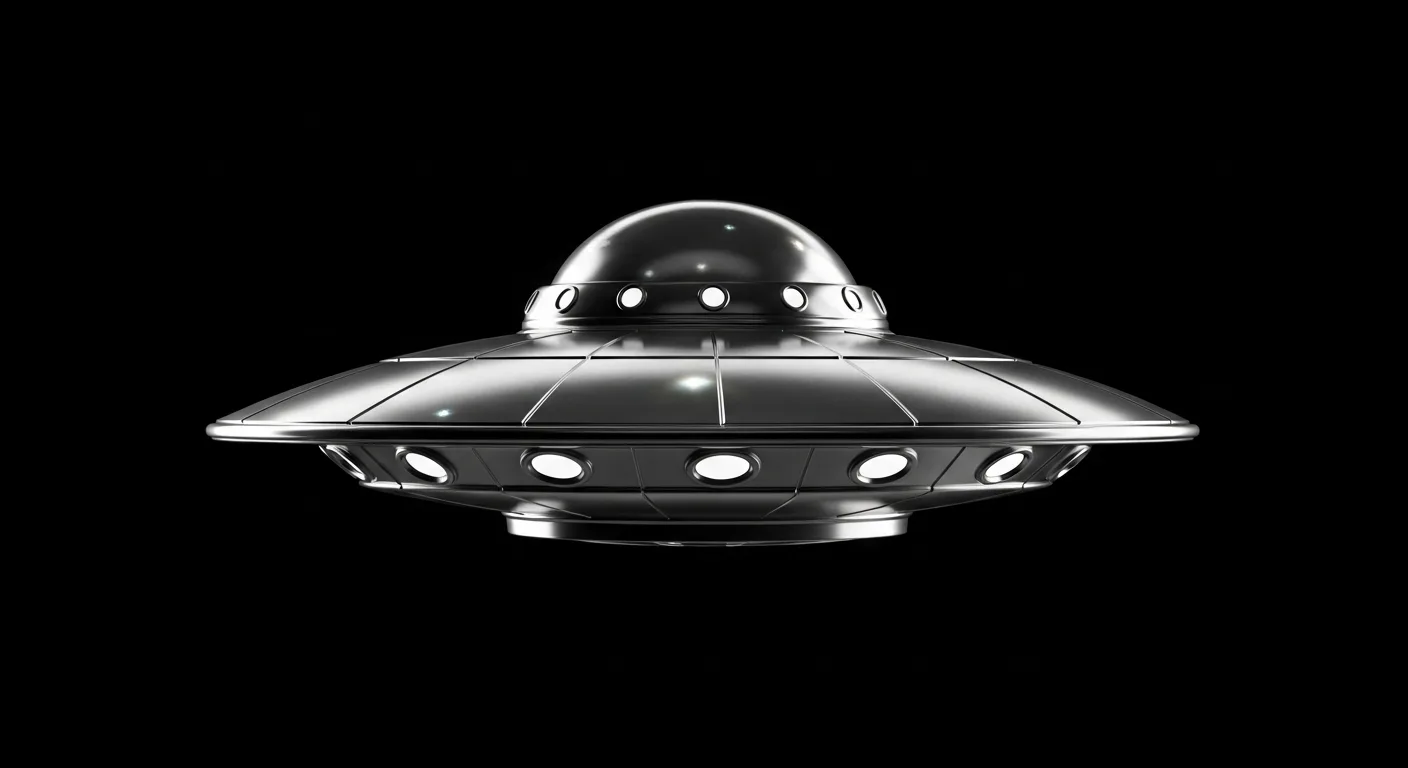
The history of UFO sightings stretches back thousands of years, long before the term “flying saucer” entered the popular vocabulary. From ancient Egyptian papyri describing circles of fire in the sky to medieval European woodcuts depicting aerial battles between mysterious spheres, humans have been reporting unidentified objects overhead for as long as they have been recording their observations. What has changed is not the phenomenon itself but our frameworks for understanding it, and in recent decades, the willingness of governments and scientific institutions to take the reports seriously.
This guide traces the complete history of UFO sightings from the earliest recorded accounts through the explosive modern era of Pentagon disclosures, Congressional hearings, and the ongoing 2026 wave of sightings and government transparency.
Ancient and Medieval Accounts
The Tulli Papyrus, allegedly dating to the reign of Pharaoh Thutmose III around 1440 BCE, describes “circles of fire” appearing in the sky over Egypt, growing more numerous over several days before departing to the south. While the authenticity and translation of this document remain disputed among Egyptologists, it represents one of the earliest known accounts that modern UFO researchers point to as evidence of a long historical pattern.
Ancient Roman writers recorded aerial phenomena that defy easy categorization. Livy described phantom ships gleaming in the sky. Pliny the Elder cataloged accounts of burning shields and globe-shaped objects seen during daylight. Julius Obsequens, compiling a book of prodigies in the fourth century, recorded numerous sightings of objects described as flying shields and globes of fire.
Medieval Europe produced some of the most vivid pre-modern UFO accounts. In 1561, the citizens of Nuremberg, Germany witnessed what appeared to be an aerial battle involving spheres, cylinders, and cross-shaped objects of various colors. A famous woodcut by Hans Glaser depicts the event in remarkable detail. Five years later, in 1566, Basel, Switzerland experienced a similar phenomenon, with dark spheres appearing before the rising sun and seeming to engage in conflict.
These accounts are sometimes attributed to atmospheric phenomena such as sun dogs, auroral displays, or meteor showers. But the specificity and consistency of some descriptions, particularly the geometric shapes and apparent purposeful movement, continue to intrigue researchers.
The 1896-1897 Airship Wave
Before the Wright Brothers achieved powered flight in 1903, thousands of Americans reported seeing mysterious airships in the skies over the western and midwestern United States. Beginning in November 1896 in Sacramento, California, and spreading eastward through 1897, witnesses described cigar-shaped craft with bright lights, sometimes accompanied by the sound of engines or propellers. Some claimed the craft landed and that they spoke with the occupants, who in various accounts identified themselves as inventors testing secret flying machines.
The airship wave is significant because it occurred at a historical moment when the idea of powered flight was in the air, so to speak, but the technology to achieve it at the scale described did not yet exist. Skeptics attribute the reports to misidentifications of Venus, advertising balloons, or simple hoaxes fueled by newspaper sensationalism. Proponents note the volume of independent, geographically dispersed reports and the consistency of certain details.
1947: The Year Everything Changed
The modern UFO era began on June 24, 1947, when private pilot Kenneth Arnold reported seeing nine bright, disc-shaped objects flying in formation near Mount Rainier, Washington, at speeds he estimated at over twelve hundred miles per hour—far beyond any known aircraft of the era. Arnold described their movement as resembling “saucers skipping across water,” and a journalist’s paraphrase of this description gave birth to the term “flying saucer.”
Arnold’s sighting opened the floodgates. Within weeks, hundreds of UFO reports poured in from across the United States. The most consequential came just days later from Roswell, New Mexico, where rancher Mac Brazel discovered strange debris on his property and the local Army Air Field initially announced the recovery of a “flying disc” before retracting the statement and claiming it was a weather balloon. The Roswell incident would become the most famous and hotly debated UFO case in history.
The Maury Island incident in Washington state and numerous other 1947 reports established the pattern that would define the UFO phenomenon for decades: credible witnesses reporting objects that defied conventional explanation, followed by official dismissal and the creeping suspicion that the government knew more than it was saying.
Project Blue Book and the Official Investigation Era
The U.S. Air Force investigated UFO reports through a series of programs: Project Sign (1948), Project Grudge (1949), and most famously Project Blue Book (1952-1969). Over its seventeen-year lifespan, Blue Book investigated 12,618 UFO reports. Of these, 701 remained classified as “unidentified” at the project’s conclusion—cases where the evidence was sufficient and the witnesses credible enough that no conventional explanation could be assigned.
The 1952 Washington, D.C. sightings, in which objects were tracked on radar over the nation’s capital on consecutive weekends and jets were scrambled in response, created a national sensation and prompted the CIA to convene the Robertson Panel. This group of scientists recommended that UFO reports be debunked and that public interest in the topic be dampened, a recommendation that critics argue shaped Air Force policy for the remainder of Blue Book’s existence.
The 1951 Lubbock Lights in Texas, where college professors observed formations of lights passing overhead on multiple nights, and the 1952 Flatwoods encounter in West Virginia further defined this era of intense sighting activity.
In 1966, the Air Force commissioned physicist Edward Condon of the University of Colorado to conduct an independent scientific study of UFOs. The Condon Report, published in 1969, concluded that further study of UFOs was unlikely to yield scientific advances, and Project Blue Book was subsequently closed. Critics noted that the report’s conclusion contradicted some of its own case analyses, several of which described genuinely unexplained events.
The 1960s and 1970s: High Strangeness
The decades following Blue Book’s closure saw some of the most dramatic and well-documented UFO cases in history. In 1964, police officer Lonnie Zamora witnessed an egg-shaped craft and two small figures near Socorro, New Mexico, leaving physical ground traces that were investigated by both the Air Force and FBI.
In 1967, missile launch officers at Malmstrom Air Force Base in Montana reported a UFO hovering over their facility at the precise moment ten Minuteman nuclear missiles went offline simultaneously. The incident remains one of the most disturbing UFO-nuclear correlations on record.
The 1973 Pascagoula abduction case, in which shipyard workers Charles Hickson and Calvin Parker claimed to have been taken aboard a craft by strange beings, introduced the abduction phenomenon to national attention. That same year, Army helicopter pilot Captain Lawrence Coyne and his crew experienced a near-collision with a cigar-shaped object over Ohio that appeared to take control of their aircraft.
The 1975 Travis Walton abduction in Arizona, witnessed by six logging crew members who saw Walton struck by a beam of light from a hovering disc, became one of the most investigated and controversial abduction cases ever, later adapted into the film “Fire in the Sky.”
The Tehran incident of 1976, in which Iranian Air Force F-4 Phantom jets attempted to intercept a luminous object and experienced electronic system failures as they approached, was documented in a Defense Intelligence Agency report that called it a “classic case” meeting all the criteria for a valid UFO study.
The 1980s and 1990s: Global Waves
The Rendlesham Forest incident of December 1980, involving U.S. Air Force personnel at a NATO base in England, produced military documentation, audio recordings, and physical trace evidence that earned it the title “Britain’s Roswell.” Lieutenant Colonel Charles Halt’s audio tape, recorded as he investigated strange lights in the forest, remains one of the most compelling pieces of primary evidence in UFO history.
The Belgian UFO wave of 1989-1990 involved thousands of witnesses, including police officers and military personnel, reporting large triangular craft with lights at each corner. The Belgian Air Force scrambled F-16 fighters and obtained radar locks on the objects, which demonstrated accelerations of up to forty G-forces—maneuvers that would be lethal to any human pilot and beyond the capability of any known aircraft.
Japan Air Lines Flight 1628, piloted by veteran captain Kenju Terauchi, encountered a massive object over Alaska in 1986 that was tracked on both airborne and ground radar. The case was investigated by the FAA, and the radar data was initially confiscated before being returned after public pressure.
The 1997 Phoenix Lights over Arizona were witnessed by thousands of people, including then-Governor Fife Symington, who initially mocked the sightings at a press conference but later admitted he had seen the object himself and described it as “otherworldly.”
The Pentagon Era: 2004-Present
The modern chapter in UFO history began with the USS Nimitz encounter off the coast of San Diego in November 2004. Commander David Fravor and Lieutenant Commander Alex Dietrich, flying F/A-18 Super Hornets, were vectored to investigate radar contacts that had been tracked for days. What Fravor encountered—a white, oblong object roughly forty feet long with no wings, no engines, and no visible means of propulsion—would become known as the “Tic Tac.” The object demonstrated instantaneous acceleration, the ability to drop from eighty thousand feet to sea level in less than a second, and awareness of classified rendezvous coordinates. The encounter was captured on the FLIR1 infrared camera system.
The 2017 New York Times revelation of the Advanced Aerospace Threat Identification Program, accompanied by the release of the FLIR1, Gimbal, and GoFast videos, transformed the UFO topic from fringe entertainment into a matter of national security. The Navy established formal reporting procedures for UAP encounters. The Pentagon created the Unidentified Aerial Phenomena Task Force, later replaced by the All-domain Anomaly Resolution Office (AARO).
The 2023 Congressional hearing featuring testimony from David Grusch, David Fravor, and Ryan Graves brought allegations of secret crash retrieval programs into the official record. Grusch’s claims that the government possessed non-human craft and biological specimens were made under oath and at risk of criminal penalties for perjury.
The 2026 Wave
The year 2026 has seen an unprecedented convergence of sighting reports, government action, and public attention. President Trump’s executive order directing the release of classified UAP files set a ninety-day timeline that has placed enormous pressure on intelligence agencies to review and declassify decades of accumulated material. The creation of aliens.gov as a public portal for released documents signaled a new era of transparency.
Sighting reports in 2026 have surged globally, with notable clusters over the American Southwest, northern Europe, and the western Pacific. Whether this increase reflects a genuine uptick in aerial anomalies, heightened public awareness driving more reporting, or some combination of both, remains an open question. What is clear is that the infrastructure for tracking and investigating these reports has never been more robust, with AARO’s catalog exceeding two thousand cases and multiple allied nations establishing their own UAP investigation offices.
Major UFO Sighting Categories
Across the decades, UFO sightings tend to fall into recognizable categories. Nocturnal lights—anomalous points of light performing unusual maneuvers—are by far the most common. Daylight discs, structured objects observed in clear conditions, are rarer but often produce the most compelling testimony. Radar-visual cases, where objects are simultaneously observed by eyewitnesses and tracked on radar, represent the strongest evidentiary category. Close encounters, involving proximity to a landed or hovering craft, sometimes with occupants, are the rarest and most controversial.
The late J. Allen Hynek, who served as scientific consultant to Project Blue Book before becoming one of the UFO phenomenon’s most respected academic advocates, developed the Close Encounter classification system: CE-1 (close-range sighting), CE-2 (physical effects on environment or witnesses), and CE-3 (observation of occupants). Subsequent researchers added CE-4 (abduction) and CE-5 (bilateral communication).
What the Data Shows
After nearly eight decades of the modern UFO era, certain patterns have emerged. Sighting reports are not randomly distributed but tend to cluster near military installations, nuclear facilities, and large bodies of water. Witnesses who report structured craft consistently describe a limited set of shapes—disc, triangle, cigar, sphere, and tic-tac—across cultures and decades. The five observables documented by military encounters recur with remarkable consistency.
The transition from UFO to UAP in official terminology reflects a maturation of the investigation rather than a change in the phenomenon. Whatever is being reported in the skies over Earth, it has been reported for a very long time, by very many people, in very many places. The question that confronts us in 2026 is no longer whether the sightings are happening, but what they represent.