Chicago O'Hare Airport UFO
United Airlines employees saw a dark disc hovering over Gate C17. It shot up through the clouds, leaving a perfect circular hole. The FAA refused to investigate, calling it a 'weather phenomenon.'
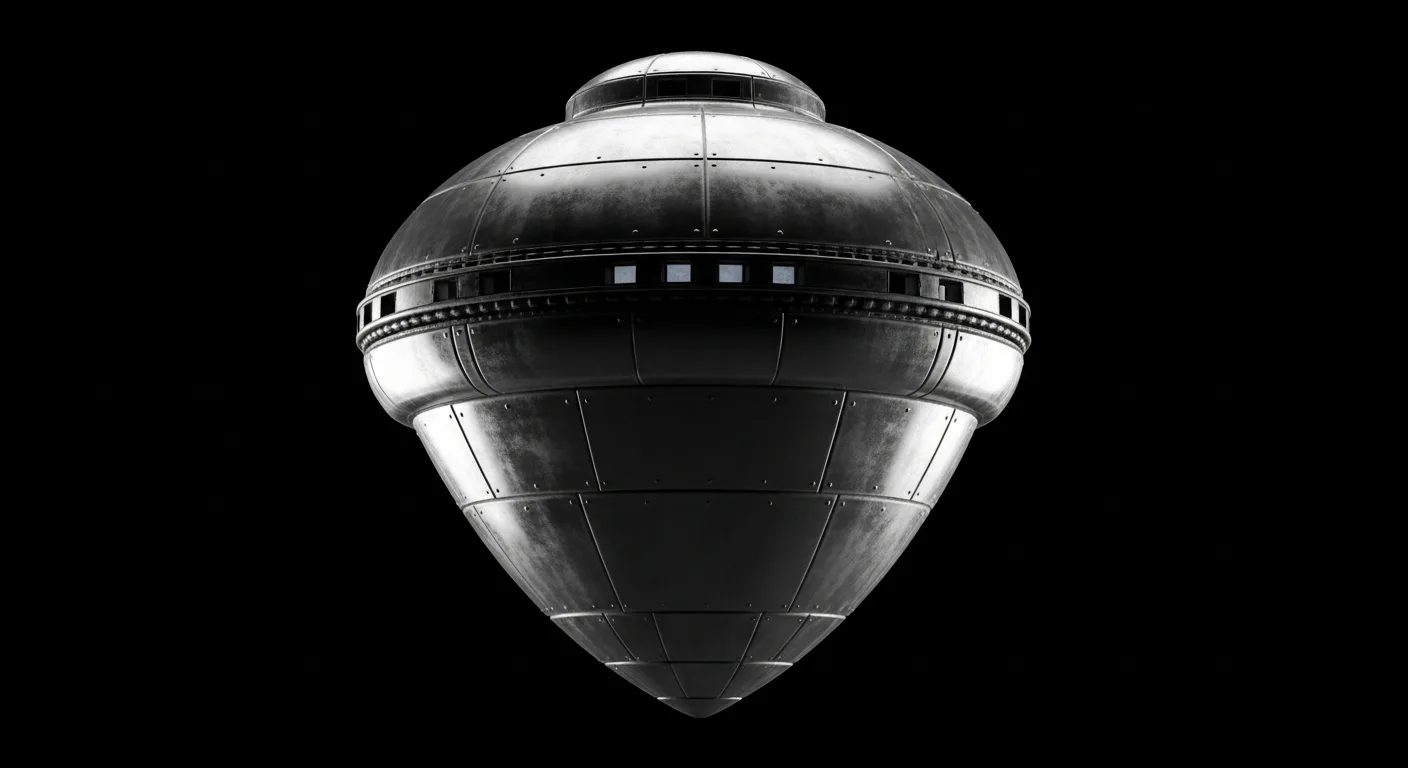
On November 7, 2006, multiple United Airlines employees witnessed a disc-shaped object hovering over Gate C17 at Chicago O’Hare Airport before it shot up through the clouds, leaving a visible hole.
The Sighting
According to documented reports, at approximately 4:15 PM, a dark gray metallic disc appeared over Gate C17 and hovered silently for several minutes. Multiple employees witnessed the object before it shot straight up at high speed, leaving a perfectly circular hole in the cloud cover.
The Witnesses
At least 12 United Airlines employees saw the object, including pilots, mechanics, ramp workers, and United management, with some passengers possibly witnessing it as well. The witnesses were described as credible aviation professionals.
The Cloud Hole
One of the most compelling details was that the object punched through the 1,900-foot cloud ceiling, leaving a visible circular hole that was observed by multiple witnesses. The hole closed gradually over several minutes, and no conventional aircraft could create such an effect.
The FAA Response
The Federal Aviation Administration initially denied any reports and said it would not investigate, calling it a “weather phenomenon” without explaining how weather creates a circular hole in clouds. FOIA requests later revealed that United had reported the incident.
Media Coverage
The story broke weeks later when the Chicago Tribune published it in January 2007. It became one of the most popular online news stories, international media picked it up, and the FAA’s dismissive response drew widespread criticism.
The Coverup Allegations
Critics noted that United employees were told not to discuss the incident, the FAA’s “weather phenomenon” explanation was inadequate, no follow-up investigation occurred, and security concerns at a major airport were dismissed.
Explanations Proposed
The FAA’s official position of a weather phenomenon was widely criticized. Some suggested a rare lenticular cloud formation, but no aircraft could hover silently and accelerate vertically as described. The most common conclusion among witnesses was that it was an unknown craft.
Significance
The O’Hare sighting is significant because it involved multiple professional aviation witnesses at a major international airport, the cloud hole phenomenon was unusual, the FAA’s dismissive response raised questions, and it became one of the most widely reported UFO cases of the 2000s.
Similar Airport Sightings
Other airport UFO incidents include the 2020 London Gatwick drone incident, the 2014 Bremen Airport incident in Germany, and various near-miss reports worldwide.
Legacy
The O’Hare incident demonstrated that UFOs can appear at major infrastructure, institutional responses often dismiss witnesses, aviation professionals make credible witnesses, and the incident remains unexplained.
Context Within the Aviation Community
For pilots and ground crew, the O’Hare event reinforced longstanding concerns within the aviation community about the lack of formal channels for reporting unidentified aerial phenomena. Until the establishment of more recent reporting frameworks under the National Aviation Reporting Center on Anomalous Phenomena and, later, the Pentagon’s All-domain Anomaly Resolution Office, commercial pilots faced significant professional risk for filing public UFO reports. Many in the industry believed that the apparent reluctance of United employees to be named publicly reflected this culture of caution, where pilots and mechanics worried that going on the record could lead to medical evaluations, suggestions of psychological unfitness, or quiet career repercussions. The O’Hare case, occurring at the busiest airport in the world at the time, became a touchstone for advocates pushing for safer reporting mechanisms.
Witness Recollections
In subsequent interviews granted to researchers and journalists, several witnesses described the moments after the object’s departure as deeply unsettling. A ramp worker reportedly stated that he had wanted to crouch down because he thought the object might fall on him, while a United mechanic was said to have remarked that he expected to see the disc on the news that night. The fact that no official statement followed left many of those involved with a sense of professional disquiet. Some recalled the cloud hole as remaining visible for several minutes, an impression broadly consistent across independent accounts gathered over the years.
Cultural Impact
The O’Hare sighting, though officially dismissed, became one of the most widely cited UFO cases of the early 21st century. It featured prominently in documentaries, books, and television specials, and reignited public interest in UAP at a moment when the topic had largely faded from mainstream discourse. The incident is frequently mentioned alongside the 2008 Stephenville mass sighting and the later USS Nimitz tic-tac encounters as part of a continuum of credible 21st-century reports that eventually contributed to congressional interest in the phenomenon. Whether the O’Hare object was an extraordinary aircraft, a poorly understood atmospheric event, or something stranger, its place in modern UFO history remains secure.
Sources
- CIA UFO/UAP Reading Room — Declassified CIA documents on UAP