Blenheim Encounter
A farmer in Blenheim, New Zealand claimed to have observed a landed UFO with two men in silvery suits standing nearby. The beings appeared to be examining the craft. When noticed, they re-entered the object and it departed. One of New Zealand's most detailed close encounter reports.
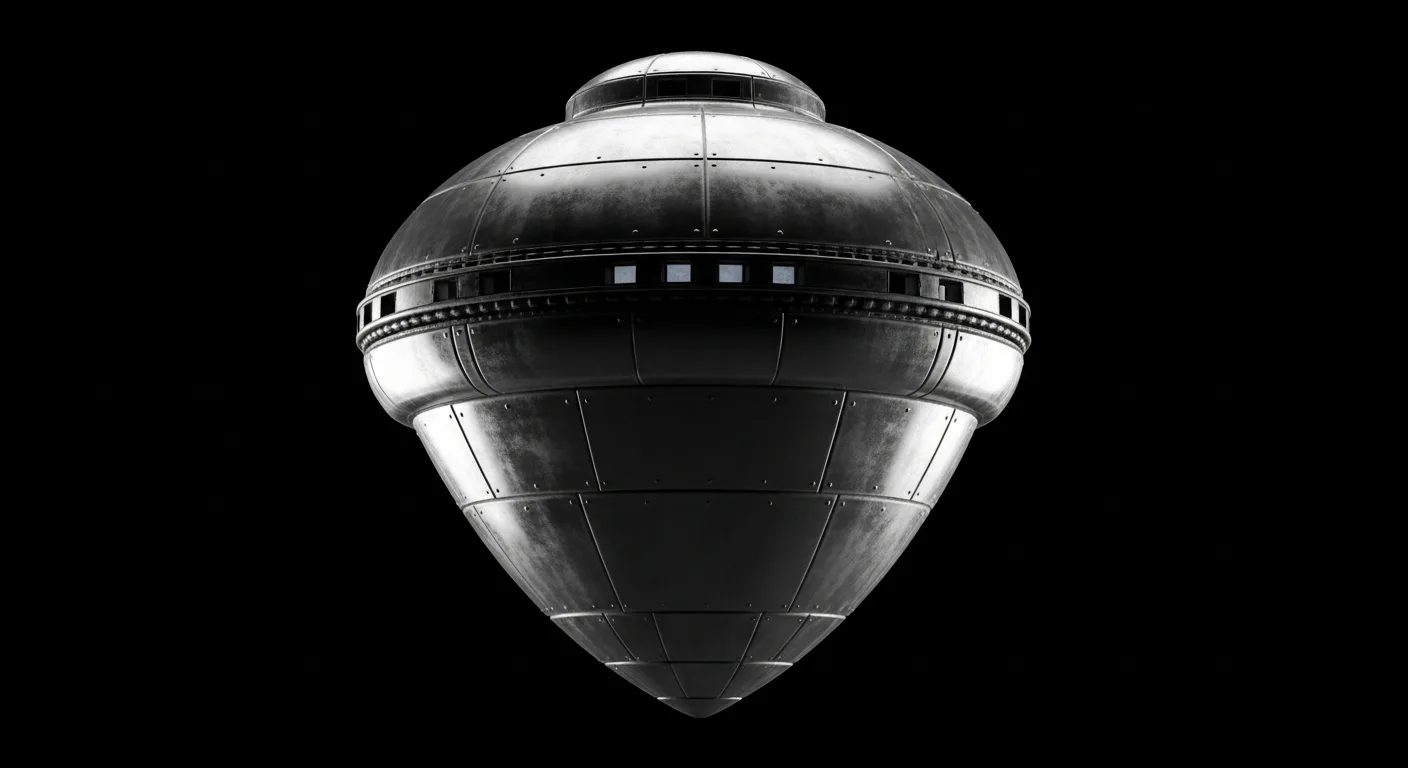
A New Zealand farmer reported beings in silver suits examining a landed craft on his property in 1959, providing one of the country’s most detailed close encounter accounts. The Blenheim Encounter stands as a significant case in New Zealand UFO history, featuring not merely a distant light or aerial object but an up-close observation of both a craft and its apparent occupants.
The Witness
The encounter occurred in 1959 in the Blenheim area of New Zealand’s South Island. A local farmer, whose routine had been shaped by decades of working his rural property, found his understanding of reality fundamentally challenged by what he witnessed that day. The man was known in his community as practical and level-headed, not given to flights of fancy or elaborate storytelling. His account, delivered without embellishment or drama, carried the weight of genuine bewilderment.
The Blenheim region itself is characterized by rolling agricultural land, vineyards, and relative isolation—the kind of place where unusual activity would stand out sharply against the backdrop of everyday rural life. The witness had no history of interest in UFOs or paranormal phenomena, making his subsequent report all the more striking to those who investigated it.
The Craft
According to the witness’s account, he came upon a landed object on his property that defied any conventional explanation. The craft was metallic in appearance, reflecting the light in ways that suggested a manufactured surface rather than any natural formation. It rested on the ground, clearly visible in daylight conditions that left no room for misidentification due to darkness or weather.
The object’s design was unlike any aircraft the farmer had seen. It was still on the ground when he first observed it, not hovering or in flight, which allowed him an extended period of observation that might not have been possible with a moving object. A door or opening was visible on the craft’s exterior, suggesting the interior was accessible and that whatever piloted the vehicle could enter and exit.
The Beings
What transformed this sighting from an unusual aerial observation into a close encounter were the two figures the farmer observed near the craft. Two humanoid beings stood in proximity to the landed object, apparently examining it or conducting some kind of inspection. They wore silvery suits that covered their bodies completely, the material gleaming in the available light.
Their appearance was human-like but distinctly unusual. The suits suggested technology beyond anything in common use in 1959, when space programs were in their infancy and such attire would have been remarkable in any context. The beings moved with purpose around the craft, their behavior suggesting intelligence and intention rather than random activity. Whether they were repairing the vessel, conducting scientific observations, or engaged in some other activity, the witness could not determine.
The Departure
The encounter came to an abrupt conclusion when the beings noticed the farmer’s presence. Whatever they were doing ceased immediately upon their awareness of being observed. Without any visible communication between them, both figures moved toward the craft and re-entered it through the opening the witness had noted earlier.
What followed happened with startling speed. The craft departed the scene rapidly, rising from its resting place and accelerating away at a velocity that exceeded anything in the farmer’s experience. The departure left no obvious traces on the ground, no burning or scorching from exhaust, no debris or evidence of the craft’s presence beyond the witness’s memory of what he had seen.
The Investigation
The farmer reported his experience to local authorities, though the official response was limited. Investigation attempts found no physical evidence to corroborate the account—no landing marks, no unusual readings, no secondary witnesses who had observed either the craft or the beings. The witness’s story remained consistent through multiple tellings, but without supporting evidence, it joined the category of compelling accounts that could neither be definitively proven nor explained away.
Local interest in the case persisted for some time, with residents discussing what their neighbor claimed to have witnessed. The practical nature of the witness lent credibility to his account among those who knew him, even as the absence of evidence frustrated those who sought confirmation.
New Zealand Context
The Blenheim Encounter fits within a broader pattern of UFO activity reported in New Zealand over the decades. The country has generated significant cases, from the 1909 airship wave that produced numerous sightings to the famous Kaikoura lights of 1978, which were captured on film and radar. New Zealand’s relatively sparse population and extensive rural areas provide conditions conducive to both sightings and the isolation that might allow for extended encounters without interruption.
The 1959 Blenheim case remains one of the most detailed close encounter reports in New Zealand’s UFO history, significant not for photographic or physical evidence but for the specificity and consistency of the witness account. Whatever the farmer saw that day, it stayed with him for the rest of his life—a mystery that rural New Zealand produced but could never explain.
Sources
- Project Blue Book — National Archives — USAF UFO investigation files, 1947–1969
- CIA UFO/UAP Reading Room — Declassified CIA documents on UAP