Barossa Valley Mass UFO Sighting
More than fifty residents of South Australia's Barossa Valley reported a slow-moving formation of orange lights drifting above the vineyards on a clear autumn evening, with consistent descriptions across several towns.
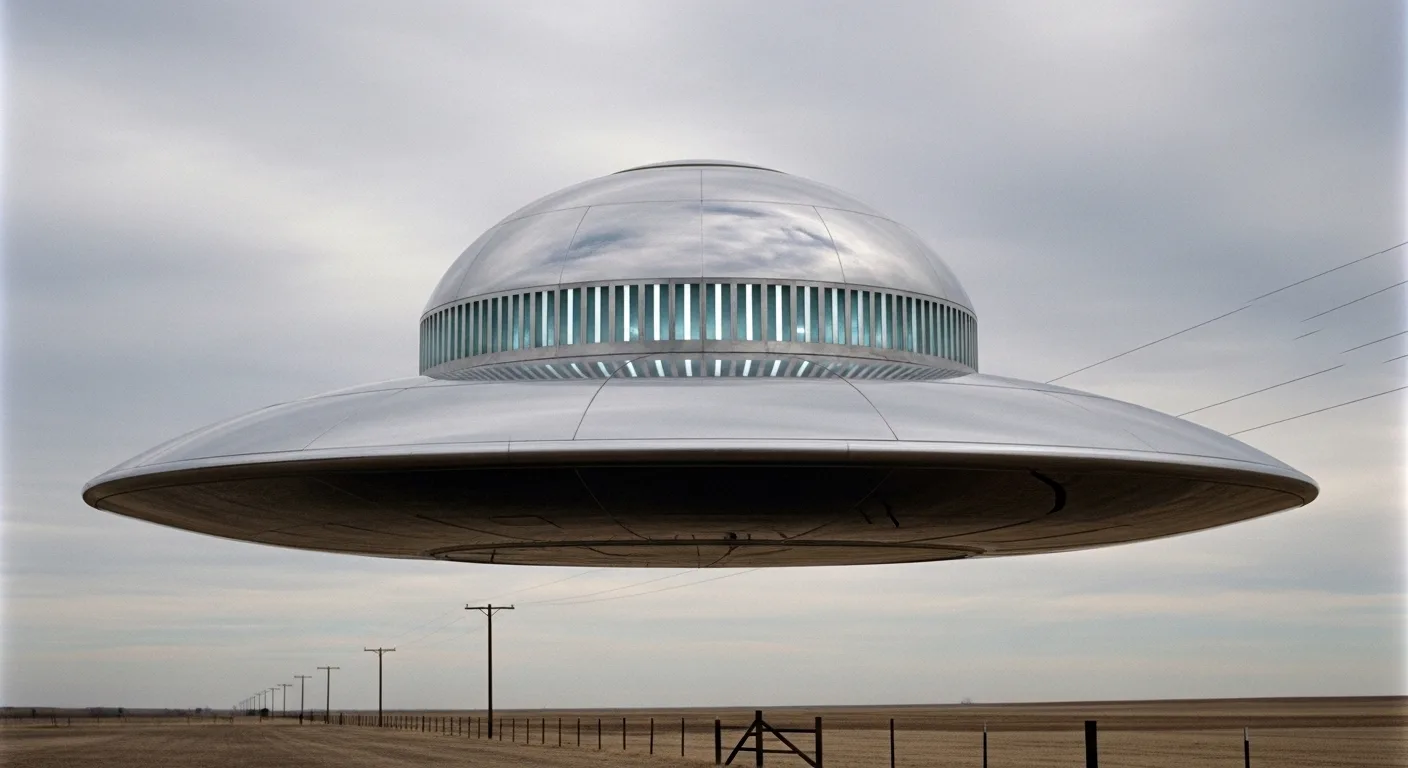
The Barossa Valley sighting of March 1985 is one of the better-attested Australian UFO events of the decade in terms of witness numbers, although it never received the international attention given to cases such as the Knowles family encounter or the Westall school sighting. It involved a slow-moving formation of orange lights observed across several Barossa towns over a period of approximately twenty minutes.
Background
The Barossa Valley, north-east of Adelaide, is a long, gently rolling stretch of vineyard and pasture country, with several small towns connected by rural roads. The skies over the valley are typically dark and clear, and the area’s residents are often outdoors on warm autumn evenings. South Australia in the mid-1980s produced a modest but steady stream of UFO reports, and the South Australian UFO Research Group maintained an active investigations roster.
By March 1985 several Australian researchers were already taking interest in the Knowles family encounter from earlier that year on the Nullarbor Plain, and the Barossa case fell into a period of heightened public attention to the subject in the country.
The Sighting
On the evening of 17 March 1985, residents in and around the towns of Tanunda, Nuriootpa, and Angaston began noticing an unusual configuration of lights drifting in formation across the eastern sky. The first reports came in shortly after 8:45 p.m. and continued steadily until around 9:10 p.m. A regional radio station took several calls during the period and broadcast a brief mention of the sightings.
Witnesses described the formation in broadly consistent terms: between five and seven steady orange lights arranged in a loose chevron or triangle, moving slowly from north to south at an estimated altitude of several hundred metres. The lights did not flicker or strobe in the manner of conventional aircraft. They produced no audible sound. Most observers reported a duration of between two and five minutes for their individual viewings, with the formation eventually drifting out of sight beyond the eastern ridge.
A handful of witnesses reported what they took to be a faint structural outline connecting the lights, suggesting a single large object rather than separate craft, although most observers described only the lights themselves.
Investigation
The South Australian UFO Research Group, through investigator Keith Basterfield, collected reports from approximately fifty witnesses in the days that followed. Basterfield’s method was meticulous: he interviewed witnesses separately, asked them to sketch what they had seen before showing them other accounts, and triangulated the formation’s apparent track across the valley.
The triangulation suggested an object or formation moving at slow but constant speed at an altitude of perhaps four hundred metres, on a track that did not match any commercial flight schedule for the evening. A check with regional air traffic control produced no record of unusual traffic over the valley during the sighting window. No military exercises were officially logged in the area for that date.
The case shares structural features with the Belgian wave of a few years later, particularly in the slow speed and triangular configuration of the lights, although the Barossa formation was not pursued by aircraft and did not produce radar returns of public record.
Aftermath
The case was written up in the Australian UFO Bulletin later in 1985 and has been cited periodically in the Australian literature, although it remains less widely known than the Knowles or Westall events. None of the witnesses sought publicity beyond the initial radio reports, and the case has not been substantially re-investigated since the original 1985 fieldwork.
Skeptical Analysis
The most commonly proposed conventional explanations involve a flight of military aircraft in close formation with their navigation lights showing only on one side, or a chain of high-altitude balloons drifting in formation on the prevailing wind. Neither explanation accounts well for the reported absence of sound, the consistent track across more than one town, or the steady, non-strobing nature of the lights. A small number of researchers have suggested the formation may have been an experimental aircraft trial conducted without public notice, but no documentary evidence of such a trial has emerged. See also mass sighting.
Sources
Keith Basterfield, UFOs: A Report on Australian Encounters (1997). South Australian UFO Research Group case files, 1985. The Advertiser, Adelaide, brief regional coverage, 18 March 1985.