South Wales Mass UFO Sighting
Hundreds of residents across the South Wales valleys reported a slow-moving group of pale lights crossing the night sky over a forty-minute window, with descriptions consistent across communities separated by tens of miles.
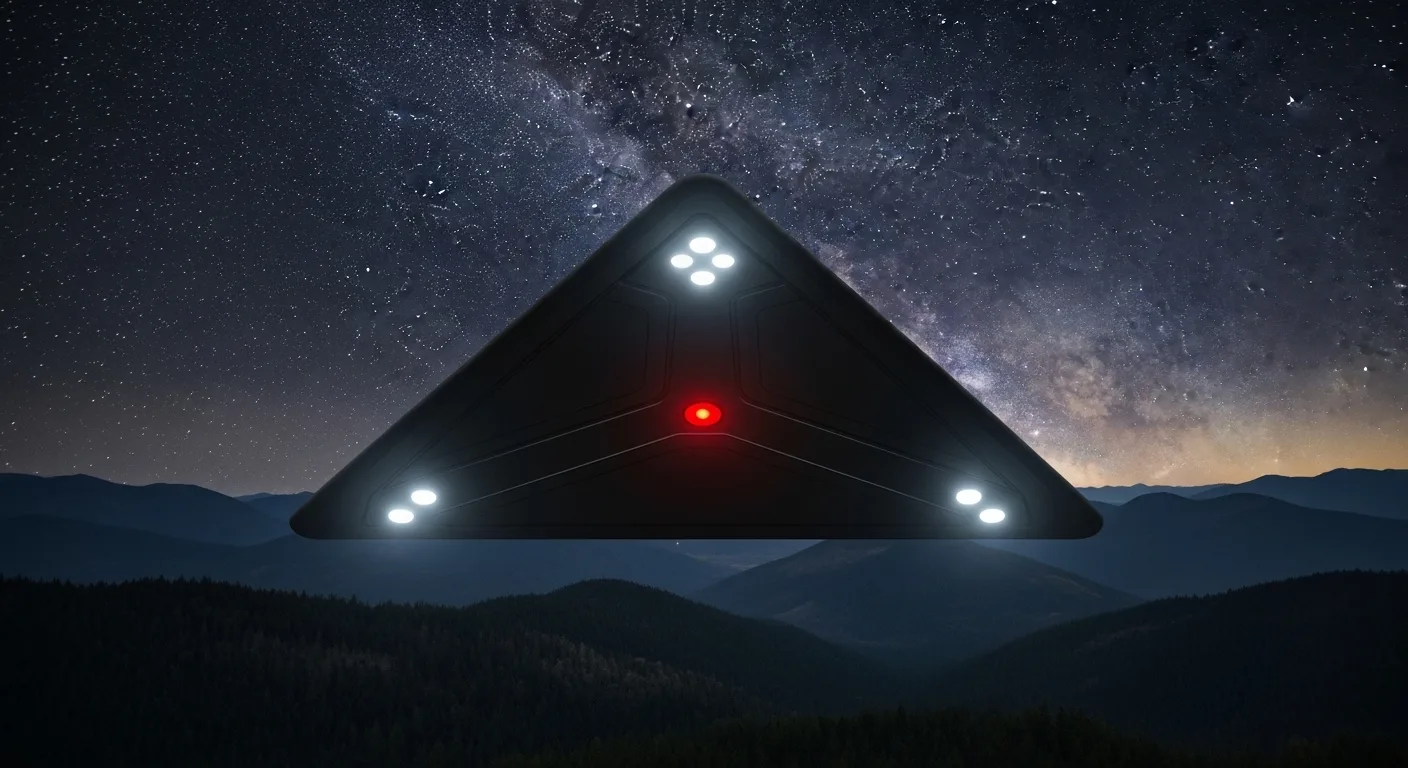
The South Wales mass sighting of April 1983 is one of the least-known but best-attested British UFO events of its decade, with witness reports collected from communities stretching across the valleys north of Cardiff, Swansea, and Bridgend over a period of approximately forty minutes. It was treated locally with a mix of curiosity and dismissal, picked up briefly by national press, and never satisfactorily explained.
Background
South Wales in the early 1980s recorded a modest but persistent stream of unusual aerial reports, falling within the broader British post-1977 climate of public interest in such cases. The valleys north of the M4 corridor are characterised by long, narrow communities running up the floors of steep-sided river gorges, with extensive open hillside between settlements. The local geography means that a slow-moving aerial event can be visible to widely dispersed observers without any single witness being able to claim a definitive view.
By 1983, the Welsh Federation of Independent Ufologists, which had been formed during the 1977 wave that produced the Broad Haven primary school case, was an active local research network, and several members were on hand to begin collecting reports almost immediately when the April event broke.
The Sighting
Beginning shortly after 9:15 p.m. on the evening of 8 April 1983, residents in towns including Merthyr Tydfil, Aberdare, Pontypridd, and Bridgend began reporting a group of pale, steadily glowing lights moving slowly from west to east across the valley sky. Reports continued steadily until shortly before 10:00 p.m., when the lights were last reported above the eastern edge of the valley region.
Witness accounts, collected over the following weeks, were broadly consistent on the essential features. The lights numbered between four and seven depending on the observer, were arranged in a loose triangular or chevron formation, were pale white or very pale blue in colour, did not strobe, did not produce audible sound, and moved at a steady speed estimated by various observers as somewhere between that of a slow aircraft and a drifting balloon. Some witnesses reported what they believed to be a faint structural outline connecting the lights, suggesting a single large object rather than separate craft, but most observers described only the lights themselves.
The duration of individual sightings varied from a few seconds to several minutes depending on the observer’s vantage point and on intervening cloud or hill cover. The total event window, defined by the earliest and latest reports submitted to investigators, was approximately forty-five minutes.
Investigation
The Welsh Federation of Independent Ufologists, working alongside investigators from BUFORA, collected approximately two hundred reports over the following month. The investigators followed a standard British practice of separate interviews, sketches before exposure to other accounts, and triangulation of the formation’s apparent track.
The triangulation suggested an object or formation moving at slow but constant speed at high altitude, perhaps several thousand metres, on a track from west to east across the valley region. The estimated speed was incompatible with conventional jet traffic and inconsistent with the prevailing wind for the evening, which complicated the balloon hypothesis.
A check with Royal Air Force authorities and with civilian air traffic control produced standard statements that no unusual traffic had been logged in the area during the relevant window. No military exercises were officially confirmed for the night in question, although several investigators suspected that the response from official sources was less candid than it appeared.
The South Wales event shares structural features with the Belgian wave of six years later, particularly in the slow-moving formation of pale lights and the apparent suggestion of a single large structure. See also mass sighting.
Aftermath
The case was reported briefly in national tabloid press in mid-April 1983 and in the Western Mail over the following week before falling out of the news cycle. The Welsh Federation of Independent Ufologists published a summary report in their newsletter later that year. The case has been cited periodically in compilations of British UFO events but has not received sustained mainstream attention.
Skeptical Analysis
The most commonly proposed conventional explanations involve a flight of military aircraft in close formation, a chain of high-altitude balloons drifting in formation, or a string of bright satellites moving across the sky. None of these explanations accounts well for the reported slow but constant speed across approximately forty minutes, the consistency of the formation’s apparent shape across widely separated witnesses, the absence of strobing, or the apparent inconsistency with prevailing winds. A small minority of researchers have suggested an experimental aircraft trial conducted without public notice, but no documentary evidence of such a trial has emerged.
Sources
Welsh Federation of Independent Ufologists, case files and newsletter summary, 1983. BUFORA case correspondence. Western Mail, regional coverage, April 1983. Jenny Randles, The UFO Conspiracy (1987), brief mention.