Pascagoula Shipyard Workers Abduction
Two shipyard workers fishing on the Pascagoula River were paralyzed and taken aboard a UFO by strange robotic beings. Their secretly recorded conversation proved their sincerity.
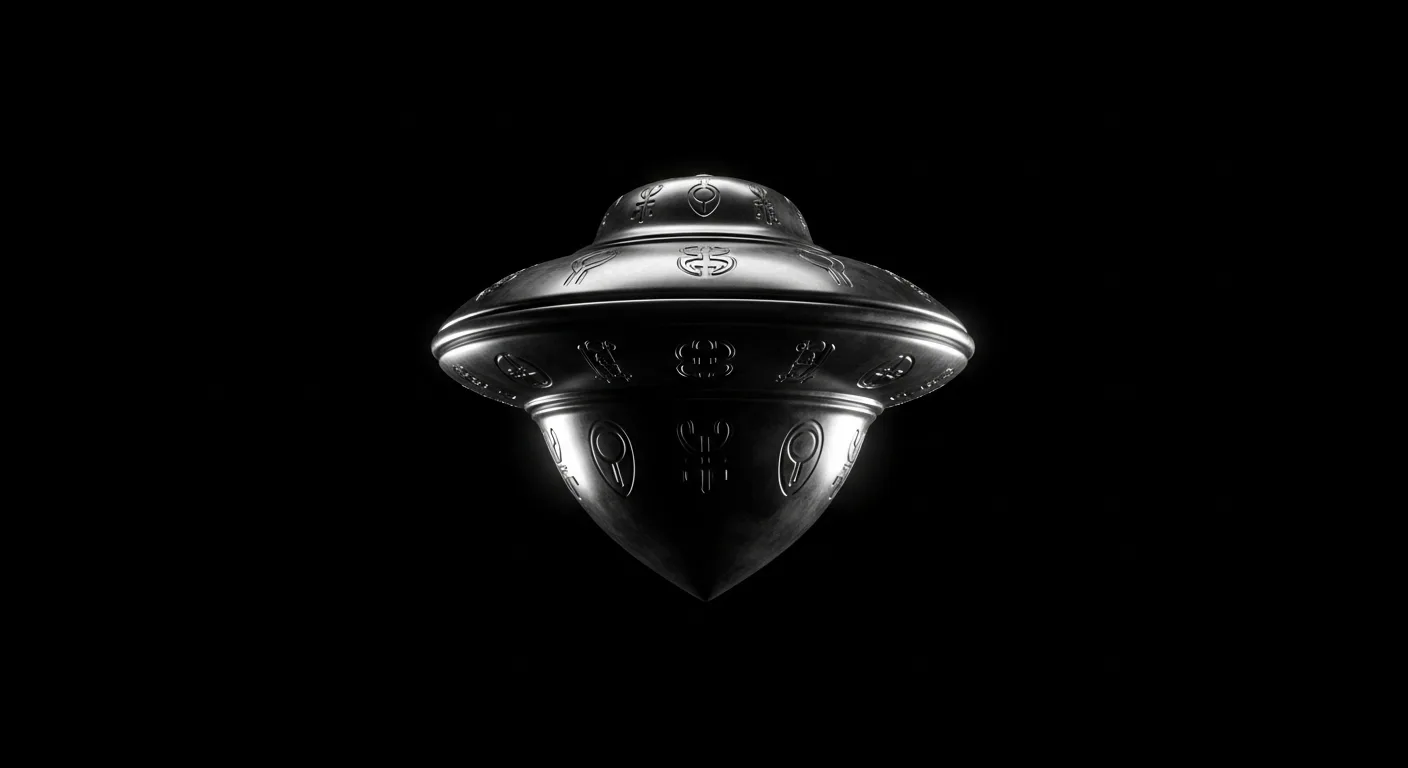
The Mississippi Gulf Coast in October 1973 seemed an unlikely setting for one of the most significant UFO encounters in American history. Yet on the evening of the eleventh, two ordinary working men would experience something so extraordinary that it would generate decades of investigation, produce uniquely compelling evidence of genuine trauma, and establish the Pascagoula abduction as a landmark case that continues to resist easy dismissal.
Two Working Men
Charles Hickson and Calvin Parker represented the backbone of the American workforce: blue-collar men who earned their living through physical labor and maintained no pretensions to intellectual sophistication. Hickson, at forty-two, served as a foreman at the Ingalls Shipyard, one of the major employers along the Gulf Coast. Parker, just nineteen, worked under Hickson’s supervision, learning the trade that would define his working life.
Neither man had any history with UFO claims or paranormal experiences. They were not science fiction enthusiasts or believers in extraterrestrial visitation. They were simply two men who enjoyed fishing, who sought relaxation after demanding shifts at the shipyard, and who chose the wrong evening to cast their lines into the Pascagoula River.
An Evening Interrupted
The pier where Hickson and Parker set up that evening had been a reliable fishing spot, quiet and removed from the bustle of the shipyard and town. As darkness gathered, they settled into the familiar rhythm of fishing: casting, waiting, hoping for the tug on the line that would make the evening productive. The October air was mild, the river calm, the setting ordinary in every respect.
Then came the sound, a zipping or buzzing that cut through the evening quiet with an alien quality neither man could identify. Looking toward the source, they watched as a blue light approached across the water, growing larger and brighter as it neared their position. The light resolved into a structured craft, oval-shaped and clearly solid, that descended toward them and hovered a short distance from the pier.
Beings Beyond Comprehension
When the craft opened and its occupants emerged, Hickson and Parker confronted something their minds struggled to process. The entities were humanoid in the loosest sense, approximately five feet tall and bipedal, but there the resemblance to humanity ended. Their skin appeared gray and wrinkled, like aged leather stretched over bones. Where faces should have shown eyes, nose, and mouth, there were only irregular protrusions and slits. Their hands terminated in claw-like appendages, cruel and mechanical in appearance.
The beings did not walk. They floated, moving toward the two fishermen with a gliding motion that suggested they were not subject to the same physical laws that governed human movement. Whatever propelled them left no trace, produced no sound. They simply advanced, silent and purposeful, toward men who found themselves suddenly unable to move.
Paralysis and Abduction
Both Hickson and Parker reported being seized by an instant paralysis that left them conscious but completely unable to resist or flee. The beings lifted them effortlessly, floating them toward the craft as if they weighed nothing at all. The experience of being moved without walking, of passing through the air in the grip of something inhuman, added another layer of unreality to an already impossible situation.
Inside the craft, both men were subjected to examination. Hickson retained clear memories of an instrument that moved around his body, studying him with what appeared to be an eye-like sensor at its tip. The examination was thorough and clinical, conducted without apparent concern for the terror it was causing its subject. After what felt like an eternity, the beings returned their captives to the pier and departed.
The Decision to Report
Finding themselves alone on the pier after the craft vanished, Hickson and Parker faced an agonizing choice. What they had experienced was so far outside normal reality that reporting it seemed almost as frightening as the experience itself. They knew what happened to people who claimed UFO encounters: ridicule, skepticism, damage to reputation and career.
Yet Hickson felt compelled to inform authorities. Whatever these beings were, whatever their purpose in examining two fishermen, the experience represented something that officials should know about. Parker, younger and more deeply shaken, initially resisted but eventually agreed. Together, they drove to the Jackson County Sheriff’s Office and asked to report something they knew would sound insane.
Official Reception
The officers at the sheriff’s office had seen their share of unusual claims, but the two men before them presented something different. These were not the typical walk-in complainants. They were genuinely distraught, their hands shaking, their voices unsteady, their eyes carrying the haunted look of men who had witnessed something terrible. The officers separated them for questioning, testing their stories against each other.
The accounts matched. Different officers, different rooms, but the same essential narrative emerged from both men. An oval craft, robotic beings with claw hands, paralysis, examination, release. The consistency impressed the investigators even as the content seemed impossible. These men were not rehearsing a story. They were struggling to describe something that had happened to them.
The Recording That Changed Everything
What elevated the Pascagoula case above routine UFO reports was a decision made by investigating officers that night. After the initial interviews, they left Hickson and Parker alone in a room, explaining they needed time to compose themselves. What the officers did not reveal was the tape recorder they had hidden in the room, hoping to catch the men revealing their hoax once they believed themselves unobserved.
What the recording captured was not the conversation of successful pranksters but the exchanges of genuinely traumatized men. Parker can be heard praying and crying, beseeching God to protect him. Hickson expresses shock and confusion, unable to comprehend what has happened. Neither suggests embellishing their story or coordinating details. They simply try to comfort each other through an experience that has shattered their understanding of reality.
The Investigation Expands
The secret recording convinced local authorities that whatever these men had experienced, they believed it to be real. The case attracted the attention of UFO researchers, including Dr. J. Allen Hynek, who traveled to Mississippi to interview the witnesses personally. Hynek, whose credentials included years as scientific consultant to the Air Force’s official UFO investigation, found Hickson and Parker credible and their account compelling.
Polygraph examinations were administered to both men, not once but multiple times over the following years. The results consistently indicated truthfulness. Whatever the limitations of lie detection technology, the tests showed that Hickson and Parker believed they were telling the truth. They were not conscious liars, whatever else they might be.
The Weight of Experience
The abduction affected the two men in different ways, reflecting their different personalities and circumstances. Hickson, the older man, eventually found a kind of peace with his experience, speaking publicly about it and becoming a fixture at UFO conferences. He seemed to accept that what happened to him was real and that sharing his account was a responsibility.
Parker suffered more severely. The younger man retreated from public attention, wrestling privately with psychological effects that would last for decades. He avoided interviews, declined invitations to speak, and tried to build a normal life around an experience that refused to let him forget. Only late in life did Parker emerge to tell his own story, adding his voice to a case that had proceeded largely through Hickson’s testimony.
Enduring Significance
The Pascagoula abduction of October 11, 1973 occupies a unique position in UFO research. The secret recording provides evidence that most abduction cases lack: documentation of witnesses in what they believed to be private moments, revealing not the congratulations of successful hoaxers but the terror of men confronting something incomprehensible. The consistency of their accounts over decades, the polygraph results, and the immediate report to authorities all contribute to a case that skeptics struggle to explain away.
Whatever visited the Pascagoula River that evening left its mark on two men who never sought the experience and never profited from reporting it. Charles Hickson carried his memories until death in 2011, never wavering, never recanting. Calvin Parker bore his trauma largely in silence until finally sharing his perspective in 2018. Together, their testimony stands as one of the most compelling accounts in abduction literature, preserved in their own voices on a recording made when they thought no one was listening.
Sources
- CIA UFO/UAP Reading Room — Declassified CIA documents on UAP