Toronto, Ontario UFO Sighting (March 26, 1966) — FBI Files
FBI files document multiple sightings of bright, color-shifting lights over Ontario in 1966, investigated under Cold War-era aerial anomaly protocols.
Historical Context
The mid-1960s represented a period of heightened atmospheric tension and intense scrutiny regarding unidentified aerial phenomena. During the height of the Cold War, the presence of unidentified objects in North American airspace was treated with significant gravity by both Canadian and United States authorities. This era was characterized by the active monitoring of the skies for potential Soviet technological incursable, leading to the establishment of rigorous reporting structures. The United States Air Force maintained Project Blue Book, a systematic study of UFO reports, while the Federal Bureau of Investigation (FBI) maintained specific protocols for documenting sightings that could potentially impact the security of vital installations or national interests.
The geographical focus of many such investigations often centered on the industrial and strategic corridors of the Great Lakes region. This area, spanning parts of Ontario and the Midwestern United States, was a hub for significant manufacturing and military-adjacent infrastructure. Consequently, any anomalous aerial activity reported in cities such as Toronto or nearby industrial centers like Sarnia was subject to formal documentation through various field offices, including those in Knoxville, Albuquerque, and Los Angeles, which routed pertinent data to headquarters for centralized analysis.
The March 1966 Incident
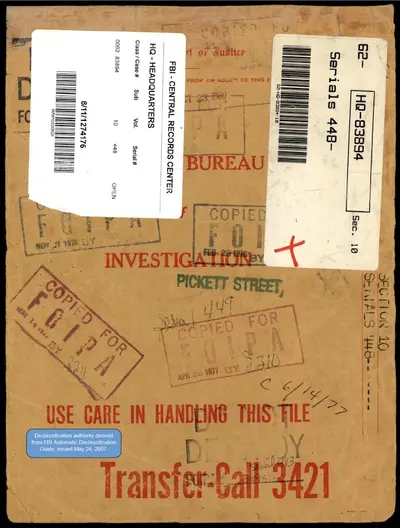
On March 26, 1966, a series of unidentified-object incidents occurred in the vicinity of Toronto, Ontario. These sightings were formally recorded by U.S. government investigators and were later made available to the public on May 8, 2026, through the Presidential Unsealing and Reporting System for UAP Encounters (PURSUE). The documentation indicates that the sightings were not isolated to a single point but were reported over multiple locations, specifically encompassing Sarnia and Kintore, Ontario.
The nature of the reported objects involved bright white lights that exhibited intermittent changes in color, specifically fading to red. Observers noted distinct patterns of movement, with some objects appearing to hover or move through the sky at slow velocities. The duration of these sightings was notable, as one observer documented an object that remained visible for a period exceeding two hours. The internal documentation of the file includes a direct observation regarding the movement of these lights, noting that some were poking along while others remained sitting stock-still in mid-air. While the document provides specific details regarding the visual characteristics and movement of the lights, the total number of witnesses involved in the reporting was not specified in the released records.
Investigation and Classification
The classification of this case remains within the realm of visual sightings reported by ground or air observers. As is standard for all records released under the PURSUE program, the All-domain Anomaly Resolution Office (AARO) has designated the events as unresolved by default. The federal government has maintained a neutral stance regarding the 1966 sightings, neither concluding that the objects were anomalous in origin nor confirming that they were the result of conventional phenomena.
The investigation of such cases during this period often had to account for a wide array of known aerial and atmospheric possibilities. Researchers and investigators frequently evaluated whether the lights could be attributed to experimental aircraft or high-altitude reconnaissance technology. Other common candidates for such sightings included weather balloons, such as the Project Mogul series utilized in the late 1940s, or atmospheric optical phenomena like sundogs and lenticular clouds. Additionally, the presence of astronomical bodies, including the Moon, Venus, or meteors near the horizon, often provided a conventional explanation for bright, moving lights. Despite these possibilities, the specific flight patterns and color shifts recorded in the Toronto-area reports remained a subject of official record-keeping within the FBI archives.