Hamilton, Ontario UFO Sighting (April 4, 1966) — FBI Files
An FBI-documented 1966 incident in Hamilton, Ontario, involves a child reporting two flying saucers and a physical burn sustained from an unidentified object.
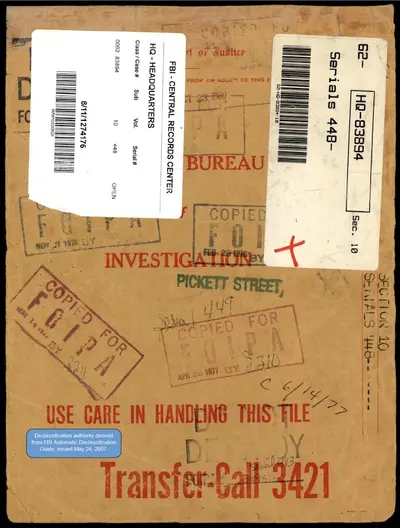
Historical Context of the Hamilton Incident
The sighting occurring on April 4, 1966, in Hamilton, Ontario, emerged during a period of heightened atmospheric and geopolitical tension. During the mid-1960s, the Cold War era necessitated rigorous monitoring of the skies by both Canadian and United States authorities. This period saw frequent reports of unidentified flying objects, often categorized as Unidentified Aerial Phenomena (UAP) in contemporary discourse. Many such sightings were investigated by the United States Air Force under Project Blue Book, a systematic study of UFO reports that operated from 1952 until 1969. While Project Blue Book was the primary investigative body for aerial anomalies, the Federal Bureau of Investigation (FBI) maintained its own protocols for documenting reports that might impact the security of vital installations or involve physical injury on North American soil.
The administrative handling of the Hamilton case reflects the bureaucratic complexity of the era. Under the Bureau’s standing protocols, various field offices, including those in Knoxville, Albuquerque, and Los Angeles, were responsible for routing significant UFO reports to headquarters. This ensured that any phenomenon potentially linked to espionage or threats to critical infrastructure was centralized for federal review. The release of the specific documentation regarding the Hamilton event on May 8, 2026, was made possible through the Presidential Unsealing and Reporting System for UAP Encounters (PURSUE), a mechanism designed to provide public access to previously classified or restricted government files.
Details of the Reported Encounter
The primary documentation regarding the April 4 incident focuses on the testimony of a young boy residing in Hamilton. According to the records, the child reported observing what he described as a flying ship in the sky. His account further detailed the presence of two distinct flying saucers. The impact of this report on his immediate family was significant, as the child communicated these observations to his mother, an event that reportedly left her in a hysterical state.
Beyond the visual sighting, the case contains a claim of physical contact or proximity-related injury. The boy reported sustaining a curved burn on his hand, which he asserted originated from the unidentified object. While the released documents do not specify the total number of witnesses present during the sighting, the boy’s direct account remains the central component of the official record. The nature of the injury, specifically the curved shape of the burn, provides a unique physical detail that distinguishes this case from purely visual sightings of the period.
Classification and Investigative Status
The Hamilton sighting is classified as a visual sighting reported by ground or air observers. In the broader landscape of mid-century aeronautical anomalies, such cases are often analyzed alongside other documented phenomena, ranging from high-altitude weather balloons to the experimental aircraft testing that characterized the late 1940s and 1950s.
As of the current archival status, all records released under the PURSUE program are designated as unresolved by the All-domain Anomaly Resolution Office (AARO) by default. The federal government has maintained a neutral stance regarding the Hamilton incident, neither concluding that the event was anomalous nor confirming that it was the result of conventional means. The investigation has not ruled out either possibility. Within the context of 1966, investigators typically considered several conventional candidates for such sightings. These included atmospheric optical phenomena like sundogs or lenticular clouds, astronomical bodies such as the Moon, Venus, or meteors near the horizon, and man-made objects like weather balloons or experimental military hardware. The Hamilton case remains a subject of study due to the combination of the visual report and the documented physical injury.