Lorain, Ohio UFO Sighting (December 13, 1965) — FBI Files
On December 13, 1965, an orange fireball was reported descending into the woods near Lorain, Ohio, an event later documented in released FBI files.
Background
On December 13, 1965, in Lorain, Ohio, U.S. government investigators recorded an unidentified-object incident later released to the public on May 8, 2026, as part of the Presidential Unsealing and Reporting System for UAP Encounters (PURSUE). This case emerged during the height of the Cold War, a period characterized by intense atmospheric surveillance and heightened anxiety regarding aerial incursions. The incident was investigated under the framework of the Air Force’s Project Blue Book or its predecessors, which served as the primary repository for Unidentified Flying Object reports during the mid-twentieth century.
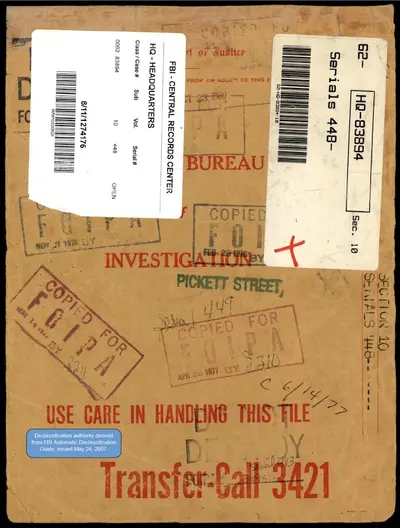
The administrative handling of the report followed established federal protocols of the era. The case was filed with the Federal Bureau of Investigation, as the Bureau’s standing protocols required field offices in locations such as Knoxville, Albuquerque, and Los Angeles to route UFO reports to headquarters when they involved the potential protection of vital installations. This centralized reporting structure ensured that sightings near industrial or strategic sites were scrutinized for implications regarding national security and airspace integrity.
The Incident
The primary documentation of the event centers on a report from an 11-year-old boy living in Lorain, Ohio. On the night of Thursday, December 13, 1965, the youth observed an orange fireball descending into the wooded area near his residence. The visual nature of the event was not isolated to a single observer; additional witnesses in nearby Elyria, Ohio, and in the vicinity of Lake Michigan also claimed to have seen the object. These distributed sightings suggest a trajectory or luminosity that was visible across a significant geographic expanse of the Great Lakes region.
Despite the scale of the reports and the subsequent efforts to locate the source of the light, the object was never found. The number of witnesses involved in the event is not specified in the released document. The lack of physical evidence or a recovered debris field left the incident categorized as an unidentified aerial phenomenon, leaving the trajectory and composition of the fireball a matter of historical record rather than physical certainty.
Analysis and Classification
The case is classified as a visual sighting reported by ground or air observers. In the context of mid-1960s aerospace technology, such sightings were often analyzed through the lens of contemporary atmospheric and military developments. During this era, the scientific community and government agencies evaluated such phenomena against a spectrum of known variables. Conventional candidates for sightings of this period include experimental aircraft, weather balloons, particularly the Project Mogul series utilized in the late 1940s, and various atmospheric optical phenomena such as sundogs or lenticular clouds. Additionally, astronomical objects like Venus, the Moon, or meteors appearing near the horizon were frequently considered as possible explanations for bright, descending lights.
The status of the Lorain incident remains officially unverified. All records released under the PURSUE program are designated unresolved by the All-domain Anomaly Resolution Office (AARO) by default. The federal government has not concluded that the events were anomalous, has not concluded that they were conventional, and has not ruled out either possibility. As an unrecovered sighting, the 1965 event remains a subject of archival study within the broader history of unidentified aerial phenomena in the American Midwest.