Cincinnati, Ohio UFO Sighting (October 2, 1961) — FBI Files
FBI records from October 1961 document an investigation into a potential Soviet nuclear explosion in space following reports of unidentified objects.
Background
On October 2, 1961, in Cincinnati, Ohio, U.S. government investigators recorded an unidentified-object incident later released to the public on May 8, 2026, as part of the Presidential Unsealing and Reporting System for UAP Encounters (PURSUE). This incident occurred during the height of the Cold War, a period characterized by intense geopolitical tension and a pervasive fear of nuclear escalation between the United States and the Soviet Union. During this era, the observation of unidentified aerial phenomena was often viewed through the lens of national security and technological competition.
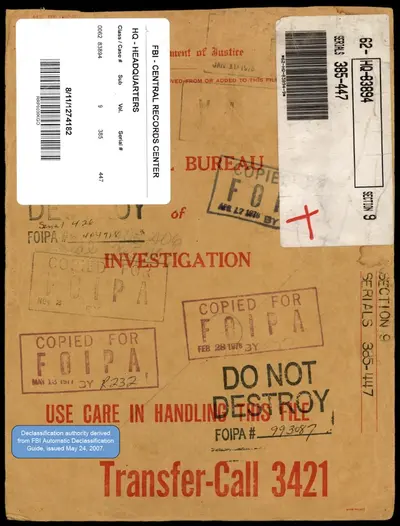
The case was investigated under the framework of the Air Force’s Project Blue Book or its predecessors, which served as the primary repository for Unidentified Flying Object reports during the mid-twentieth century. The documentation was filed with the Federal Bureau of Investigation, following established administrative procedures. At the time, the FBI’s various field offices, including those in Knoxville, Albuquerque, and Los Angeles, utilized standing protocols to route UFO reports to headquarters. This centralized system was designed specifically for the protection of vital installations and the monitoring of potential threats to domestic and strategic stability.
The Incident and Investigation
The specific details regarding the sighting are centered on the observations of a Mr. Stringfield. The investigation was prompted by Stringfield’s review of an article published in the Cincinnati Enquirer. This article addressed the possibility of a Soviet nuclear explosion occurring in space, an event that would have been visible to a massive portion of the global population. Stringfield believed that the contents of this newspaper report correlated directly with information he had received during an anonymous telephone call on September 25, 1961.
The released document does not specify the total number of witnesses involved in the observation. The primary concern documented in the file relates to the potential for a high-altitude nuclear detonation to serve as a psychological or strategic tool for intimidation. The investigation focused on the intersection of reported aerial anomalies and the broader context of Soviet nuclear capabilities.
Documented Evidence
The official file contains a specific excerpt regarding the anxieties held by military and intelligence officials during this period. The verbatim text from the record states that some Defense Department bigwarks were apprehensive that Russia would climax its campaign of intimidation by a spectacular explosion in space, describing it as an immense nuclear blast visible to hundreds of millions of people. This reflects the era’s preoccupation with high-altitude nuclear testing and the potential for such events to disrupt the atmospheric or electromagnetic environment.
Classification and Status
The case is categorized as being associated with a military installation or nuclear facility, reflecting the strategic importance of monitoring any phenomena that could indicate nuclear activity. Within the current archival framework, all records released under the PURSUE program are designated as unresolved by the All-domain Anomaly Resolution Office (AARO) by default. The federal government has maintained a neutral stance regarding this specific event, having neither concluded that the sightings were anomalous nor confirmed them to be conventional.
In the broader context of 1960s aerial phenomena, investigators frequently weighed such reports against known atmospheric and technological variables. Conventional candidates for sightings during this period included experimental aircraft, weather balloons—notably the Project Mogul series utilized in the late 1940s—and various atmospheric optical phenomena such as sundogs or lenticular clouds. Additionally, astronomical objects like Venus, the Moon, or meteors appearing near the horizon were often considered as possible explanations for unidentified lights. The Cincinnati incident remains a significant piece of the archival record due to its direct connection to the nuclear tensions of the early 1960s.