Detroit, Michigan UFO Sighting (March 21, 1960) — FBI Files
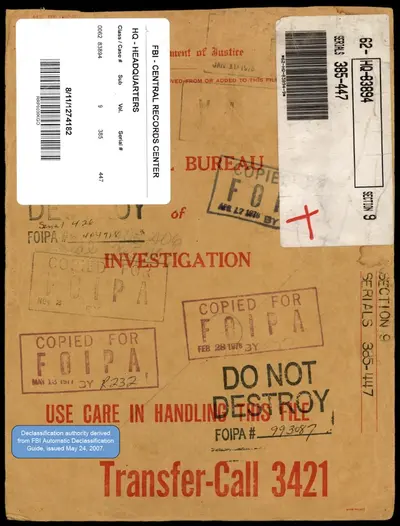
An investigation into a 1960 Detroit sighting involving unidentified flying objects and photographic evidence was released via the PURSUE program.
Historical Context
The sighting in Detroit, Michigan, occurred during a period of intense geopolitical tension characterized by the height of the Cold War. During the late 1950s and early 1960s, the United States maintained a heightened state of vigilance regarding aerial incursions. The presence of unidentified aerial phenomena (UAP) was often viewed through a lens of national security, as the possibility of Soviet reconnaissance technology or advanced weaponry loomed over the American skyline. This era saw the establishment of various government-sanctioned investigations into aerial anomalies, most notably the Air Force’s Project Blue Book, which sought to determine whether such sightings represented extraterrestrial visitors, secret military hardware, or natural atmospheric events.
The geographic significance of Detroit during this period cannot be overstated. As a primary industrial hub and a critical node in the American manufacturing infrastructure, the city was considered a vital installation. Consequently, reports of anomalous aerial activity in the region were subject to rigorous scrutiny by federal agencies. The reporting protocols of the era required that sightings near sensitive industrial or military zones be routed through established channels, ensuring that the Federal Bureau of Investigation (FBI) and other intelligence bodies could assess potential threats to domestic stability and infrastructure.
The March 1960 Incident
On March 21, 1960, an incident involving unidentified objects was recorded by U.S. government investigators. The documentation, which remained restricted for decades, was eventually released to the public on May 8, 2026, as part of the Presidential Unsealing and Reporting System for UAP Encounters (PURSUE). The case was officially filed with the FBI, following standard operating procedures where various field offices, including those in Knoxville, Albuquerque, and Los Angeles, would forward UFO reports to headquarters to protect vital installations.
The primary individual associated with this specific report was Joseph F. Perry. According to the released files, Perry reported an encounter involving what he described as possible flying saucers. Crucially, Perry provided photographic evidence to the authorities to support his claims. His involvement extended beyond the initial report, as he contacted President Eisenhower to request the return of his photographs after they had been transferred to the Office of Special Investigations (OSI) and the Air Force. Perry’s motivation for reclaiming the images was rooted in public interest; the file contains his assertion that “thousands are looking forward to viewing the photographs,” suggesting a high level of local or national anticipation regarding the visual evidence.
While the documentation confirms the existence of the report and the photographic evidence, the total number of witnesses to the event is not specified within the released text. The case remains categorized as a visual sighting reported by ground or air observers.
Analytical Framework and Classification
Under the current administrative framework of the All-domain Anomaly Resolution Office (AARO), all records released through the PURSUE program are designated as unresolved by default. The federal government maintains a neutral stance regarding the Detroit incident, having reached no conclusion as to whether the objects were anomalous or conventional. The investigation has neither confirmed the presence of non-human technology nor dismissed the possibility of known human-made or natural phenomena.
When analyzing sightings from the 1960 era, investigators typically weigh several conventional candidates. These include experimental aircraft developed during the rapid technological advancements of the aerospace arms race, or weather balloons, such as the Project Mogul series which had previously caused significant aerial confusion. Other possibilities include atmospheric optical phenomena, such as sundogs or lenticular clouds, as well as astronomical objects like Venus, the Moon, or meteors appearing near the horizon. The Detroit case remains a subject of study within the broader archive of Cold War-era aerial anomalies.