1950s UFO Contactee Era
The 1950s saw the rise of 'contactees' - people who claimed peaceful contact with benevolent Space Brothers. George Adamski, George Van Tassel, and others reported meetings with Venusians bringing messages of peace. They held conventions, wrote books, and created a UFO subculture that persists today.
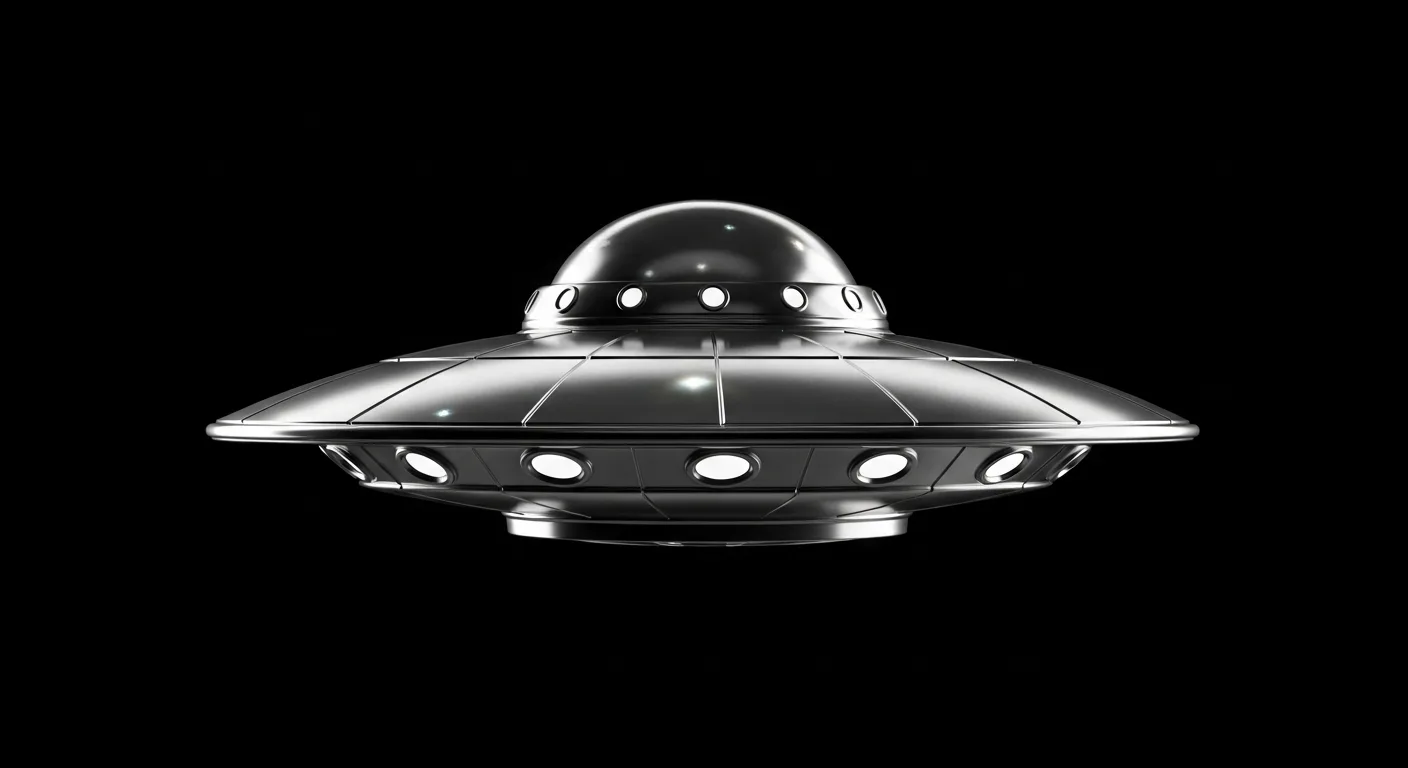
1950s UFO Contactee Era
In the years following the atomic detonations over Hiroshima and Nagasaki, as the Cold War settled its frozen grip on the Western world and the skies above the American desert began to fill with experimental aircraft and missile tests, a new kind of prophet emerged from the margins of society. These were the contactees—men and women who claimed not merely to have glimpsed unidentified objects in the heavens but to have stood face to face with their occupants, shaken hands with beings from Venus and Saturn and Mars, and received from them urgent messages of peace and spiritual awakening. The contactee movement of the 1950s was part religious revival, part science fiction spectacle, and part Cold War anxiety dream. It drew thousands of earnest believers to desert gatherings and lecture halls, generated bestselling books that were translated into dozens of languages, and planted seeds of belief that would eventually blossom into the modern UFO subculture, the New Age movement, and an enduring strain of American spiritual seeking that persists to this day.
The World That Made the Contactees
To understand the contactee phenomenon, one must first appreciate the particular anxieties of the early atomic age. The United States in the early 1950s was a nation living under an unprecedented shadow. The Soviet Union had detonated its first nuclear device in 1949, years ahead of Western predictions, and the hydrogen bomb tests that followed in the early 1950s demonstrated destructive power on a scale that defied human comprehension. Schoolchildren practiced duck-and-cover drills beneath their desks. Suburban families dug backyard fallout shelters. The Doomsday Clock, established by the Bulletin of the Atomic Scientists, ticked perilously close to midnight.
Into this atmosphere of dread came a wave of UFO sightings that seemed to confirm humanity’s deepest hopes and fears about its place in the cosmos. The Kenneth Arnold sighting of 1947, in which a private pilot reported nine luminous objects skimming across the Cascade Mountains at impossible speed, had introduced the term “flying saucer” into the American vocabulary. The Roswell incident of the same year, whatever its true nature, embedded the idea of crashed alien spacecraft into popular culture. By the early 1950s, thousands of Americans were scanning the skies for anomalous lights, and many were finding them. The Air Force’s Project Blue Book investigated hundreds of reports each year, and while most were explained as misidentified aircraft, weather phenomena, or celestial objects, a stubborn residue of cases defied conventional explanation.
Against this backdrop, the contactees offered something that neither the military nor the scientific establishment could provide: reassurance. Where the government spoke of threats and preparedness, the contactees spoke of benevolent beings who had traveled across the void of space not to conquer but to counsel. Where the atomic scientists warned of extinction, the Space Brothers—as the contactees invariably called their extraterrestrial friends—promised salvation. It was a message perfectly calibrated to the anxieties of the age, and it found a receptive audience among Americans who yearned for some higher authority to step in and prevent the catastrophe that seemed increasingly inevitable.
George Adamski and the Venusian in the Desert
The man who did more than any other to define the contactee movement was George Adamski, a self-educated philosopher and amateur astronomer who operated a small cafe at the base of Mount Palomar in California, within sight of the famous observatory. Adamski had been making claims about extraterrestrial life since the 1940s, lecturing to small groups about cosmic philosophy and universal laws. He had already published a science fiction novel, “Pioneers of Space,” that described interplanetary travel in terms remarkably similar to the contact experiences he would later claim as fact.
On November 20, 1952, Adamski drove into the Mojave Desert near Desert Center, California, accompanied by six companions who would serve as witnesses to what followed. According to Adamski’s account, a large cigar-shaped craft appeared in the sky, pursued by military jets. A smaller, bell-shaped scout ship then descended and landed nearby. From it emerged a being of extraordinary beauty—a man with shoulder-length blond hair, high cheekbones, and an expression of gentle wisdom. This was Orthon, a Venusian, who communicated with Adamski through a combination of telepathy and hand gestures.
Orthon’s message, as Adamski relayed it, was one of urgent concern. The Space Brothers had been observing humanity’s development of nuclear weapons with growing alarm. The radiation from atomic tests was not merely poisoning the Earth but was spreading through space, threatening other worlds and disrupting the cosmic order. The people of Venus, Mars, Saturn, and other planets in our solar system had sent emissaries to warn humanity before it was too late. They came in peace, seeking not to interfere but to guide, hoping that humanity would choose wisdom over self-destruction.
Adamski’s six companions, positioned at some distance from the encounter, corroborated that they had seen him speaking with a figure near a landed craft, though their testimony varied in its details. Footprints were found at the site, and Adamski later produced plaster casts showing what he described as symbols from an alien language embedded in the sole prints. Photographs followed—images of bell-shaped scout ships hovering against clear desert skies, taken through Adamski’s telescope.
The publication of “Flying Saucers Have Landed” in 1953, co-authored with Desmond Leslie, made Adamski an international sensation. The book sold hundreds of thousands of copies and was translated into numerous languages. Adamski followed it with “Inside the Space Ships” in 1955, which described elaborate journeys aboard Venusian mother ships, meetings with the masters of multiple worlds, and visions of the dark side of the Moon that included forests, cities, and lakes. He lectured around the world, drew enormous crowds, and was reportedly received by Queen Juliana of the Netherlands and Pope John XXIII, though the Vatican later denied any formal audience.
George Van Tassel and the Giant Rock Conventions
If Adamski was the contactee movement’s most famous figure, George Van Tassel was its great organizer. A former flight inspector for Howard Hughes and Lockheed, Van Tassel had retreated in the late 1940s to a remote spot in the Mojave Desert near a massive freestanding boulder known as Giant Rock. There he operated a small airport and a cafe, living with his family in rooms excavated beneath the enormous stone.
Van Tassel claimed that his contacts with extraterrestrial beings began in 1951, when a craft landed near Giant Rock and its occupants invited him aboard. The beings, who identified themselves as coming from Venus, communicated with him telepathically and revealed principles of rejuvenation technology based on electromagnetic energy. Van Tassel soon began channeling messages from a being he called Ashtar, commander of a vast fleet of spacecraft monitoring Earth, who delivered lengthy discourses on subjects ranging from nuclear disarmament to the nature of time and consciousness.
Beginning in 1954, Van Tassel organized the Giant Rock Spacecraft Conventions, annual gatherings that drew contactees, believers, curiosity seekers, and journalists to the remote desert location. At their peak in the mid-to-late 1950s, these conventions attracted as many as ten thousand attendees who camped in the desert, listened to speakers describe their encounters with Space Brothers, purchased books and pamphlets, and scanned the night skies for signs of extraterrestrial visitation. The conventions were part revival meeting, part county fair, and part something entirely new—a gathering of people united by the conviction that humanity was not alone and that beings from other worlds were actively working for our benefit.
The atmosphere at Giant Rock was electric with possibility. Attendees later recalled the sense of community and shared purpose that pervaded the gatherings, the feeling that they were participants in something genuinely historic. Speakers took turns at the podium, each describing their contacts in vivid detail. Some claimed to have been taken aboard spacecraft. Others described telepathic communications received in their living rooms. A few produced photographs, recordings, or physical artifacts they attributed to their alien friends. The crowd listened with rapt attention, asking questions, comparing experiences, and debating the finer points of extraterrestrial philosophy.
Van Tassel’s most ambitious project was the Integratron, a dome-shaped structure he began building near Giant Rock in 1954, based on designs he claimed were communicated to him by his Venusian contacts. The Integratron was intended to be a rejuvenation machine, using rotating electromagnetic fields to reverse the aging process. Van Tassel worked on the structure for nearly two decades, funding its construction through donations and convention proceeds. He died in 1978 before completing the project, but the Integratron still stands in the desert near Landers, California, now used as a venue for sound baths and acoustic meditation sessions—a strange but fitting afterlife for a building conceived through alleged alien guidance.
The Wider Circle of Contactees
Adamski and Van Tassel were the most prominent figures in a much larger movement. Throughout the 1950s, dozens of individuals came forward with their own contact stories, each adding new details to the emerging mythology of benevolent extraterrestrial visitors.
Truman Bethurum, a road maintenance worker from Redondo Beach, California, described multiple encounters with a beautiful female captain named Aura Rhanes, who commanded a spacecraft from the planet Clarion, said to be hidden behind the Moon. Bethurum’s accounts had a romantic quality that distinguished them from the more philosophical narratives of Adamski and Van Tassel. His wife reportedly divorced him on the grounds that his obsession with the alluring Captain Rhanes constituted a form of infidelity—perhaps the only divorce in history prompted by alleged extraterrestrial contact.
Daniel Fry, an explosives technician at White Sands Proving Ground in New Mexico, claimed that in 1950 he encountered a remotely piloted spacecraft in the desert and was taken on a flight from New Mexico to New York City and back in thirty minutes. His contact, a being named A-lan who communicated through the ship’s speakers, explained that his people were descendants of an ancient Earth civilization that had destroyed itself through nuclear war and colonized Mars before eventually moving to other star systems. They had returned to prevent modern humanity from repeating the same catastrophic mistakes.
Howard Menger, a sign painter from New Jersey, described contacts spanning his entire lifetime, beginning with childhood encounters with a beautiful blond woman in the woods near his home. By the 1950s, Menger claimed he was acting as a liaison between the Space Brothers and Earth, helping newly arrived extraterrestrials blend into human society by providing them with clothing, haircuts, and identity documents. He also claimed to have traveled to the Moon, where he described conditions that bore no resemblance to the airless wasteland that Apollo astronauts would later encounter.
Orfeo Angelucci, a factory worker at the Lockheed plant in Burbank, California, perhaps produced the most mystical and emotionally affecting contactee narratives. His encounters, described in “The Secret of the Saucers” (1955), had a dreamlike, almost devotional quality. Angelucci described being lifted from his car on a lonely road, taken aboard a craft of shimmering light, and shown visions of Earth’s spiritual destiny. His Space Brothers wept for humanity’s suffering and spoke of cosmic love and redemption in terms that echoed both Christian mysticism and Eastern philosophy.
The Messages from Beyond
Despite their differences in background and temperament, the contactees delivered remarkably consistent messages from their alleged extraterrestrial friends. The core themes repeated across virtually every account: humanity stood at a crossroads, nuclear weapons threatened not merely Earth but the cosmic order, spiritual awakening was essential for survival, and benevolent beings from more advanced civilizations were watching with compassion and concern.
The Space Brothers consistently warned against nuclear testing and the arms race. They described radiation as a poison that spread far beyond Earth’s atmosphere, disrupting the harmony of the solar system and even threatening other inhabited worlds. This message resonated powerfully with the growing anti-nuclear movement of the 1950s and gave it a cosmic dimension. If the atomic scientists warned that nuclear war would destroy civilization, the Space Brothers warned that it would be a crime against the universe itself.
The spiritual content of the contactee messages drew heavily on Theosophy, the esoteric philosophical system developed by Helena Blavatsky in the late nineteenth century. Concepts such as spiritual evolution, ascended masters, lost civilizations, and the hierarchical ordering of the cosmos appeared throughout contactee literature, often with new terminology but recognizable foundations. The Space Brothers functioned much as the Theosophical masters had—enlightened beings who guided humanity from a higher plane of existence, working behind the scenes to steer civilization toward its destined awakening.
This spiritual dimension distinguished the contactees from the broader UFO community, which was increasingly focused on nuts-and-bolts investigation of sightings and physical evidence. Where serious ufologists sought to prove that unidentified objects represented advanced technology—possibly extraterrestrial, possibly military—the contactees were fundamentally uninterested in technological questions. Their concern was with the message, not the medium. The spacecraft were merely vehicles for spiritual truths, and the Space Brothers were teachers rather than specimens to be studied.
Skeptics, Critics, and Controversy
The contactee movement attracted fierce criticism from virtually every direction. The scientific establishment dismissed it as fantasy or fraud. The military regarded it with suspicion, concerned that contactee gatherings might be used for Soviet propaganda or espionage. Even the mainstream UFO research community, represented by organizations such as the National Investigations Committee on Aerial Phenomena (NICAP), treated the contactees with open contempt, fearing that their extravagant claims would discredit the entire field of UFO study.
The evidence offered by the contactees was uniformly unconvincing to critical analysis. Adamski’s photographs of Venusian scout ships bore a suspicious resemblance to chicken brooders, bottle coolers, and surgical lamp housings, and photographic experts identified numerous inconsistencies in the images. His descriptions of Venus as a lush, inhabited world were contradicted by every scientific observation, and when space probes eventually reached Venus in the 1960s, they revealed a hellish landscape of crushing atmospheric pressure and temperatures hot enough to melt lead—a far cry from the paradise Adamski had described.
The contactees’ claims about other solar system bodies fared no better as space exploration advanced. Mars proved to be a cold, barren desert with no signs of civilization. The far side of the Moon, when finally photographed by Soviet and American spacecraft, showed craters rather than the forests and cities that Adamski and others had described. Saturn’s rings were ice and rock, not the highway of spacecraft that some contactees had suggested.
Beyond the factual problems, there were questions of motive and character. Several contactees had backgrounds in science fiction writing or occult philosophy that suggested their “experiences” might be creative rather than literal. Others profited handsomely from their claims through book sales, lecture fees, and donations, creating financial incentives that skeptics found difficult to ignore. The consistency of the contactee messages, rather than suggesting a common truth, might equally suggest a shared cultural template—the anxieties and hopes of the atomic age projected onto the blank screen of outer space.
The Legacy That Endured
The contactee era as a coherent movement began to fade in the early 1960s, overtaken by real space exploration and by a shift in UFO culture toward darker narratives of alien abduction and government conspiracy. The friendly Space Brothers gave way to the emotionless Greys of Barney and Betty Hill’s 1961 abduction account, and the optimistic tone of contactee literature was replaced by stories of medical experimentation, implants, and hybrid breeding programs. The universe, it seemed, had become a more frightening place.
Yet the contactee legacy proved remarkably durable. The New Age movement that blossomed in the 1970s and 1980s drew directly on contactee themes, incorporating channeled messages, cosmic hierarchies, and the promise of spiritual ascension into a broader framework of alternative spirituality. The concept of Ashtar Command, first articulated by Van Tassel, evolved into an elaborate mythology that continues to attract adherents in the twenty-first century. Adamski’s blond, benevolent Nordics became a recognized category in UFO typology, contrasting with the more sinister alien types that dominate modern abduction narratives.
The Giant Rock conventions established the template for UFO conferences that continue to be held worldwide, gatherings where believers and researchers meet to share experiences, hear speakers, and purchase books and merchandise. The contactee model of small-group encounters and personal spiritual relationships with extraterrestrial beings anticipated the channeling movement and the proliferation of online communities dedicated to extraterrestrial communication.
The Integratron still stands in the desert near Landers, California, now used as a venue for sound baths and acoustic meditation sessions—a strange but fitting afterlife for a building conceived through alleged alien guidance.
Sources
- Project Blue Book — National Archives — USAF UFO investigation files, 1947–1969
- CIA UFO/UAP Reading Room — Declassified CIA documents on UAP
- Chronicling America — Historic US newspapers (1690–1963)