Vancouver, Washington UFO Sighting (July 1947) — FBI Files
In July 1947, three sheriff's deputies reported observing dozens of objects moving like a flight of geese accompanied by a low humming sound.
Historical Context
The summer of 1947 represents a pivotal moment in the history of unidentified aerial phenomena, marking the beginning of what researchers often categorize as the first modern wave of “flying saucer” reports. This period was characterized by a sudden, nationwide surge in sightings following the Kenneth Arnold encounter in June 1947 and the controversial events surrounding the Roswell incident in July 1947. During this era, the concept of an extraterrestrial or technologically advanced unidentified craft was entering the public consciousness, though the term “UFO” was not yet the standard nomenclature used by the press or the government.
At the time, the United States was navigating the early complexities of the Cold War. The rapid advancement of aerospace technology, including the development of jet engines and long-range reconnaissance capabilities, created an environment where unidentified aerial objects could be interpreted through various lenses of national security. The presence of experimental aircraft, high-altitude balloons, and the early stages of secret atmospheric monitoring programs contributed to a climate of heightened surveillance and frequent reports of anomalous objects in the sky.
The Vancouver Incident
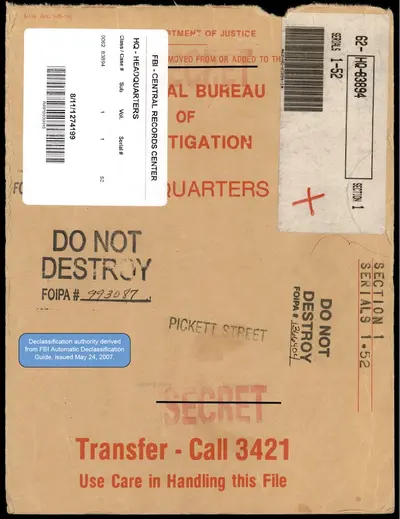
In July 1947, in Vancouver, Washington, U.S. government investigators recorded an unidentified-object incident later released to the public on May 8, 2026, as part of the Presidential Unsealing and Reporting System for UAP Encounters (PURSUE). The incident was documented within the files of the Federal Bureau of Investigation. Under the Bureau’s standing protocols for the protection of vital installations, various field offices, including those in Knoxville, Albuquerque, and Los Angeles, were responsible for routing UFO reports to headquarters. This systematic approach ensured that any aerial phenomenon occurring near sensitive or strategic locations was brought to the attention of federal authorities.
The specific details of the sighting involve three sheriff’s deputies stationed in Vancouver, Washington. These observers reported seeing between 20 to 50 objects positioned over Portland, Oregon. The visual nature of the sighting was described by the deputies as resembling a “flight of geese,” suggesting a coordinated or group-based movement of the objects. In addition to the visual component, the deputies reported hearing a low humming sound that accompanied the presence of these objects. While the released document provides these specific observations, the total number of witnesses involved in the event is not specified within the official record.
Investigative Analysis and Classification
The case is classified as a visual sighting reported by ground observers. Because the documentation was processed through the FBI, the investigation was framed within the context of potential threats to domestic security and the integrity of national airspace. The nature of the report, involving multiple objects moving in a pattern, mirrors other contemporary sightings that described large groups of unidentified craft traveling in formation.
The status of this case remains officially unresolved. All records released under the PURSUE program are designated as unresolved by the All-domain Anomaly Resolution Office (AARO) by default. The federal government has not reached a conclusion regarding whether the event was anomalous or caused by conventional means, and it has not ruled out either possibility.
When evaluating sightings from the late 1940s, investigators often consider several conventional candidates. These include experimental military aircraft, the Project Mogul series of high-altitude weather balloons, and various atmospheric optical phenomena such as sundogs or lenticular clouds. Additionally, astronomical objects such as the Moon, Venus, or meteors appearing near the horizon are frequently analyzed as potential sources for such reports. The Vancouver sighting remains a documented part of the historical record, representing the intersection of local law enforcement observation and federal intelligence gathering during a period of intense aerial uncertainty.