Seattle, Washington UFO Sighting (August 12, 1947) — FBI Files (D3P178 var 2)
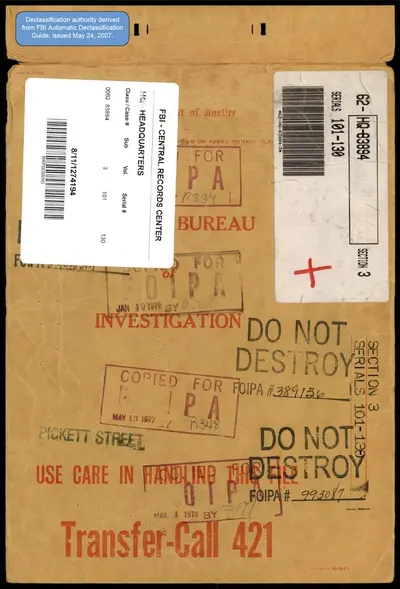
In August 1947, Boeing engineers observed a dark, triangular object fluttering near Boeing Field, an event later documented in FBI files.
Historical Context
The summer of 1947 represents a pivotal moment in the history of modern ufology, marking the beginning of a period characterized by a massive surge in unidentified aerial phenomena reports across the United and United States. This wave of sightings was ignited by the Kenneth Arnold encounter in June 1947 and was further complicated by the controversial events surrounding the Roswell incident in July 1947. During this era, the concept of “flying saucers” entered the public consciousness, often characterized by unusual flight patterns that defied the aerodynamic understanding of contemporary fixed-wing aircraft.
At the time, the United States was navigating the early stages of the Cold War, a period of intense scrutiny regarding airspace security and the potential for advanced Soviet technology. The Federal Bureau of Investigation maintained specific protocols for handling reports of unidentified objects, particularly when such sightings occurred near vital installations or sensitive industrial sites. Field offices in cities such as Knoxville, Albuquerque, and Los Angeles were instructed to route UFO reports to headquarters to ensure the protection of critical infrastructure. This bureaucratic framework treated unidentified aerial sightings not merely as curiosities, but as potential matters of national security and intelligence.
The Boeing Field Incident
On August 12, 1947, a specific incident occurred in Seattle, Washington, involving personnel from the Boeing Aircraft Company. The event was documented in FBI files, which remained restricted from public view until their release on May 8, 2026, under the Presidential Unsealing and Reporting System for UAP Encounters (PURSUE). The witnesses to this event included Bruce Armstrong, an electronics technician at Boeing, and approximately ten other engineers.
The observation took place near Boeing Field, where the group identified a small, dark triangular object in the sky. The object was described as appearing to be composed of a black or dark blue triangular substance. Rather than exhibiting the high-speed propulsion often associated with later descriptions of unidentified phenomena, this object moved at a much slower pace, traveling at approximately fifteen miles per hour. The observers noted that the object appeared to be floating in the air like a leaf, specifically described in the file as seeming to be fluttering like a leaf at an altitude of roughly 200 feet. The flight path of the object concluded when it climbed into the sky and disappeared after reaching the end of the runway.
Investigation and Classification
The nature of the investigation into this specific sighting followed the standard reporting procedures of the era, where the focus remained on the potential for technological intrusion. While the number of witnesses was not explicitly specified in the released documentation beyond the identified group of engineers, the technical background of the observers provided a level of professional scrutiny to the report. The triangular or wedge-shaped geometry of the object remains a defining characteristic of this particular case.
Under the current oversight of the All-domain Anomaly Resolution Office (AARO), all records released through the PURSUE program are designated as unresolved by default. The federal government has maintained a neutral stance regarding the Boeing Field incident, neither concluding that the event was anomalous nor confirming it as a conventional occurrence.
When evaluating sightings from the late 1940s, investigators often consider several conventional candidates. These include the presence of experimental aircraft testing, the use of weather balloons—specifically those associated with the Project Mogul series—or atmospheric optical phenomena such as lenticular clouds and sundogs. Additionally, astronomical objects like the Moon, Venus, or meteors near the horizon are frequently analyzed as potential sources for such sightings. The Seattle incident remains part of this broader scientific and investigative effort to categorize unidentified aerial phenomena within the context of known physical and atmospheric possibilities.