Oregon UFO Sighting (July 4) — FBI Files
Federal Bureau of Investigation records document multiple sightings of unidentified flying objects across the western United States on July 4.
Background
On July 4, in Oregon, Washington, and other western states, U.S. government investigators recorded an unidentified-object incident later released to the and public on May 8, 2026, as part of the Presidential Unsealing and Reporting System for UAP Encounters (PURSUE). This specific event occurred during a period of heightened atmospheric tension and public fascination with unidentified aerial phenomena. The incident is one of the first wave of “flying saucer” reports that swept the United States after the Kenneth Arnold sighting of June 1947 and the Roswell incident of July 1947. During this era, the Pacific Northwest and the broader western United States were frequent subjects of aerial observation due to the region’s vast, unpopulated landscapes and the presence of sensitive military installations and aerospace research facilities.
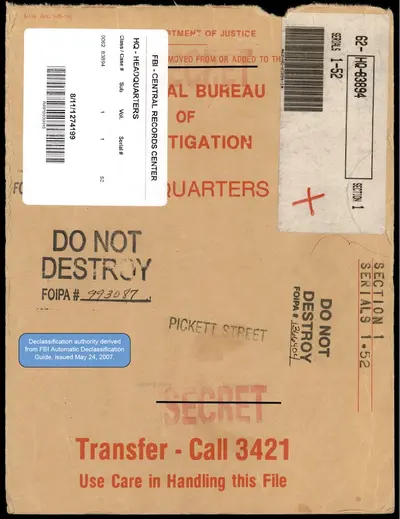
The documentation of this event was processed through established federal channels. The case was filed with the Federal Bureau of Investigation, whose Knoxville, Albuquerque, Los Angeles, and other field offices routed UFO reports to headquarters under the Bureau’s standing protocols for the protection of vital installations. At the time, the FBI maintained a systematic approach to collecting reports that could potentially interfere with the security of domestic airspace or critical infrastructure. This administrative procedure ensured that any phenomenon perceived as a threat to national security or military assets was centralized for analysis by federal authorities.
What the document records
Numerous civilian observers in Oregon, Washington, and other western states reported sightings of the flying objects on July 4th. These reports added to the growing number of observations across the country, which had begun around June 25th. The timing of the July 4th reports placed them within a concentrated window of activity that characterized the mid-summer of 1947. While the reports were widespread across several western states, the specific details regarding the flight paths or exact trajectories of the objects were not part of the primary reporting summary.
The number of witnesses is not specified in the released document. The reports primarily consisted of visual accounts provided by ground or air observers who noted the presence of objects moving through the atmosphere. Such reports were common during this period, as the proliferation of civilian aviation and the increased visibility of the night sky following the end of World War II provided more opportunities for the public to engage with aerial phenomena.
Type of case
The case is a visual sighting reported by ground or air observers. This classification places the event within the standard category of Unidentified Anomalous Phenomena (UAP) investigations, where the primary evidence is based on human perception and visual tracking of objects in the sky.
Status
All records released under the PURSUE program are designated unresolved by the All-domain Anomaly Resolution Office (AARO) by default. The federal government has not concluded that the events were anomalous, has not concluded that they were conventional, and has not ruled out either possibility. The lack of a definitive conclusion reflects the inherent difficulty in verifying visual-only sightings without corroborating radar or sensor data.
The investigation of such cases often involves weighing the possibility of unknown technology against known atmospheric or man-made phenomena. Conventional candidates for sightings of this period include experimental aircraft, weather balloons, especially the Project Mogul series in the late 1940s, atmospheric optical phenomena such as sundogs and lenticular clouds, and astronomical objects including Venus, the Moon, and meteors near the horizon. The Project Mogul program, in particular, involved high-altitude balloon arrays designed to detect Soviet nuclear tests, which frequently contributed to the confusion surrounding unidentified objects in the western United States during the late 1940s.