Kenneth Arnold UFO Sighting, Mt. Rainier, Washington (June 24, 1947)
An investigation into the June 24, 1947, sighting near Mt. Rainier, Washington, which contributed to the initial wave of mid-century flying saucer reports.
Historical Context of the 1947 Aerial Phenomenon
The summer of 1947 represents a pivotal moment in the history of modern aerial anomaly documentation. During this period, the United States was navigating the early complexities of the Cold War, a geopolitical climate characterized by intense technological competition and heightened surveillance of the national airspace. The emergence of reports involving unidentified aerial phenomena coincided with significant advancements in aeronautical engineering, including the development of high-altitude reconnaissance capabilities and experimental jet propulsion. This era saw the birth of the “flying saucer” phenomenon, a term that entered the popular lexicon following a series of high-profile sightings that suggested the presence of objects moving with physics-defying maneuverability.
The Pacific Northwest, particularly the region surrounding the Cascade Mountain Range, has long been a focal point for such observations due to its complex topography and frequent atmospheric disturbances. The presence of massive volcanic structures like Mt. Rainier creates unique meteorological conditions, including the formation of lenticular clouds and complex light refraction patterns, which have historically complicated the identification of aerial objects. During the late 1940s, the scientific and military communities were beginning to grapple with how to categorize these sightings, often struggling to differentiate between emerging military technology, natural atmospheric events, and truly anomalous phenomena.
The June 24 Incident and Official Documentation
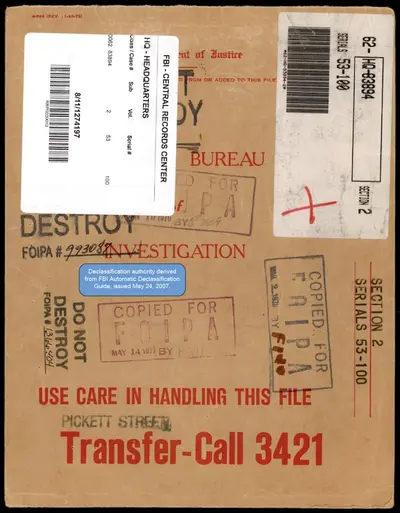
On June 24, 1947, in the vicinity of Mt. Rainier, Washington, U.S. government investigators recorded an unidentified-object incident. The details of this specific event were not made available to the general public for decades, eventually being released on May 8, 2026, as part of the Presidential Unsealing and Reporting System for UAP Encounters (PURSUE). This release provided a rare glimpse into the internal bureaucratic handling of aerial anomalies during the mid-twentieth century.
The document records that flying discs were first reported in the area near Mt. Rainier on this date by Kenneth Arnold. This initial report served as a catalyst, prompting further investigation into the phenomenon within the region. While the released documentation provides the framework for the investigation, the specific number of witnesses involved in this particular sighting is not specified within the official record. The incident occurred during a period of heightened sensitivity, following the Kenneth Arnold sighting of June 1947 and preceding the Roswell incident of July 1947, placing it firmly within the first wave of reported unidentified objects that characterized the era.
Investigative Protocols and Bureaucratic Processing
The administrative handling of the Mt. Rainier case followed established federal procedures for the era. The case was filed with the Federal Bureau of Investigation (FBI), which operated under standing protocols designed to protect vital installations and national security interests. At the time, the FBI’s various field offices, including those in Knoxville, Albuquerque, and Los Angeles, were responsible for receiving and routing UFO reports to the Bureau’s headquarters. This centralized processing ensured that any reports that could potentially impact the security of sensitive military or governmental sites were scrutinized by central authorities.
The methodology of the time focused heavily on the potential for these sightings to represent incursions by foreign powers or breaches of restricted airspace. The reporting structure was less about scientific analysis of the objects themselves and more about the security implications of unidentified movements within the domestic borders of the United States. This procedural approach reflects the broader institutional preoccupation with airspace integrity during the onset of the nuclear age.
Classification and Resolution Status
The case is classified as a visual sighting reported by ground or air observers. Under the current regulatory framework established by the All-domain Anomaly Resolution Office (AARO), all records released under the PURSUE program are designated as unresolved by default. The federal government has maintained a position of neutrality regarding the Mt. Rainier incident; it has not concluded that the events were anomalous, nor has it concluded that they were conventional. The possibility of either conclusion remains open within the official record.
When evaluating sightings from this period, investigators often consider several conventional candidates. These include experimental aircraft being tested in the post-war era, weather balloons—specifically those associated with the Project Mogul series active in the late 1940s—and various atmospheric optical phenomena such as sundogs or lenticular clouds. Additionally, astronomical objects such as the Moon, Venus, or meteors passing near the horizon are frequently analyzed as potential sources for such reports. The Mt. Rainier incident remains a significant component of the historical archive of these unverified aerial encounters.