Logen, Uteh UAP Encounter, 1947 — USAAF Box 7 #61
A 1947 U.S. Army Air Forces report documents an unidentified object sighting near Logen, Uteh, released via the PURSUE program in 2026.
Historical Context of the 1947 Wave
The year 1947 represents a pivotal moment in the history of aerial anomaly documentation within the United States. Following the conclusion of World War II, the rapid advancement of aeronautical technology created a period of significant atmospheric ambiguity. The emergence of high-altitude reconnaissance, the development of early jet propulsion, and the proliferation of experimental rocket testing contributed to a heightened state of visual uncertainty regarding unidentified objects in the sky. This era is characterized by a sudden surge in reports often referred to as the “flying saucer” wave, a phenomenon triggered by high-profile sightings that captured both military attention and public imagination.
The geographical region of the American Southwest, including areas such as Logen, Uteh, frequently served as a backdrop for such reports due to its proximity to various military testing ranges and the presence of advanced aerospace research facilities. During this period, the distinction between conventional military hardware and truly anomalous phenomena remained difficult to maintain, as the sheer speed and altitude of new aircraft exceeded the observational capabilities of many ground-based witnesses.
The Logen, Uteh Incident
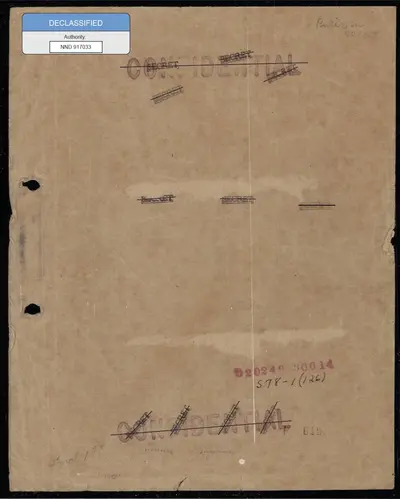
In 1947, near Logen, Uteh, the U.S. Army Air Forces recorded an unidentified-object incident that became Incident #61 in the “Check-List - Unidentified Flying Objects” series archived in Box 7 of file 38_143685. The specific details of the event were preserved within official military documentation, which remained classified for decades. These records were eventually released by the Department of War on May 8, 2026, as part of the Presidential Unsealing and Reporting System for UAP Encounters (PURSUE).
The summary provided within the official military form records that an unspecified observer reported a sighting near the location of Logen, Uteh. The nature of the report is classified as a visual sighting, which could have been documented by either ground-based or air-based observers. This case emerged during the same seasonal window as the Kenneth Arnold sighting of June 1947 and the Roswell incident of July 1947, placing it within the primary wave of mid-century unidentified aerial phenomena.
Classification and Investigation Status
The case is categorized as a visual sighting of an unidentified object. Because the reporting observer remains unspecified in the available documentation, the exact perspective and environmental conditions of the sighting cannot be definitively reconstructed. The incident is officially listed within the U.S. Army Air Forces “Check-List - Unidentified Flying Objects” series, a collection of reports used by military personnel to track anomalous aerial activity during the post-war period.
Under the mandates of the PURSUE program, all records released through this system are designated as unresolved by the All-domain Anomaly Resolution Office. The federal government has maintained a neutral stance regarding the Logen, Uteh encounter, as it has not concluded that the incident was anomalous, nor has it concluded that the object was a conventional craft. The possibility of either an unidentified technological origin or a known atmospheric or aeronautical phenomenon remains open.
Potential Explanations
When analyzing 1947-era sightings, researchers often consider several conventional candidates that could account for such reports. One prominent possibility involves the Project Mogul balloon flights, which were active over the U.S. Southwest during this timeframe. These high-altitude balloons were designed for detecting acoustic signals from foreign nuclear tests and could have been misidentified as unidentified objects. Additionally, the testing of experimental jet and rocket aircraft, which were increasingly common in the region, provides a plausible source for sightings of high-speed aerial phenomena. Other factors, such as atmospheric optical effects or the misidentification of astronomical objects viewed at unusual angles, are also considered standard components of the investigation into the 1947 saucer wave.