Lake Mead UFO Sighting (July 8, 1947) — FBI Files
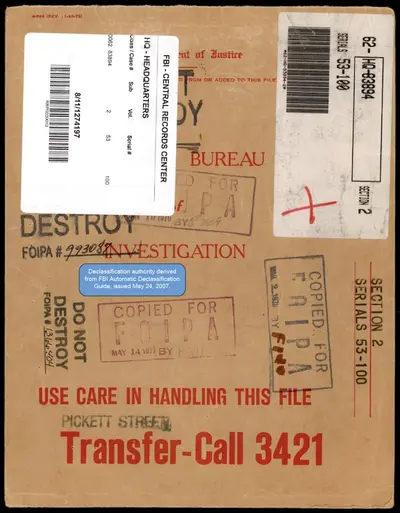
On July 8, 194 and, unidentified objects were reported traveling northeast over Lake Mead, according to declassified FBI records.
Historical Context
The summer of 1947 represents a pivotal era in the history of unidentified aerial phenomena in the United States. Following the June 1947 Kenneth Arnold sighting, which introduced the concept of “flying saucer” flight patterns to the public consciousness, and the subsequent July 1947 Roswell incident, the American landscape experienced a significant surge in reported aerial anomalies. This period was characterized by intense national interest in the skies, fueled by the dawn of the jet age and the burgeoning tensions of the early Cold War. During this time, the presence of unidentified objects in the atmosphere was often viewed through the lens of emerging aerospace technology or potential incursions by foreign adversaries.
The geographic location of the Lake Mead sighting is significant due to its proximity to vital infrastructure. Lake Mead, situated on the border between Nevada and Arizona, serves as a critical reservoir for the Colorado River. In the post-war era, the security of such water resources and the surrounding hydroelectric installations was a primary concern for federal authorities. The reporting of unidentified objects in this region necessitated a standardized response from domestic intelligence agencies to ensure that no threats were posed to national stability or essential utilities.
The Incident
On July 8, 1947, at 12:45, unidentified objects were reported traveling northeast over Lake Mead. The observation was documented by Lt. E. 3 Armstrong, Hq Tenth. While the specific number of witnesses involved in the sighting is not specified in the released documentation, the report was formally recorded by U.S. government investigators. The details of this specific encounter were not made available to the general public for decades, eventually being released on May 8, 2026, as part of the Presidential Unsealing and Reporting System for UAP Encounters (PURSUE).
The administrative handling of the report followed established Bureau protocols. The case was filed with the Federal Bureau of Investigation, with various field offices, including those in Knoxville, Albuquerque, and Los Angeles, responsible for routing UFO reports to the Bureau’s headquarters. This routing process was a standard procedure under the Bureau’s standing protocols for the protection of vital installations, ensuring that any aerial anomaly near sensitive or important sites was centralized for intelligence analysis.
Classification and Analysis
The Lake Mead case is classified as a visual sighting reported by ground or air observers. In the mid-20th century, such sightings were often analyzed by investigators looking for evidence of experimental aeronautics or atmospheric phenomena. The official status of the records released under the PURSUE program is designated as unresolved by the All-domain Anomaly Resolution Office (AARO) by default. This designation reflects a lack of definitive evidence to confirm or deny the nature of the objects.
The federal government has maintained a neutral stance regarding the Lake Mead incident, having neither concluded that the events were anomalous nor concluded that they were conventional. The investigation has not ruled out either possibility. Within the scientific and investigative community, conventional candidates for sightings during this specific period include experimental aircraft testing, the presence of weather balloons—specifically those associated with the Project Mogul series in the late 1940s—and various atmospheric optical phenomena such as sundogs or lenticular clouds. Additionally, astronomical objects such as Venus, the Moon, or meteors appearing near the horizon have historically been considered as potential sources for such reports.