East St. Louis, Illinois UFO Sighting (August 1947) — FBI Files
Federal investigators examined reports of unidentified disks over East St. Louis, Illinois, which were ultimately identified as railroad maintenance materials.
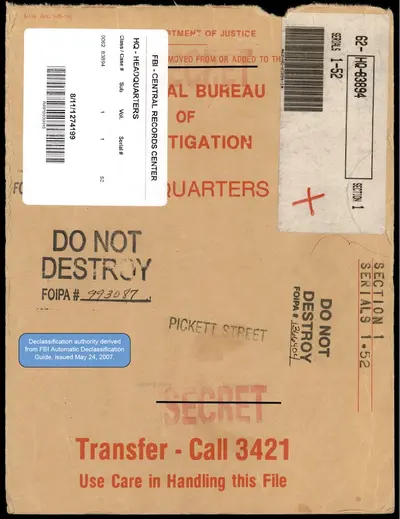
Background
In August 1947, in East St. Louis, Illinois, U.S. government investigators recorded an unidentified-object incident later released to the public on May 8, 2026, as part of the Presidential Unsealing and Reporting System for UAP Encounters (PURSUE). This specific event occurred during a period of intense public and governmental preoccupation with aerial phenomena. The incident is one of the first wave of “flying saucer” reports that swept the United States following the Kenneth Arnold sighting of June 1947 and the Roswell incident of July 1947. During this summer, the term “flying saucer” entered the global lexicon, fueled by a series of sightings that suggested the presence of technologically advanced, non-conventional craft.
The geographical setting of East St. Louis provided a significant backdrop for such reports. Situated across the Mississippi River from St. Louis, Missouri, the city served as a major industrial and transportation hub, characterized by dense rail networks and heavy manufacturing. Because of its strategic importance to the nation’s logistics and its proximity to vital infrastructure, sightings in this region were subject to rigorous scrutiny. The case was filed with the Federal Bureau of Investigation, whose Knoxville, Albuquerque, Los Angeles, and other field offices routed UFO reports to headquarters under the Bureau’s standing protocols for the protection of vital installations. This administrative procedure ensured that any perceived threat to industrial or military assets was centralized for federal review.
What the document records
The released documentation provides a specific resolution to the reports of “disks” observed over East St. Louis. Upon investigation, these unidentified objects were found to be white paper washers used in railroad maintenance. The physical evidence was confirmed when a locomotive engineer collected several of these items, providing a tangible link between the aerial sightings and standard industrial debris. While the visual appearance of these washers in flight may have mimicked the shape of the era’s reported craft, their origin was entirely terrestrial and related to local rail operations.
The number of witnesses to this specific event is not specified in the released document. This lack of a precise count is common in many mid-century investigative files, where the focus of the reporting agency was often on the nature of the object and the potential threat to security rather than the demographic breakdown of observers.
Type of case
The case is classified as a visual sighting reported by ground or air observers. Such sightings were the primary method of UAP documentation during the late 1940s, as radar technology was not yet widely deployed for civilian or widespread atmospheric monitoring.
Status
All records released under the PURSUE program are designated unresolved by the All-domain Anomaly Resolution Office (AARO) by default. This designation reflects a standardized bureaucratic stance where the federal government has not concluded that the events were anomalous, has not concluded that they were conventional, and has not ruled out either possibility. In the specific instance of the East St. Louis case, while the physical evidence pointed toward railroad washers, the official status remains subject to the overarching protocols of the AARO.
Conventional candidates for sightings of this period include experimental aircraft, weather balloons, especially the Project Mogul series in the late 1940s, atmospheric optical phenomena such as sundogs and lenticular clouds, and astronomical objects including Venus, the Moon, and meteors near the horizon. The East St. Louis incident serves as a notable example of how mundane industrial materials can be misidentified as anomalous phenomena during periods of high-intensity aerial reporting.