Cascade mountains UFO Sighting (August 1947) — FBI Files
Federal investigators and Army pilots searched the Cascade Mountains in August 1947 following reports of unidentified flying disks.
Background
In August 1947, within the Cascade Mountains, U.S. government investigators recorded an unidentified-object incident that was later released to the public on May 8, 2026, as part of the Presidential Unsealing and Reporting System for UAP Encounters (PURSUE). This specific event occurred during a period of intense public and military scrutiny regarding unidentified aerial phenomena. The incident is categorized as one of the first wave of “flying saucer” reports that swept the United States following the Kenneth Arnold sighting in June 1947 and the Roswell incident of July 1947. During this era, the sudden influx of such reports created a sense of national preoccupation with the possibility of advanced technology or extraterrestrial presence in the skies.
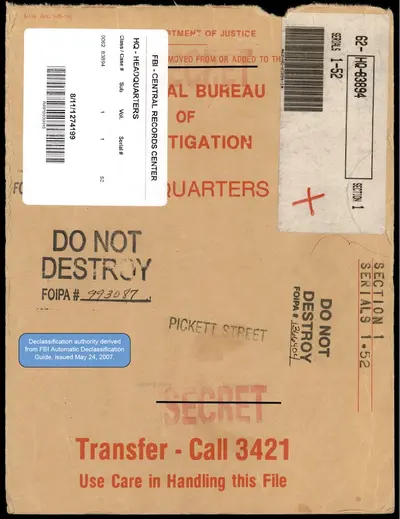
The geographic location of the sighting, the Cascade Mountains, provided a complex landscape for aerial observation. The range, characterized by high peaks, dense forests, and frequent cloud cover, often creates atmospheric conditions that can obscure or distort visual sightings. At the time, the Federal Bureau of Investigation maintained a structured process for handling such reports. The case was filed with the FBI, whose Knoxville, Albuquerque, Los Angeles, and other field offices routed UFO reports to headquarters under the Bureau’s standing protocols for the protection of vital installations. This administrative routing suggests that the government viewed these unidentified objects through the lens of national security and the potential for unauthorized surveillance of sensitive military or industrial sites.
What the document records
The released documentation details the physical response attempted by military personnel to identify the source of the disturbance. Army pilots conducted a search of the Cascade mountains using P-5ical Mustang and A-26 Invader aircraft, specifically looking for the reported flying disks. Despite the deployment of these combat-capable aircraft for reconnaissance, the search yielded no results. The lack of visual confirmation during the aerial sweep left the origin of the objects unverified.
While the documentation provides details regarding the search efforts and the nature of the reported objects, the number of witnesses is not specified in the released document. This lack of a precise witness count is common in many declassified files from this period, where the focus of the investigators was often on the physical manifestation of the object rather than the demographic details of the observers.
Type of case
The case is classified as a pilot or aircrew sighting, observed from the cockpit during flight. This classification is significant because sightings from an aerial perspective often involve different variables than ground-based observations, such as different angles of light, higher velocities, and the potential for interaction with atmospheric layers.
Status
All records released under the PURSUE program are designated unresolved by the All-domain Anomaly Resolution Office (AARO) by default. The federal government has not concluded that the events were anomalous, has not concluded that they were conventional, and has not ruled out either possibility. The investigation into the August 1947 Cascade Mountains incident remains open in a historical and analytical sense, as no definitive explanation has been applied to the reports.
Conventional candidates for sightings of this period include experimental aircraft, weather balloons, especially the Project Mogul series in the late 1940s, and atmospheric optical phenomena such as sundogs and lenticular clouds. Additionally, astronomical objects including Venus, the Moon, and meteors near the horizon are often considered during the evaluation of such cases. The Cascade Mountains’ specific topography is known to produce lenticular clouds, which are stationary, lens-shaped clouds that can appear to an observer as solid, disk-like objects moving through the sky. Without further empirical data, the August 1947 sighting remains an unverified entry in the annals of unidentified aerial phenomena.