The Broad Haven UFO Incident
Schoolchildren witnessed a landed UFO and its occupant.
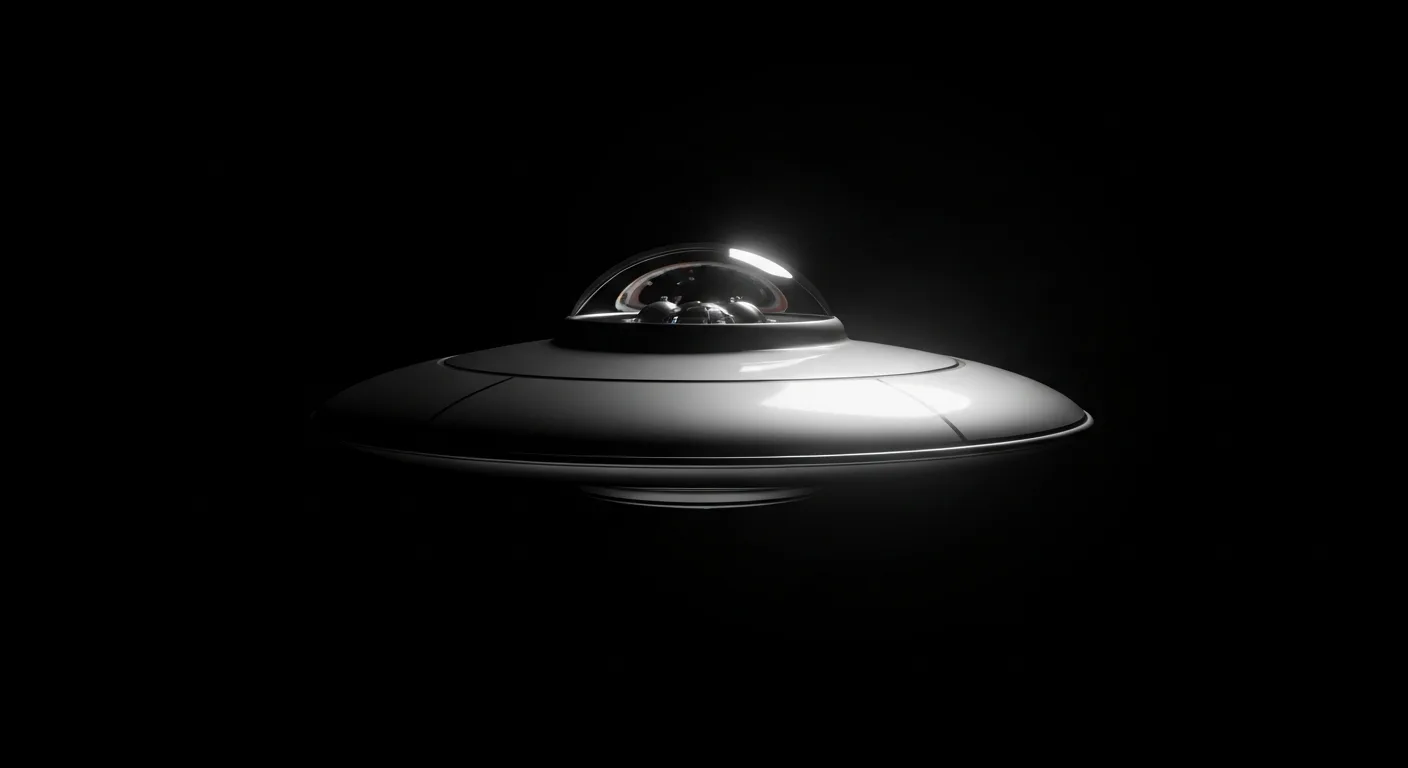
On a cold February afternoon in 1977, a group of schoolchildren at Broad Haven Primary School in Pembrokeshire, Wales, saw something in a field near their playground that would transform their lives and turn their quiet coastal village into the center of one of Britain’s most remarkable UFO flaps. What began with a single sighting by a handful of children would escalate over the following months into a sustained wave of encounters involving hundreds of witnesses across the Pembrokeshire peninsula, an episode so concentrated and so strange that the area earned the nickname “the Welsh Triangle” and attracted the attention of investigators, journalists, and government officials from around the world.
The Setting: Pembrokeshire in Winter
Pembrokeshire in the late 1970s was a world apart from the bustling cities of England. This southwestern corner of Wales jutted into the Irish Sea like a clenched fist, its coastline battered by Atlantic storms and its interior a patchwork of small farms, ancient churches, and villages where life moved at a pace dictated by the seasons and the tides. The population was sparse, the communities tight-knit, and the landscape possessed a wild, primordial quality that seemed to belong to a much older Britain than the one that existed beyond the county’s eastern boundary.
Broad Haven itself was a small seaside village, home to a few hundred residents and a primary school that served children from the surrounding farming communities. The school sat near the village’s modest harbor, and its playground offered views across fields toward the coast. It was a quiet, unremarkable place, the sort of village where nothing much happened and everyone knew everyone else. The children who attended the school were ordinary rural children, more accustomed to tractors and sheep than to anything exotic or sensational.
The area did, however, have a subtle undercurrent of strangeness that predated the 1977 events. Pembrokeshire was rich in folklore—tales of fairy paths, standing stones with mysterious properties, and lights that danced over the marshes. The county’s ancient churches and Celtic crosses spoke of a spirituality that stretched back millennia, and the landscape itself, with its dramatic cliffs, hidden coves, and wind-sculpted headlands, seemed designed to inspire wonder and unease in equal measure. Whether this deep history of the uncanny had any bearing on what happened in 1977 is a question that has never been satisfactorily answered.
The Children’s Sighting
The events of February 4, 1977, began during the lunch break at Broad Haven Primary School. A group of approximately fourteen children, ranging in age from eight to eleven, were playing in the school grounds when they noticed something unusual in a field adjacent to the school. In the field, partially obscured by trees and bushes, sat a large silver object that none of them could identify.
The children’s accounts, gathered independently in the hours and days that followed, described a silver, cigar-shaped or disc-shaped craft with a dome on top. The object appeared to be resting on the ground or hovering just above it. Some children described seeing lights on or around the craft, and at least one child reported seeing a figure near the object—a humanoid form in a silver or metallic-looking suit.
The children’s reactions varied. Some were frightened and ran back toward the school building. Others were fascinated and moved closer to the field for a better look. A few initially dismissed the object as some kind of vehicle or machinery, perhaps connected to the sewage works that lay in the general direction of the sighting. But as they watched and discussed what they were seeing, a consensus emerged that the object was unlike anything they had encountered before.
The children reported their sighting to their teachers, but the initial adult reaction was skeptical. Children’s imaginations were active things, and a group of excited primary school pupils claiming to have seen a flying saucer was not the sort of report that warranted serious investigation. The lunch break ended, lessons resumed, and the incident might have been forgotten entirely had it not been for what happened next.
The Headmaster’s Test
Ralph Llewellyn, the headmaster of Broad Haven Primary School, was a practical, level-headed man not given to entertaining fantasies. When the children continued to insist on the reality of their sighting in the days that followed, he devised a simple but ingenious test to assess the credibility of their claims.
Llewellyn separated the children who had witnessed the object and, without allowing them to communicate with one another, asked each child individually to draw what they had seen. The results were striking. The drawings, produced independently by children of different ages and abilities, showed a remarkable degree of consistency. All depicted a craft of similar shape—an elongated or disc-like form with a dome on top. The proportions were similar, the positioning of features like lights and the dome was consistent, and the overall impression was of a single object described from slightly different angles by different observers.
The drawings were not identical, as one would expect if the children had simply copied from a common source or agreed on a fabricated story. There were variations in detail—different numbers of lights, slightly different proportions, varying levels of artistic skill—that were entirely consistent with multiple independent observations of the same object. What the drawings lacked was the kind of uniformity that would suggest rehearsal or collusion. They looked exactly like what they purported to be: the honest attempts of a group of children to depict something they had all seen.
Llewellyn was sufficiently impressed by the consistency of the drawings that he reported the incident to the local police and to the press. The story was picked up by regional newspapers and then by national media, and Broad Haven Primary School found itself at the center of a media sensation that the quiet village was entirely unprepared for.
The Welsh Triangle Unfolds
The children’s sighting at Broad Haven Primary School might have remained an isolated curiosity had it not been followed by a sustained wave of UFO reports from across the Pembrokeshire peninsula. In the weeks and months following the school incident, dozens of witnesses in the area reported sightings of unusual aerial objects, strange lights, and humanoid figures in silver suits. The concentration of reports in this relatively small geographical area led journalist and UFO researcher Randall Jones Pugh to coin the term “the Welsh Triangle,” echoing the Bermuda Triangle and implying that something about this particular patch of Welsh countryside was attracting extraordinary phenomena.
The reports came from a wide cross-section of the local community. Farmers reported seeing strange lights hovering over their fields at night. Motorists described encountering luminous objects on remote country roads. A group of guests at the Haven Fort Hotel, situated on a headland overlooking St Bride’s Bay, reported seeing a large, luminous object in a field below the hotel on multiple occasions. The hotel’s owner, Rosa Granville, became one of the most persistent and vocal witnesses, describing encounters with both the craft and its apparent occupants.
Granville’s account was particularly dramatic. She reported that in the early hours of one morning, she was awakened by a commotion outside the hotel and, looking from her window, saw a large, dome-shaped object in the field below. Near the object stood two tall figures in silver suits. The figures appeared to be examining the ground or engaged in some kind of activity that Granville could not identify from her vantage point. She watched for some time before the figures returned to the craft, which then rose silently and departed. Granville was considered a credible witness—she was a businesswoman with no interest in UFOs or the paranormal—and her testimony added substantial weight to the accumulating body of evidence.
The Silver-Suited Figures
One of the most distinctive and unsettling aspects of the Welsh Triangle wave was the repeated reports of humanoid figures in silver suits. These figures were seen at multiple locations across the peninsula, by witnesses who in many cases had no knowledge of one another’s experiences. The consistency of the descriptions—tall, apparently human in proportions, wearing seamless silver or metallic-looking coveralls, and often seen in proximity to the reported craft—suggested either a genuine phenomenon or a remarkably widespread and coordinated hoax.
The silver-suited figures behaved in ways that witnesses found deeply unsettling. They moved with a deliberate, unhurried quality, apparently unconcerned by the presence of human observers. Some witnesses reported that the figures seemed to be examining the landscape—bending down to inspect plants or soil, looking at the sky, or moving in patterns that suggested systematic observation. They did not speak, at least not in any language that witnesses could hear, and they did not respond to attempts at communication.
A particularly disturbing encounter was reported by a farmer named Stephen Taylor, who claimed to have come face-to-face with one of the silver-suited figures on his property. Taylor described the figure as tall, over six feet, with a featureless face that appeared to be covered by a visor or mask. The figure stood motionless, regarding Taylor for several seconds, before turning and walking away with an oddly mechanical gait. Taylor’s dogs, which normally barked at any stranger, remained silent and motionless during the encounter, apparently frozen with fear or some other cause.
The question of whether the silver-suited figures were genuine extraterrestrial visitors, government personnel in protective equipment, pranksters in costume, or something else entirely was never resolved. Investigators considered the hoax hypothesis carefully and discovered that a local businessman had, on at least one occasion, dressed in a silver suit and fire extinguisher equipment to frighten people as a practical joke. This revelation cast doubt on some of the sightings but could not account for all of them, particularly those that occurred at widely separated locations on the same night or that involved witnesses who had no connection to the prankster.
The Investigation
The Broad Haven incident and the wider Welsh Triangle wave attracted serious investigation from several quarters. Randall Jones Pugh, a veterinary surgeon and UFO researcher based in Pembrokeshire, conducted the most thorough civilian investigation, interviewing dozens of witnesses, collecting drawings and photographs, and attempting to correlate the various reports into a coherent picture. His work, published in collaboration with journalist F.W. Holiday in the book “The Dyfed Enigma,” remains the most comprehensive account of the events.
The Ministry of Defence also took an interest, though the extent of official investigation has been a subject of debate. Documents released under the Freedom of Information Act decades later revealed that the MoD had received and filed reports relating to the Welsh Triangle sightings, though the level of active investigation appeared to be minimal. Some researchers have argued that the MoD’s apparent lack of interest was itself suspicious, suggesting that a more thorough investigation may have been conducted through classified channels.
The children’s testimony was subjected to particular scrutiny. Child psychologists who examined the Broad Haven pupils concluded that they were telling the truth as they understood it—that is, they genuinely believed they had seen what they described. Whether this belief reflected objective reality or a shared misperception of something mundane was a question the psychologists could not answer. The consistency of the children’s accounts, the independent drawings, and the absence of any evidence of collusion or coaching were all noted as factors supporting the sincerity, if not necessarily the accuracy, of their reports.
Skeptics proposed various conventional explanations for the sightings. The sewage works near the school were suggested as a possible source of misidentification, though the children who knew the sewage works well insisted that what they saw was entirely different. Weather phenomena, military exercises, and the power of suggestion in a close-knit community where UFO reports were receiving extensive media coverage were all considered as contributing factors. None of these explanations, individually or collectively, accounted for all the reported phenomena.
Forty Years Later
The passage of time has not diminished the conviction of those who were present at Broad Haven Primary School in February 1977. In the decades since the sighting, many of the original child witnesses have spoken publicly about their experiences, and their accounts have remained remarkably consistent with what they reported as children. Several of the witnesses have described the incident as a formative experience that shaped their understanding of the world and their relationship to the unexplained.
A reunion of the original witnesses, organized decades after the event, brought together adults who had been children on that February afternoon. Their recollections, tested by years of normal life and adult skepticism, showed no significant deviation from their original accounts. They still described the same object, in the same location, with the same characteristics they had drawn for Headmaster Llewellyn all those years before. If they were wrong about what they saw, they were wrong in a remarkably stable and consistent way.
The wider Welsh Triangle wave faded over the course of 1977, with reports becoming less frequent as the year progressed. No definitive explanation was ever established for the concentration of sightings in the Pembrokeshire area, and the episode remains one of the most significant UFO waves in British history. The region returned to its customary quietness, the headlines moved on to other sensations, and the village of Broad Haven resumed the peaceful obscurity from which it had been so dramatically pulled.
But the memory lingers. In the fields near the primary school, in the lanes and headlands of the Pembrokeshire coast, the events of 1977 have become part of the landscape, woven into the rich tapestry of folklore and experience that defines this ancient corner of Wales. The children who saw the silver craft in the field that February lunchtime are now middle-aged adults with children and grandchildren of their own, but they carry with them the knowledge that on one unremarkable afternoon in their unremarkable childhoods, something appeared in the world that did not belong there—something that departed as mysteriously as it arrived, leaving nothing behind but drawings, memories, and questions that four decades of investigation have failed to answer.
Sources
- CIA UFO/UAP Reading Room — Declassified CIA documents on UAP
- UK National Archives — UFO Files — MoD UFO investigation records
- British Newspaper Archive — UK press archive