America West Flight 564
The pilots of America West Flight 564 observed a cigar-shaped UFO with strobing lights flying parallel to their Boeing 757. Air traffic control saw nothing on radar, but the professional crew stood by their report.
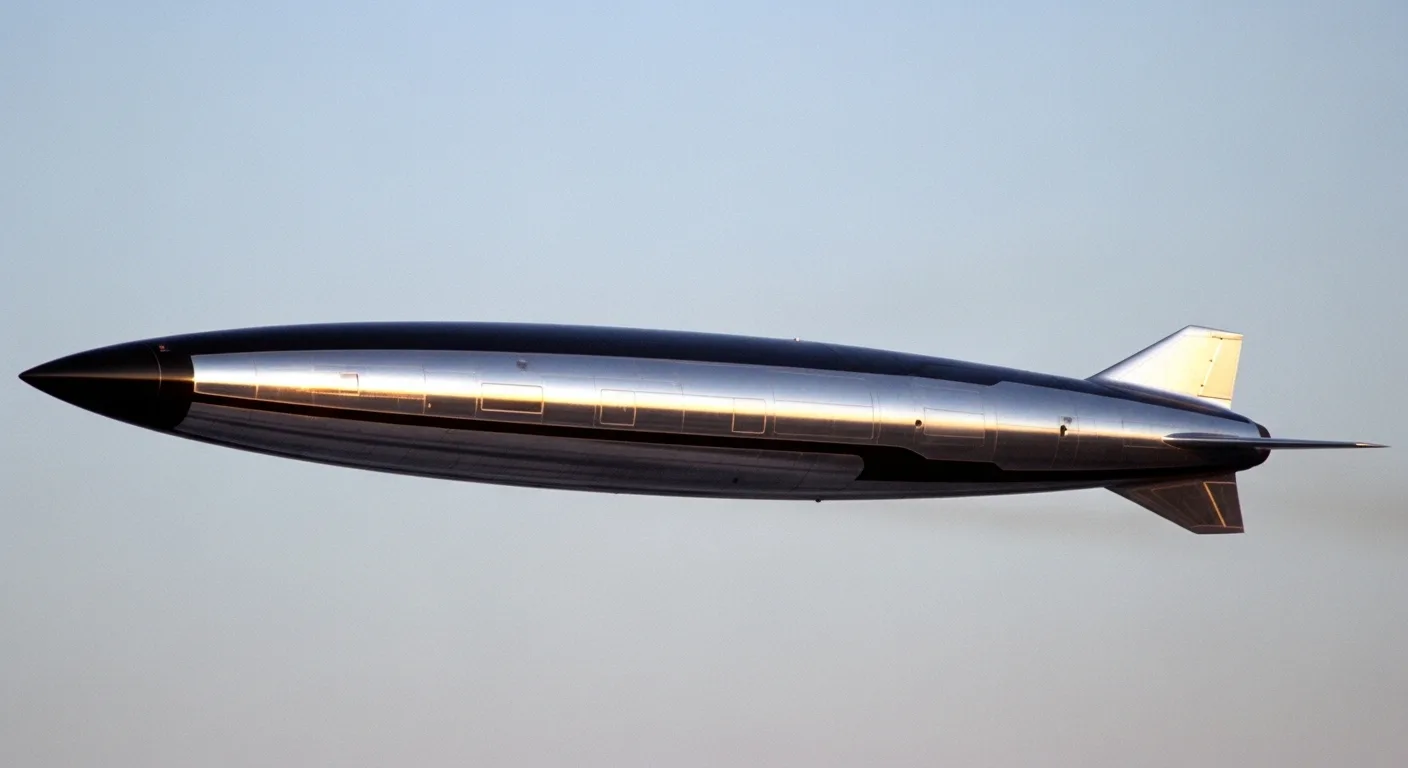
On the evening of May 25, 1995, the crew of America West Flight 564, a Boeing 757 operating a routine service from Dallas-Fort Worth to Las Vegas, encountered something over the Texas panhandle that none of them could explain. For approximately eight to ten minutes, Captain Eugene Tollefson and First Officer John Waller observed a massive cigar-shaped object with a row of strobing lights along its length, flying parallel to their aircraft at a lower altitude. The object was dark-bodied, wingless, and estimated at three hundred to four hundred feet in length, roughly the size of a large cargo vessel suspended impossibly in the air. The crew reported the sighting to air traffic control, which checked its radar screens and found nothing. The object that the professional flight crew could clearly see with their own eyes was apparently invisible to radar, a paradox that deepened the mystery and elevated the case into the upper ranks of credible UFO encounters.
The Flight and the Crew
America West Flight 564 departed Dallas-Fort Worth International Airport in the early evening of May 25, 1995, bound for Las Vegas, Nevada. The aircraft was a Boeing 757-200, one of the workhorses of American commercial aviation, a narrow-body twin-engine jet capable of carrying approximately two hundred passengers. The flight path took the aircraft westward across Texas, New Mexico, and Arizona, a route that the crew had flown many times before, over terrain that was utterly familiar to them.
Captain Eugene Tollefson was in command of the flight. An experienced commercial pilot with thousands of hours of flight time, Tollefson was precisely the kind of witness whose testimony carries weight in aviation circles. Commercial airline captains undergo rigorous training in observation, situational awareness, and the identification of other aircraft, weather phenomena, and potential hazards. Their careers depend on accurate perception and sound judgment, and their professional culture values precise, factual reporting above speculation or embellishment. A captain who made false or exaggerated claims about aerial encounters would face severe professional consequences, including investigation by the FAA and potential loss of certification.
First Officer John Waller occupied the right seat in the cockpit. Like Tollefson, Waller was a trained and experienced aviator whose professional credibility was integral to the sighting’s significance. A first officer on a major commercial airline has passed the same rigorous training and certification requirements as the captain and brings the same observational skills to the cockpit. Having two qualified pilots observe the same object simultaneously eliminates many of the perceptual errors that can affect individual observers, providing a built-in cross-check that enhances the reliability of the report.
A flight attendant also observed the object from the passenger cabin, providing a third independent viewpoint. While the flight attendant’s observation was less detailed than those of the cockpit crew, the additional witness corroborated the existence of an object visible from the aircraft and confirmed that the sighting was not an artifact of the cockpit windows or a misperception confined to the forward crew.
The Encounter
The sighting occurred as Flight 564 was cruising at approximately 39,000 feet over the Texas panhandle, in the vicinity of Bovina, a small agricultural community in the western part of the state. The weather was clear, with excellent visibility and no significant cloud cover. The sun was setting, painting the western sky in shades of orange and red, while the eastern sky behind the aircraft was darkening toward night. These lighting conditions, with ambient light still sufficient for visual observation but with growing contrast between illuminated objects and the darkening sky, were ideal for spotting anomalous objects.
Captain Tollefson was the first to notice the object. Looking out and below the aircraft’s flight path, he observed a dark shape with a row of bright lights along its length. The object was at a significantly lower altitude than the 757, estimated by the crew at somewhere between twenty thousand and thirty thousand feet. It was moving in the same general direction as the aircraft, on a roughly parallel heading, and appeared to be maintaining a consistent speed that was comparable to but slightly slower than the commercial jet.
The object’s shape was immediately distinctive. Both pilots described it as cigar-shaped or cylindrical, with a long, smooth body that showed no evidence of wings, tail surfaces, or engine nacelles. Its outline was dark against the remaining light in the sky, presenting a solid, structured appearance that was clearly not a cloud, a contrail, or any atmospheric phenomenon. The length of the object was estimated at three hundred to four hundred feet, making it comparable in size to a large ship or a substantial building, an object of enormous dimensions to be suspended in the atmosphere without any visible means of support or propulsion.
The most striking feature of the object was its lights. Along the length of the cylindrical body, a row of bright lights pulsated in a sequential pattern, strobing from one end of the object to the other in a regular, rhythmic sequence. The lights were bright enough to be clearly visible at the distance from which the crew was observing, and their regular patterning suggested a deliberate, engineered display rather than a natural phenomenon. The strobing sequence moved consistently in one direction, creating an effect that the pilots found both mesmerizing and deeply unsettling.
Eight Minutes of Observation
The crew observed the object for approximately eight to ten minutes, an exceptionally long duration for a UFO sighting and one that allowed the pilots to study the object in considerable detail. This was not a momentary flash or a brief glimpse of something ambiguous; it was a sustained observation by trained professionals under good viewing conditions, with ample time to assess what they were seeing, discuss it between themselves, and formulate a coherent description.
During those minutes, the pilots conducted the observational equivalent of a field study. They noted the object’s shape, size, altitude, heading, and speed. They observed the pattern of its lights and the consistency of that pattern over time. They checked the object’s position against known landmarks and celestial features to rule out misidentification. They discussed what they were seeing, comparing observations in real time and confirming that both were seeing the same thing. This methodical approach to observation is characteristic of professional pilots and distinguishes their testimony from the more excitable and less structured accounts often provided by civilian witnesses.
The object maintained its position relative to the aircraft throughout the observation period, pacing the 757 as though deliberately keeping station alongside it. This parallel flight was one of the most disturbing aspects of the encounter, as it suggested that the object was not merely traveling in the same direction by coincidence but was actively maintaining a specific spatial relationship with the commercial aircraft. Whether this indicated surveillance, curiosity, or some other form of intelligent interest, it demonstrated a level of awareness and control that was inconsistent with any natural phenomenon or uncontrolled piece of debris.
At no point during the encounter did the object display hostile behavior or make any move that the crew interpreted as threatening. It simply flew alongside the aircraft, maintaining its distance and its heading, its lights strobing in their unchanging pattern, before eventually falling behind or moving away and disappearing from view. The departure was gradual rather than sudden, the object slowly fading from visibility rather than accelerating away or blinking out of existence.
The Radar Void
When the crew of Flight 564 reported their sighting to air traffic control, the response they received added another layer of mystery to an already perplexing encounter. The controller responsible for the sector in which the sighting occurred checked the radar display and reported that nothing was showing on the screen that could correspond to the object described by the crew. No unidentified targets, no secondary radar returns, no unexplained echoes. According to radar, the sky around Flight 564 was empty except for the Boeing 757 itself.
This absence of a radar return for an object that was clearly visible to multiple trained observers is one of the most significant aspects of the America West case. The object described by the pilots was enormous, three to four hundred feet in length, and at an altitude well within the range of ATC radar coverage. A conventional aircraft of that size would have produced a strong primary radar return and, if equipped with a transponder, a secondary return as well. The fact that the object was invisible to radar while clearly visible to the naked eye suggested one of several possibilities, each of them extraordinary.
The most straightforward possibility was that the object was constructed of or coated with material that absorbed or deflected radar energy, rendering it effectively invisible to ground-based radar systems. Such stealth technology existed in 1995 in the form of military aircraft like the F-117 Nighthawk and the B-2 Spirit, but these aircraft were far smaller than the object described by the Flight 564 crew and bore no resemblance to a wingless cylinder with strobing lights. If the object was a stealth aircraft, it was one of a type entirely unknown to aviation technology.
Alternatively, the object might have been employing some form of active radar countermeasure, generating signals that canceled out or confused radar returns. Such technology, while theoretically possible, was beyond the state of the art in 1995 for anything other than highly specialized military applications, and its use by a civilian or unknown entity over the Texas panhandle would raise more questions than it answered.
A third possibility, and the one most disturbing to conventional thinking, was that the object operated on principles that rendered radar detection irrelevant. If the object was not a conventional physical structure but something else entirely, whether a phenomenon of unknown physics, a craft utilizing propulsion systems beyond current human understanding, or something from outside the framework of terrestrial technology, then the absence of a radar return might simply reflect the inadequacy of radar as a tool for detecting such objects.
The NARCAP Investigation
The America West Flight 564 encounter attracted the attention of the National Aviation Reporting Center on Anomalous Phenomena (NARCAP), an organization dedicated to studying UFO sightings by aviation professionals. NARCAP was founded by Dr. Richard Haines, a retired NASA research scientist and psychologist who had spent decades studying pilot reports of unusual aerial phenomena. Haines recognized the America West case as particularly significant due to the quality of the witnesses, the duration of the observation, and the availability of official records.
Haines and his colleagues conducted a thorough investigation of the sighting, interviewing the flight crew, reviewing the air traffic control communications, and analyzing the conditions under which the observation was made. Their analysis confirmed that the crew’s descriptions were consistent, detailed, and free of the contradictions or embellishments that might suggest fabrication or misperception. The investigation also confirmed that no conventional explanation, whether aircraft, satellite, meteor, weather balloon, or atmospheric phenomenon, could account for the observed characteristics of the object.
The NARCAP report on the case has become a key document in the field of aviation-related UFO research. It demonstrates the methodology that Haines and his colleagues developed for evaluating pilot sightings, a methodology that combines the rigor of scientific analysis with respect for the professional competence of the witnesses. The report’s conclusions, that the crew observed a genuine anomalous object that remains unidentified, have not been seriously challenged by subsequent analysis.
The Thunderstorm Connection
One aspect of the America West sighting that has attracted particular attention from researchers is the possible connection between the object and thunderstorm activity in the area. On the night of May 25, thunderstorms were developing over parts of the Texas panhandle, and some researchers have noted that the object appeared to be in the general vicinity of storm activity.
The association between UFO sightings and thunderstorms has been documented in numerous cases and has generated various theories. Some researchers suggest that the electrical energy generated by thunderstorms might attract or power certain types of anomalous phenomena. Others propose that thunderstorms create atmospheric conditions that make unusual objects more visible or that generate natural phenomena, such as ball lightning or plasma formations, that can be mistaken for structured craft.
In the case of Flight 564, however, the thunderstorm connection is speculative rather than established. The object described by the pilots bore no resemblance to known atmospheric electrical phenomena. Ball lightning, the most commonly cited candidate for misidentified natural phenomena, typically appears as a small, short-lived luminous sphere, bearing no resemblance to a four-hundred-foot cigar-shaped object with sequential strobing lights. The crew’s extended observation and detailed description rule out the transient, amorphous natural phenomena that thunderstorms are known to produce.
Professional Risk and Personal Courage
The decision by Captain Tollefson and First Officer Waller to report their sighting and to stand by their account in the face of potential professional consequences speaks to the significance they attached to what they had seen. Commercial airline pilots who report UFO sightings risk being labeled as unreliable observers, a characterization that can damage careers built on the perception of steady judgment and clear thinking. The aviation industry, like the military, has historically discouraged UFO reporting through a culture of implicit penalties that can affect assignments, promotions, and professional reputation.
That Tollefson and Waller chose to report nonetheless, and that they continued to affirm their account in subsequent interviews and investigations, suggests that what they saw was sufficiently extraordinary to overcome the professional disincentives against reporting. They were not activists or publicity seekers; they were working pilots who observed something anomalous and fulfilled their professional obligation to report it, accepting the consequences that might follow.
Their courage is representative of a broader phenomenon in aviation: the gradual willingness of professional pilots to come forward with accounts of unusual aerial observations. Organizations like NARCAP have played a crucial role in creating spaces where pilots can report without fear of ridicule, and cases like Flight 564 have helped to establish the legitimacy of pilot UFO reports as valuable data rather than career-ending admissions.
An Object Without a Name
The America West Flight 564 encounter remains, three decades after it occurred, a case without a resolution. The object seen by the crew has never been identified. No conventional aircraft, no natural phenomenon, no experimental technology has been proposed that adequately explains a wingless cylinder four hundred feet long, equipped with sequential strobing lights, capable of pacing a commercial airliner at thirty-nine thousand feet while remaining invisible to radar.
The case endures as one of the most significant pilot UFO sightings in the modern era, a reminder that the skies through which commercial aircraft carry millions of passengers each year are also home to phenomena that remain beyond the boundaries of human understanding. Captain Tollefson, First Officer Waller, and the other members of Flight 564’s crew saw something over Texas that May evening that they could describe but could not explain, something that flew alongside them in the fading light, its lights pulsing in patterns that spoke of purpose and design, before disappearing into the gathering darkness as silently and as mysteriously as it had appeared.
Their testimony stands as a challenge to those who would dismiss UFO sightings as the product of untrained observation or overactive imagination. These were not casual observers but professional aviators whose daily work required the precise identification of objects in the sky. What they saw did not fit into any category their training had prepared them for. It was something new, something unknown, something that remains, after all these years, an object without a name.
Sources
- CIA UFO/UAP Reading Room — Declassified CIA documents on UAP