New UAP Whistleblower Emerges - Congress Seeks SCIF Briefing
Congress identifies a new UAP whistleblower in 2026, with lawmakers prioritizing classified SCIF briefings over public testimony as disclosure accelerates.
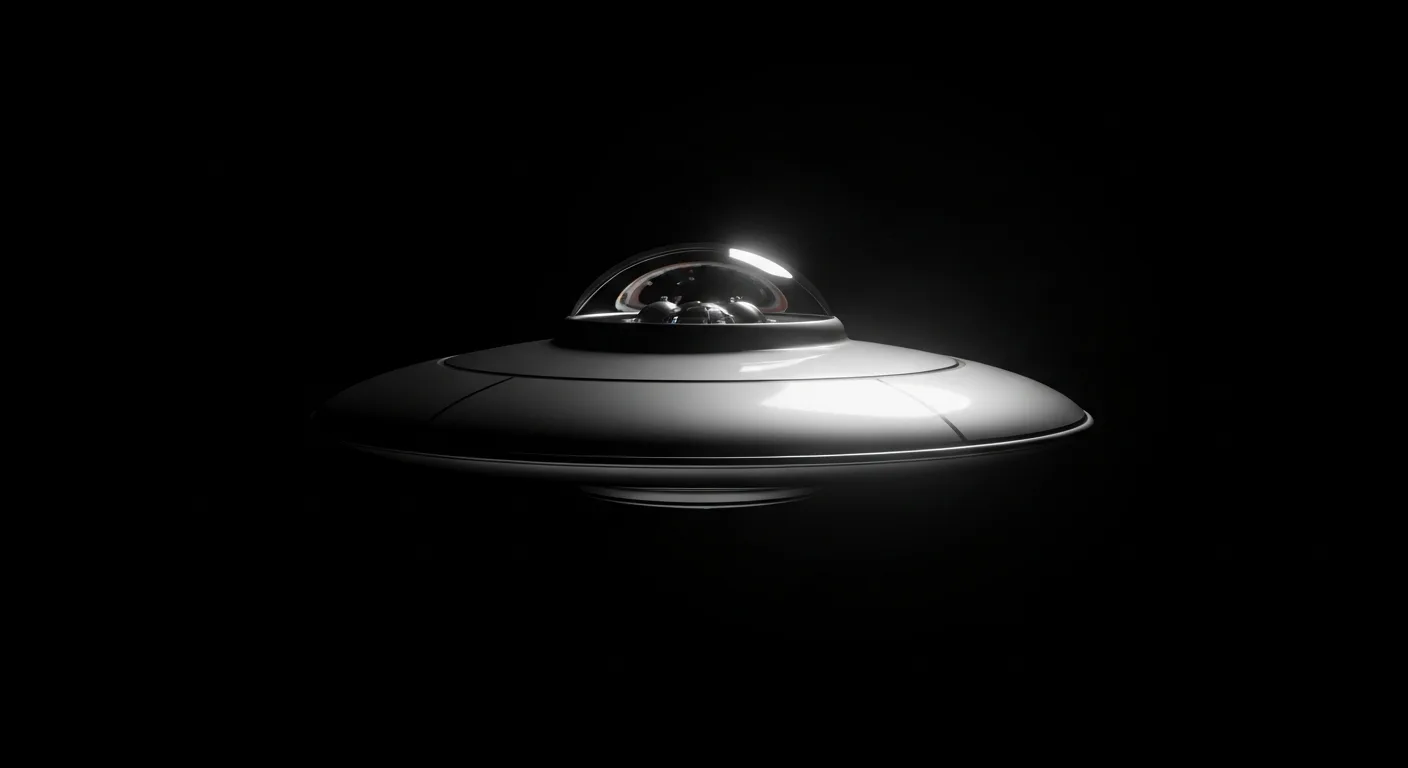
The corridors of power in Washington, D.C., are not typically associated with the strange and the unexplained, yet by early 2026, the United States Congress found itself grappling with claims that would have been dismissed as fantasy a decade earlier. A new UAP whistleblower had come forward, and this time the lawmakers tasked with investigating the claims were taking a fundamentally different approach. Rather than staging the kind of dramatic public hearing that had characterized the David Grusch testimony of 2023, key members of Congress moved to secure briefings in Sensitive Compartmented Information Facilities, the classified chambers where the nation’s most closely guarded secrets can be discussed beyond the reach of cameras and microphones. The decision to prioritize classified sessions over public spectacle signaled that the information this whistleblower carried might be of a different order of magnitude than anything previously disclosed.
The Road to This Moment
To appreciate the significance of the 2026 whistleblower, it is necessary to understand the extraordinary sequence of events that preceded their emergence. The modern era of UAP disclosure did not begin in 2026, or even in 2023. Its roots stretch back to 2017, when the New York Times published a landmark investigation revealing the existence of the Advanced Aerospace Threat Identification Program, a Pentagon initiative that had spent $22 million studying unidentified aerial phenomena. That story, and the declassified military videos that accompanied it, cracked open a door that the United States government had kept firmly shut for decades.
The years that followed saw a steady escalation. In 2020, the Pentagon officially released three videos of UAP encounters recorded by Navy pilots, confirming their authenticity after years of speculation. In 2021, the Office of the Director of National Intelligence published a preliminary assessment on UAPs that acknowledged more than 140 incidents that could not be explained. The establishment of the All-domain Anomaly Resolution Office in 2022 gave the phenomenon an official bureaucratic home for the first time, signaling that the government was treating the subject with a seriousness that would have been unthinkable in previous decades.
Then came David Grusch. In June 2023, the former intelligence officer went public with claims that the United States government possessed retrieved UAP technologies and biological materials of non-human origin. Grusch stated that he had filed a complaint with the Intelligence Community Inspector General, that he had provided classified information to Congressional committees, and that he had faced retaliation for his efforts. His public testimony before the House Oversight Committee in July 2023, flanked by Navy pilots Ryan Graves and David Fravor who described their own encounters, was watched by millions and treated by many observers as a watershed moment.
Grusch’s testimony was explosive but also frustrating. Much of what he knew, he said, could not be shared in an open hearing because the information was classified. Members of Congress who pressed for details were told that such details could only be provided in a classified setting. The public hearing generated enormous interest but limited concrete information, and critics pointed out that Grusch’s claims, however sincere, were largely secondhand: he was reporting what others had told him rather than what he had personally witnessed.
The Accelerating Cascade
The period between Grusch’s 2023 testimony and the emergence of the new whistleblower in 2026 was not a lull but an acceleration. Each new revelation built on the last, creating a cascading effect that drew more insiders out of the shadows.
In October 2024, reports surfaced regarding a classified program known as Immaculate Constellation. The program was described as a parallel UAP tracking operation that had been operating outside normal Congressional oversight, collecting and analyzing data on unidentified phenomena through channels that bypassed the standard intelligence reporting structure. The existence of such a program, if confirmed, would validate one of Grusch’s central claims: that UAP-related activities had been deliberately concealed from the elected officials constitutionally empowered to oversee them.
The following month, Luis Elizondo, who had led the Advanced Aerospace Threat Identification Program before resigning in protest over internal resistance to his work, gave testimony in which he claimed, under oath, that the United States possesses UAP technologies. Elizondo had been a prominent figure in the disclosure movement since the 2017 New York Times report, but his willingness to make such specific claims under the penalty of perjury represented a significant escalation. His testimony carried the weight of direct personal involvement in government UAP programs, distinguishing it from the secondhand nature of some of Grusch’s public claims.
In September 2025, a House hearing featured multiple military witnesses who described firsthand encounters with unidentified phenomena. These were not intelligence officers reporting what they had been told but service members who had seen anomalous objects with their own eyes, tracked them on radar, and in some cases attempted to engage them. One veteran testified that he had faced professional retaliation for reporting his encounter through official channels, a claim that echoed Grusch’s earlier allegations and suggested a systematic effort to suppress UAP reporting within the military.
Then, in February 2026, President Trump issued a disclosure directive that sent shockwaves through the intelligence and defense communities. The precise scope and content of the directive remain the subject of debate, but its effect was clear: it provided executive-level authorization for the declassification and release of UAP-related information, and it gave potential whistleblowers the political cover that many had been waiting for. The directive represented the first time a sitting president had explicitly aligned the executive branch with the push for UAP transparency, and it removed one of the principal barriers to insider disclosure: the fear of prosecution for revealing classified information without authorization.
The New Whistleblower
It was in this context that the new whistleblower emerged in early 2026. The details of their identity, background, and specific claims have not been made public as of this writing, which is itself significant. Unlike Grusch, who went public with his name and face before his Congressional testimony, the 2026 whistleblower has been shielded from public exposure, their identity known to members of Congress but not disclosed to the media or the general public. This level of protection suggests that the information they carry is considered sensitive enough to warrant extraordinary caution.
What is known is that multiple members of Congress, from both parties, have identified the whistleblower as credible and have prioritized obtaining classified briefings based on their information. The bipartisan nature of the Congressional interest is notable, as UAP disclosure has historically attracted support from both sides of the aisle, one of the few issues in contemporary American politics that consistently transcends partisan divisions.
The decision to seek SCIF briefings rather than public testimony represents a maturation of the Congressional approach to UAP investigation. The Grusch hearing, while historically significant, exposed the limitations of public proceedings when dealing with classified information. Members of Congress found themselves in the awkward position of asking questions that could not be answered in an open setting, while the witness was constrained from sharing the specific evidence that might have been most persuasive. The resulting hearing was dramatic but incomplete, generating more questions than answers and leaving the public to fill in the gaps with speculation.
By moving directly to classified sessions, the lawmakers involved in the 2026 case are signaling several things. First, they expect to encounter information that cannot be discussed publicly, information classified at levels that would preclude its disclosure even in the controlled environment of a Congressional hearing. Second, they want to evaluate the whistleblower’s claims in an environment where those claims can be fully articulated, without the constraints imposed by classification rules. Third, they are building a more systematic investigative framework, one that treats UAP claims with the same methodological rigor applied to other intelligence matters rather than the ad hoc hearing format that characterized earlier efforts.
Grusch’s Continuing Role
David Grusch did not fade from the picture after his 2023 testimony. By 2026, he remained on staff as a Special Advisor to the House Oversight Task Force on the Declassification of Federal Secrets, a position that gave him continuing access to the Congressional process and allowed him to serve as a bridge between whistleblowers and lawmakers. His sustained involvement provided institutional continuity during a period when the turnover of Congressional membership and staffing might otherwise have disrupted the momentum of UAP investigations.
Grusch’s role as an advisor also reflected the evolution of his position within the disclosure ecosystem. He was no longer the lone whistleblower stepping into the spotlight at personal risk but an established figure within the investigative apparatus, someone who could vouch for new sources, provide context for their claims, and help navigate the complex classification landscape that makes UAP investigation so difficult. His transition from outsider to insider, from whistleblower to advisor, mirrored the broader trajectory of UAP disclosure, from fringe concern to legitimate subject of Congressional inquiry.
The Expanding Network
Perhaps the most significant aspect of the 2026 whistleblower’s emergence is what it represents about the broader dynamics of disclosure. Each whistleblower who comes forward makes it easier for the next one. Each hearing that treats UAP claims seriously reduces the stigma associated with reporting. Each piece of information that enters the public record makes it harder for those maintaining the wall of secrecy to argue that disclosure would be harmful.
The growing number of insiders willing to speak, whether publicly or in classified settings, suggests an expanding network of government personnel who believe that the American public has a right to know about programs that have operated behind classification walls for decades. These are not conspiracy theorists or attention seekers but career intelligence officers, military personnel, and defense contractors who have reached the conclusion, through their own professional experience, that the current level of secrecy surrounding UAP is neither justified nor sustainable.
The cascade effect is real and observable. Grusch’s 2023 testimony opened the floodgates. Elizondo’s subsequent claims under oath raised the stakes. The military witnesses of 2025 added firsthand experiential testimony. Trump’s 2026 disclosure directive provided executive cover. And now a new whistleblower has emerged, carrying information that Congress considers significant enough to pursue through classified channels. Each step makes the next step possible, and each new piece of information increases the pressure on the system to reveal more.
What Comes Next
The trajectory of UAP disclosure in the United States has reached a point where the question is no longer whether the government possesses information about unidentified phenomena but what that information contains and when it will be made available to the public. The 2026 whistleblower represents the latest point on a curve that has been steepening since 2017, and the Congressional decision to pursue classified briefings suggests that the information at stake may be of a nature that fundamentally challenges existing assumptions.
For the moment, the details remain behind closed doors, discussed in the soundproofed rooms where America’s classified conversations take place. The public, which has watched this process unfold over nearly a decade of incremental revelation, waits for whatever emerges from those rooms. The history of UAP disclosure suggests that what comes out of SCIF briefings eventually makes its way into the public sphere, whether through official channels, Congressional action, or the determination of individuals who believe the public’s right to know outweighs the government’s preference for secrecy.
The new whistleblower has stepped forward into a landscape very different from the one David Grusch navigated in 2023. The path has been widened, the stigma reduced, the institutional framework strengthened. What they carry with them into the classified chambers of Congress may or may not change the world. But the fact that they have come forward at all, and that Congress is listening, represents a continuation of a process that has been building momentum for nearly a decade and shows no signs of slowing down.
Whatever the truth about UAP turns out to be, the process by which that truth is being uncovered has become one of the most remarkable developments in modern American governance. A subject that was once relegated to the margins of credible discourse has moved, step by step, into the center of Congressional attention. The 2026 whistleblower is not an endpoint but another marker on a road whose destination remains unclear but whose direction is unmistakable: toward disclosure, toward transparency, and toward answers to questions that have been asked for decades but never satisfactorily addressed.