Transmedium UAP Concept Emerges
The 2021 UAP Task Force report introduced 'transmedium' as a category - objects that can operate in air, water, and space. This acknowledged capabilities long reported by witnesses.
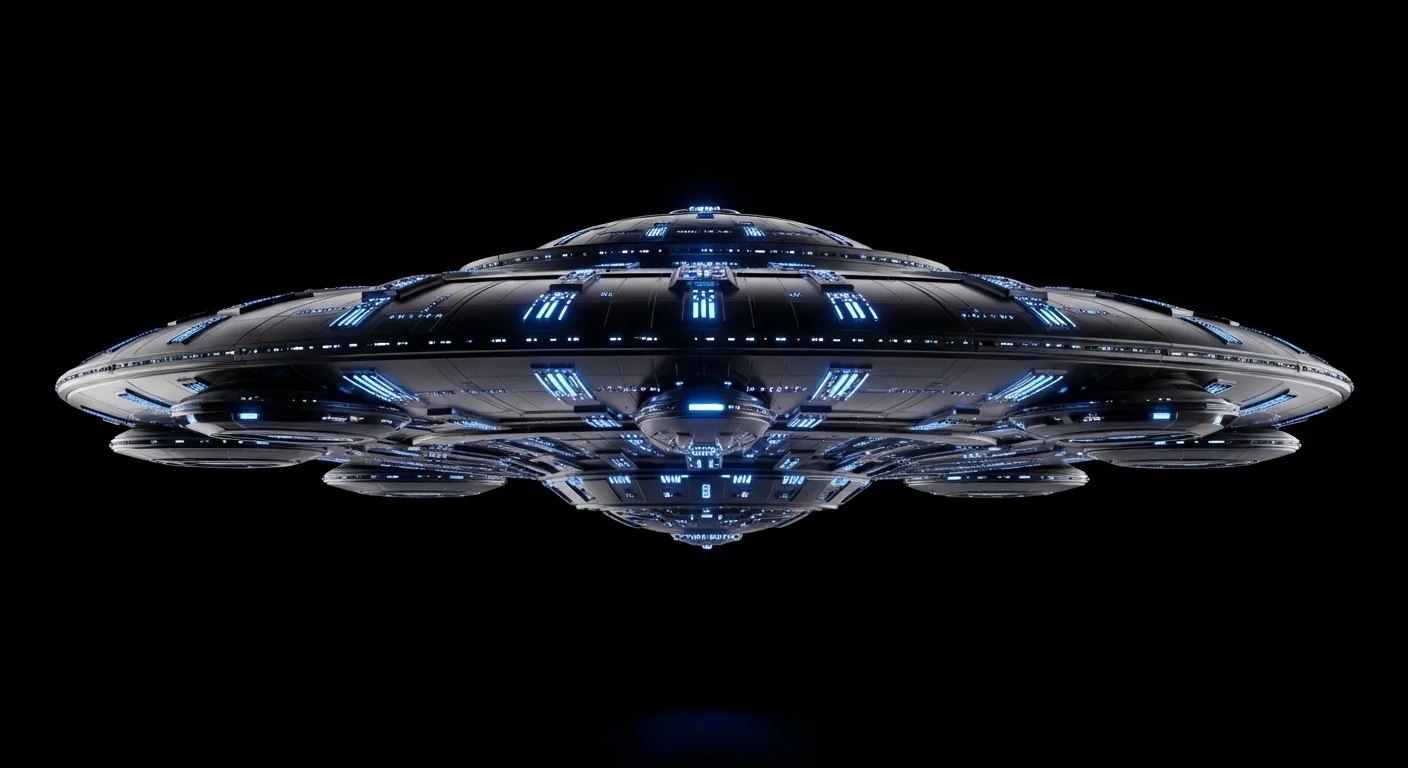
On June 25, 2021, the Office of the Director of National Intelligence delivered to Congress a nine-page document that would have seemed impossible just five years earlier. The Preliminary Assessment: Unidentified Aerial Phenomena, prepared by the UAP Task Force at the direction of the Senate Intelligence Committee, was the first official acknowledgment by the United States intelligence community that unidentified objects in American airspace represented a genuine phenomenon worthy of serious investigation. The report was measured in its language, cautious in its conclusions, and deliberately vague in many of its specifics. But buried within its careful bureaucratic prose was a concept that, once introduced into official discourse, could not be retracted: the notion that some UAP appeared to be “transmedium,” capable of operating in air, in water, and potentially in space, transitioning between these environments without apparent difficulty. With that single word, the United States government acknowledged a capability that witnesses had been reporting for decades, a capability so far beyond known technology that its implications challenged the fundamental assumptions of physics, engineering, and national defense.
The Report That Changed Everything
The Preliminary Assessment was the product of a legislative mandate included in the Intelligence Authorization Act for Fiscal Year 2021, which required the Director of National Intelligence, in consultation with the Secretary of Defense, to submit a report on unidentified aerial phenomena to the congressional intelligence and armed services committees. The mandate itself was remarkable, representing a congressional acknowledgment that UAP were a legitimate subject of intelligence analysis rather than a fringe curiosity to be dismissed or ridiculed.
The report reviewed 144 UAP incidents reported by military personnel between November 2004 and March 2021. Of these, the task force was able to identify only one with high confidence, a deflating balloon. The remaining 143 cases were categorized as unexplained, with the report noting that the incidents “probably do represent physical objects” based on the fact that most were registered across multiple sensors, including radar, infrared, and visual observation. This conclusion alone was significant. The United States government was stating, in an unclassified document available to the public, that unknown physical objects were operating in restricted military airspace and that the military could not explain what they were.
But it was the report’s discussion of UAP capabilities that carried the most profound implications. The assessment noted that some UAP appeared to demonstrate “advanced technology,” including the ability to remain stationary in high winds, to move at considerable speed without visible means of propulsion, and to maneuver in ways that exceeded the known capabilities of any human-made aircraft. Among these capabilities, described with a restraint that barely concealed its staggering implications, was the ability to transition between different operational environments, what the report termed “transmedium” behavior.
Defining the Impossible
The concept of transmedium operation is, on its surface, simple to describe: an object that can function effectively in air, in water, and potentially in the vacuum of space. In practice, this capability represents one of the most formidable engineering challenges imaginable, so formidable that no known human technology comes close to achieving it.
The fundamental problem is that air, water, and space are radically different environments, each imposing its own set of physical demands on anything that moves through it. Aircraft are designed to operate in air, exploiting its properties for lift and control while minimizing drag. Ships and submarines are designed for water, dealing with pressures, buoyancies, and fluid dynamics that are entirely different from those encountered in the atmosphere. Spacecraft operate in the vacuum of space, where there is no medium at all and where propulsion must rely on principles that have no relevance in either air or water.
A vehicle that could operate effectively in all three environments would need to solve a set of contradictory engineering problems simultaneously. It would need to be hydrodynamic enough to move efficiently through water, aerodynamic enough to fly through air, and capable of functioning in the vacuum of space. It would need propulsion systems that worked in all three media. It would need structural integrity sufficient to withstand the crushing pressures of deep water, the aerodynamic stresses of atmospheric flight, and the thermal extremes of space. And it would need to transition between these environments seamlessly, moving from water to air or from air to space without the catastrophic stress that such transitions would impose on any conventionally designed vehicle.
No known human technology achieves this. Aircraft that can land on water, such as seaplanes and flying boats, are heavily compromised in both their aerial and aquatic performance. Submarines that can launch missiles into the air do so by ejecting separate vehicles designed exclusively for atmospheric flight. The idea of a single craft that can operate with equal facility in all three domains is, by the standards of current human engineering, science fiction.
Yet this is precisely what witnesses had been reporting for decades before the 2021 assessment gave the concept an official name.
The Historical Record
The transmedium behavior acknowledged in the 2021 report was not a new discovery. Military personnel, commercial sailors, and civilian witnesses had been reporting objects that entered and exited bodies of water for as long as the modern UFO era has existed. These reports, often dismissed or ignored by authorities, described objects that plunged into the ocean at high speed without producing the expected splash or debris, that emerged from beneath the surface with water streaming from their hulls, and that transitioned between underwater and aerial operation without any apparent loss of performance.
The term that had been used for these objects before “transmedium” entered the official lexicon was USO: unidentified submerged object. USO reports were a recognized subcategory of UFO sightings, collected and analyzed by civilian researchers who recognized that the phenomenon was not confined to the atmosphere. Sailors in both military and commercial service had reported encounters with luminous objects moving beneath the surface of the ocean, sometimes at speeds that exceeded the capability of any known submarine. Sonar operators had tracked contacts that descended to depths no known vessel could reach and that accelerated beyond any known underwater propulsion technology.
These reports spanned the globe and the decades. Swedish and Norwegian naval forces reported repeated encounters with unidentified underwater objects in Scandinavian waters throughout the Cold War, encounters that were initially attributed to Soviet submarine incursions but that in many cases could not be reconciled with known submarine capabilities. South American navies reported similar encounters off the coasts of Argentina and Brazil. Soviet and Russian naval personnel described encounters in the Arctic and Pacific that their own technology could not explain.
The British and American navies accumulated their own collections of USO reports, most of which remained classified or were filed without public disclosure. When fragmentary accounts emerged, usually through retired personnel willing to discuss their experiences, they described objects that behaved in ways no submarine could replicate: descending to enormous depths, accelerating to speeds of several hundred knots, and, most disturbingly, transitioning from water to air and back again without apparent effort.
The Nimitz Encounter
The case that brought transmedium behavior to the forefront of public and official attention was the now-famous encounter between the USS Nimitz carrier strike group and one or more unidentified objects off the coast of Southern California in November 2004. The Nimitz encounter, which remained classified for over a decade before being made public, involved multiple sensor systems, multiple witnesses, and flight footage captured by the infrared camera system of an F/A-18F Super Hornet flown by Commander David Fravor and Lieutenant Commander Alex Dietrich.
The primary object observed during the Nimitz encounter was the “Tic Tac,” so named by Fravor for its resemblance to the breath mint. The Tic Tac was described as a smooth, white, featureless object approximately forty feet long, with no visible wings, control surfaces, exhaust, or propulsion system. It moved with extraordinary agility, performing maneuvers that exceeded the capabilities of any known aircraft by orders of magnitude.
The transmedium aspect of the Nimitz encounter centered on the object’s apparent interaction with the ocean surface. Before Fravor’s visual contact, the cruiser USS Princeton had been tracking anomalous radar contacts for several days, contacts that had been descending from altitudes of approximately 80,000 feet to the sea surface in a matter of seconds, a descent rate that would destroy any conventional aircraft. When Fravor arrived at the coordinates of the latest contact, he observed the Tic Tac hovering over a disturbance in the ocean surface, an area of churning white water that he described as roughly the size of a Boeing 737. The implication, though not conclusively proven, was that the object had been operating beneath the surface and had recently emerged, or that another object was operating beneath the surface while the Tic Tac hovered above.
The Nimitz encounter was not the only military case to exhibit transmedium characteristics. The “Splash” video, one of several UAP recordings released or leaked from military sources, appeared to show an object entering the ocean at high speed without producing the expected splash pattern. Reports from naval personnel described objects tracked on sonar that subsequently appeared on radar as airborne contacts, having apparently transitioned from water to air without any interruption in their movement.
Congressional Recognition
The introduction of “transmedium” into official government vocabulary had consequences that extended beyond semantics. When members of Congress used the term in hearings, in draft legislation, and in public statements, they were implicitly acknowledging that the phenomenon they were discussing was not merely a matter of unidentified aircraft. They were acknowledging the possibility of objects that operated across the full spectrum of physical environments, objects whose capabilities were so far beyond known technology that they represented either a revolutionary breakthrough by a terrestrial power or something far more difficult to explain.
The term appeared in successive pieces of legislation with increasing specificity. The National Defense Authorization Act for Fiscal Year 2022 used language that encompassed transmedium phenomena in its definition of what the newly established All-domain Anomaly Resolution Office was charged with investigating. Subsequent NDAA language further refined the definition, making explicit that the government’s UAP investigation mandate covered objects observed in air, water, space, and transitioning between these domains.
Congressional hearings featured discussions of transmedium capabilities that would have seemed surreal just a few years earlier. Members of the House and Senate intelligence and armed services committees questioned Pentagon officials about objects that entered the ocean, about naval encounters with submerged unknowns, and about the implications for national defense of a technology that could operate across all physical domains. The officials’ responses were typically guarded, acknowledging that such reports existed while declining to characterize them in detail, but the mere fact that these conversations were taking place in the halls of Congress represented a profound shift in the government’s approach to the phenomenon.
The Physics Problem
The transmedium concept poses fundamental challenges to physics as currently understood. The transition from air to water, or from water to air, involves dramatic changes in the physical properties of the surrounding medium, changes that would impose enormous stresses on any object making the transition at the speeds reported in UAP encounters.
When an object enters water from air at high speed, the impact with the water surface generates forces comparable to hitting a solid wall. This is why belly-flopping from a high diving board hurts, and it is why aircraft that strike the ocean at speed disintegrate. The objects described in transmedium UAP reports appear to enter the water without any such destructive impact, suggesting either that they are somehow negating the forces involved or that they are interacting with the water surface in a way that current physics cannot explain.
The reverse transition, from water to air, presents its own challenges. An object emerging from the water at speed would need to overcome the surface tension and viscous drag of the water, and it would need to transition instantly from a propulsion system optimized for water to one optimized for air. The reports of objects emerging from the ocean with water streaming from their surfaces but showing no loss of speed or maneuverability suggest capabilities that exceed anything in the current engineering repertoire.
Some theoretical physicists have speculated that transmedium behavior might be achievable through manipulation of the space-time metric around the object, essentially creating a localized distortion of gravity that would allow the object to move through any medium, or through no medium at all, without interacting with it in the conventional sense. This concept, related to the theoretical Alcubierre warp drive, is mathematically consistent with general relativity but would require energy densities and exotic matter that are far beyond current technological capability. Other theoretical approaches involve quantum effects, plasma sheaths, or electromagnetic field manipulation, but none has been developed to the point of practical application.
The All-Domain Threat
From a military perspective, the acknowledgment of transmedium UAP was deeply concerning. The United States military is organized around the concept of domain separation: the Army operates on land, the Navy at sea, the Air Force in the air, and Space Force in space. Each service develops and deploys technologies optimized for its specific domain, and the integration of capabilities across domains is one of the most challenging aspects of modern military operations.
An object that can operate with equal facility across all domains represents a strategic challenge of the highest order. Such an object cannot be effectively tracked by any single sensor system, cannot be engaged by weapons designed for a single domain, and cannot be predicted in its movements because it is not constrained by the limitations of any single operational environment. It can appear as an airborne contact, descend into the ocean where air-defense systems cannot follow, traverse undersea distances where anti-submarine warfare assets may not be positioned, and re-emerge in an entirely different location as an airborne threat once again.
The military implications of genuine transmedium technology, whether possessed by a foreign adversary or by something else entirely, were sufficiently alarming to ensure that the Pentagon took the subject seriously regardless of the stigma that had historically attached to UFO reports. The establishment of the All-domain Anomaly Resolution Office, with its explicit mandate to investigate phenomena across air, water, space, and the transitions between them, reflected the military’s recognition that the transmedium aspect of UAP was not merely an interesting curiosity but a potential national security concern of the first magnitude.
A Vocabulary for the Unknown
The emergence of “transmedium” in official UAP discourse marked more than a semantic shift. It represented a fundamental change in the way the government engaged with a phenomenon it had spent decades dismissing, ignoring, or actively suppressing. By giving a name to a capability that witnesses had been describing since the earliest days of the modern UFO era, the government implicitly acknowledged that those witnesses had been observing something real, something that deserved a place in the official vocabulary of national security rather than the margins of tabloid journalism.
The word also served as a bridge between decades of dismissed civilian reports and the new era of official acknowledgment. When a sailor in the 1960s reported seeing a luminous object enter the ocean, he was ignored or ridiculed. When a Navy pilot in 2004 reported seeing an object interact with the ocean surface, the encounter was classified and forgotten for thirteen years. When the UAP Task Force described transmedium behavior in its 2021 assessment, it was giving official recognition to something that those earlier witnesses had known all along: that the objects they observed were not confined to the sky but could move through water and air alike, operating across domains with a facility that no known technology could match.
The full implications of the transmedium concept remain to be explored. If the objects described in military and civilian reports are real, if they genuinely possess the ability to operate across all physical domains without regard to the limitations that constrain human technology, then they represent either a revolutionary technological breakthrough or evidence of an intelligence whose capabilities exceed our own by a margin that is difficult even to quantify. Either possibility demands investigation, and the introduction of the transmedium concept into official vocabulary was an essential first step toward that investigation, a step that transformed a fringe claim into an acknowledged reality and opened the door to questions that the government had spent decades refusing to ask.
Sources
- CIA UFO/UAP Reading Room — Declassified CIA documents on UAP
- AARO (All-domain Anomaly Resolution Office) — Current US DoD UAP office