Early Foo Fighters
Before the famous 1944-45 Foo Fighter wave, military pilots were already encountering mysterious aerial phenomena. RAF crews over Germany reported strange lights that followed their aircraft, exhibiting intelligent behavior and impossible flight characteristics.
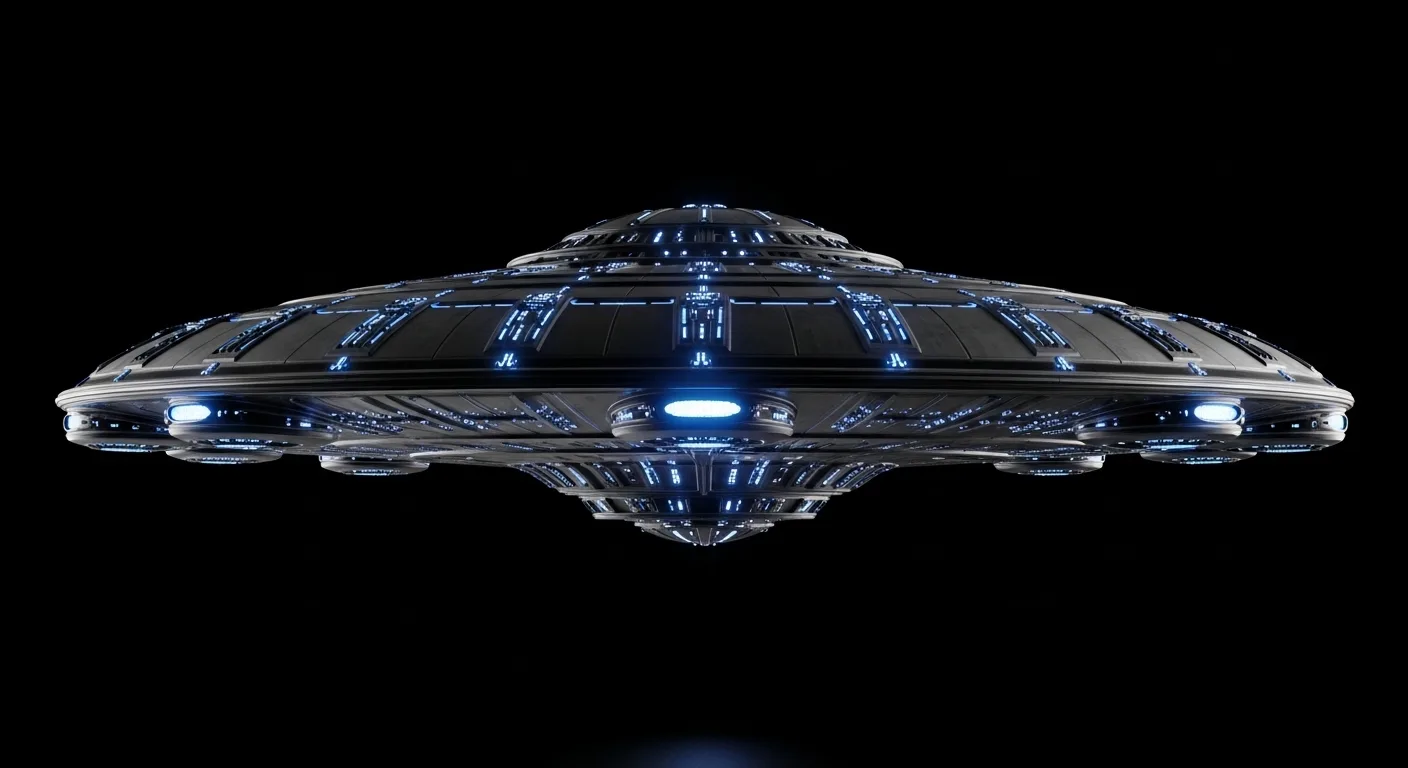
While the term “Foo Fighters” became famous during 1944-1945, when Allied pilots over Europe and the Pacific regularly encountered mysterious balls of light that followed their aircraft, the phenomenon actually began earlier. From 1940 onwards, RAF crews flying missions over Germany reported strange aerial phenomena – lights that paced their aircraft, exhibited intelligent behavior, and displayed flight characteristics beyond any known technology. These early encounters were the precursors to one of World War II’s greatest mysteries.
The Phenomenon
What Were Foo Fighters?
The typical description involved balls or globes of light, reported in various colors – often red, orange, or white. These lights persistently followed aircraft, matching their speeds and maneuvers, and never exhibiting hostility but remaining alarming.
Why “Foo Fighters”?
The name came later, coined in 1944. It originated from the “Smokey Stover” comic strip, utilizing the phrase “Where there’s foo, there’s fire.” Pilots quickly adopted this slang term, which then became the universal term for these mysterious lights.
Early Encounters (1940-1942)
RAF Over Germany
British pilots reported encountering strange lights during missions, frequently following bomber formations and appearing alongside aircraft. Witnesses noted that these lights matched exact speeds and exhibited intelligence.
Timing
The early sightings began in 1940, continuing throughout the Battle of Britain period and extending into 1941-1942, prior to American entry into the war. These British forces were primarily responsible for the initial observations.
Characteristics
Flight Behavior
Witnesses observed impossible speeds, instant acceleration, and the capability of hovering. The lights frequently formed flight formations with the aircraft they followed, and they routinely evaded attacks.
Physical Appearance
Descriptions consistently featured glowing orbs, often with a luminous quality and appearing as solid objects, sometimes in sizes that varied considerably.
Intelligent Control
There was evidence of deliberate following, responsive control to aircraft movements, maintenance of precise distances, and the ability to appear and disappear at will, suggesting an intelligent purpose.
Military Concerns
Initial Reactions
The armed forces responded with concern about a potential new enemy weapon and a fear of surveillance technology. Reports were filed officially, leading to an attempted investigation, but no conclusions were reached.
German Weapons Theory
Authorities considered the possibility of Nazi secret technology, including a psychological warfare device or a guidance system for anti-aircraft fire, perhaps even a new weapon system.
The Problem
The theory failed because Germans also reported seeing the lights, Japanese pilots observed them, no weapon effects were detected, no wreckage was ever found, and both sides remained mystified.
Documented Incidents
Types of Encounters
Sightings were categorized into single orbs following one aircraft, multiple orbs in formation, orbs passing through formations, stationary objects observed, and objects pacing for extended periods.
Duration
Encounters typically lasted seconds to minutes, although some continued for extended periods, spanning miles of flight and occasionally occurring throughout entire missions, exhibiting a variable and unpredictable nature.
Analysis
What They Weren’t
Explanations were ruled out, including enemy aircraft (no attacks), flak (incorrect behavior), St. Elmo’s fire (too mobile), hallucinations (too consistent), and ball lightning (too persistent).
What They Might Be
Theories proposed included unknown natural phenomena, advanced technology (whose?), extraterrestrial observation, an interdimensional manifestation, or something entirely unknown.
Historical Significance
Pre-1944 Documentation
The early cases established a longer timeline for the phenomenon, occurring before the term “Foo Fighter” existed. These initial observations represented a genuine mystery from the start and were not based on suggestion or expectation, representing original observations.
The Pattern
A consistent pattern emerged, with multiple witnesses across both sides of the conflict, and sightings occurring in various theaters of war, suggesting the phenomenon was real.
Global Phenomenon
Not Just Europe
Sightings primarily occurred in the European theater early on, but later extended to the Pacific theater, involving multiple nations’ pilots and different aircraft types. The phenomenon was a universal experience.
All Sides Saw Them
Importantly, British, American, German, and Japanese pilots all reported seeing the lights, indicating that it was not a weapon controlled by one side alone.
The Mystery Deepens
No Explanation Found
Despite investigation, no technology was identified, no natural cause was proven, no enemy weapon was confirmed, and the mystery remained. The war ended without answers.
Post-War Questions
After 1945, no German wonder weapon was found, no Japanese equivalent existed, no Allied secret project was discovered, and nobody claimed responsibility for their creation. The phenomenon simply stopped.
Connection to UFO History
Transition
The Foo Fighters led to the 1947 Kenneth Arnold sighting, marking the beginning of the modern UFO era. Similar observations of intelligent lights in the sky continued, suggesting a continuous phenomenon and a pattern across decades.
Credible Witnesses
Military pilots were trained observers accustomed to identifying aircraft and were not prone to fantasy. Multiple crew members confirmed the sightings, and official reports were filed.
The Question
From 1940, even before the famous waves of 1944, something was flying alongside military aircraft over Europe.
Balls of light. Glowing orbs. Objects that followed bombers and fighters with apparent intelligence, matching their speeds, mimicking their maneuvers, staying just out of reach.
The RAF saw them. Then the Americans saw them. Then it emerged that the Germans were seeing them too.
Everyone thought they were the enemy’s secret weapon.
But they weren’t anyone’s weapon.
They never attacked. They never damaged aircraft. They just… watched. Followed. Observed.
What were the Foo Fighters?
The war ended. Scientists examined German facilities. There was no Foo Fighter technology. The Japanese had nothing similar. Neither did the Allies.
No one had built them.
No one knew what they were.
And then, after the war, they were gone. The skies returned to normal - for a while.
But something had been there. Something had flown alongside thousands of military aircraft during the deadliest conflict in human history. Something that all sides saw. Something that no side created.
The Early Foo Fighters of 1940-1942.
The beginning of the mystery.
Intelligent lights in the war-torn skies.
Observing humanity at its worst.
And never explaining why.
Still unknown.
Still unexplained.
Still one of World War II’s strangest secrets.
Waiting in the historical record.
For someone to finally understand.