The Galileo Project's 2026 Findings: Five Years of Sky Surveillance
On its fifth anniversary, Harvard's Galileo Project released a consolidated technical report on the data collected by its expanded sky-monitoring observatories — including hundreds of unresolved aerial signatures whose nature the team's analysts could not definitively determine.
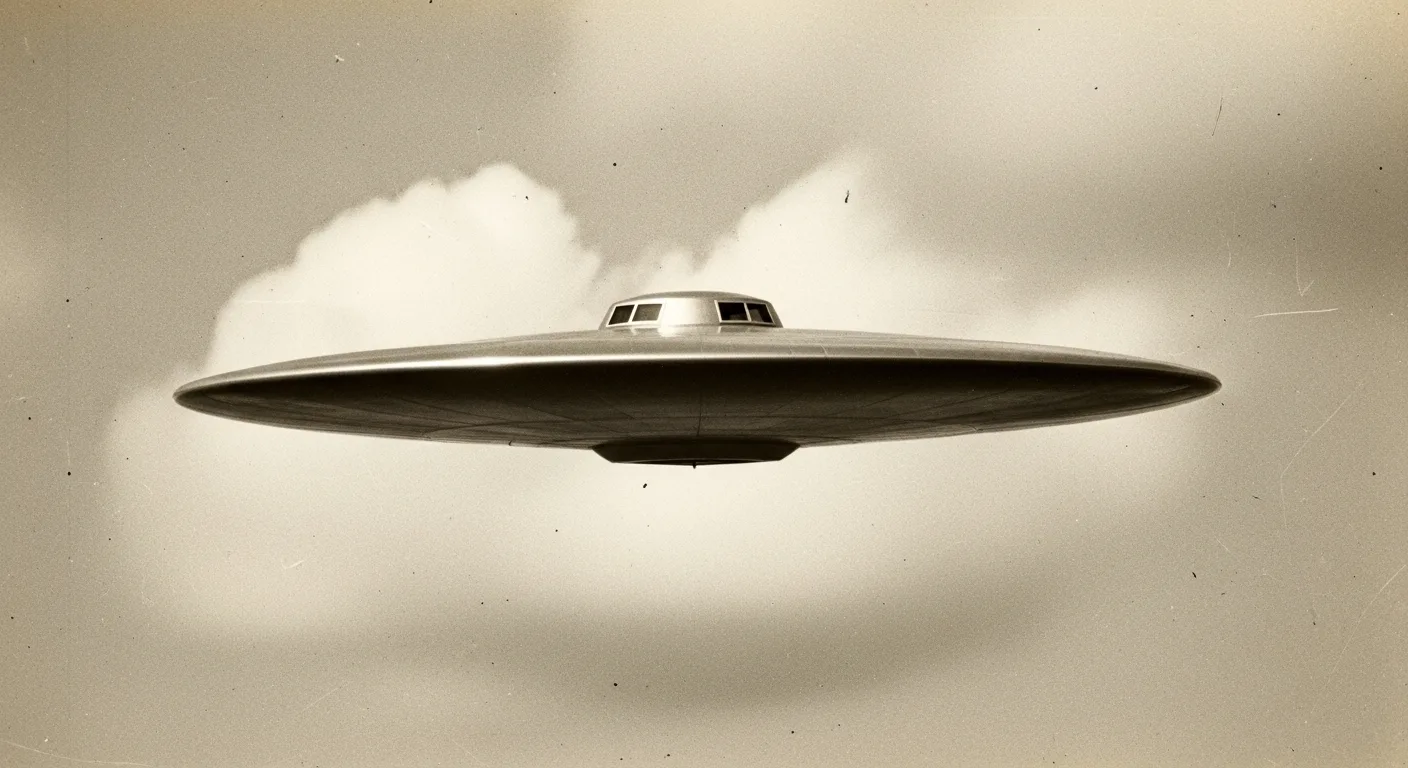
In late March 2026, the Galileo Project — the Harvard-led civilian initiative for the systematic observation of unidentified anomalous phenomena — released a consolidated technical report covering its first five years of operations. The report, made publicly available on the project’s website and accompanied by a peer-reviewed companion paper submitted to the Journal of Astronomical Telescopes, Instruments, and Systems, represented the most extensive open scientific accounting of an instrumentation-based UAP research program produced to date. Founded in July 2021 under the direction of Avi Loeb, Frank B. Baird Jr. Professor of Science at Harvard, the project had by 2026 grown from a single experimental observatory at Harvard’s Center for Astrophysics into a small distributed network of observatories on multiple continents, with a developed analytic pipeline and a body of data substantial enough to support meaningful statistical analysis.
The Project’s Origins and Premises
The Galileo Project was founded in the immediate aftermath of the June 2021 release of the United States government’s Preliminary Assessment on Unidentified Aerial Phenomena, which acknowledged that a meaningful fraction of incidents observed by United States military personnel could not be attributed to known aerospace platforms. Loeb, who had previously argued in his 2018 paper on the interstellar object ‘Oumuamua that anomalous astrophysical observations should be considered against the full range of possible explanations, including the artificial, founded the project to apply mainstream scientific methods to the question of whether some unidentified objects observed in the Earth’s atmosphere or near-Earth space might be of non-human technological origin.
The project’s founding premise was methodological rather than substantive. It did not assume that any particular UAP cases were of artificial origin; it argued that the question of origin should be approached through systematic observation, transparent data collection, and peer-reviewed analysis, rather than through the reliance on military-source data that had characterized much of the public UAP discourse. The project committed from its inception to operating exclusively with publicly available data and instrumentation, to publishing its results in mainstream scientific venues, and to making its analytic pipelines and datasets available to the broader research community.
The Observatory Network
The 2026 report described the operational status of the project’s observatory network. The original Harvard observatory at the Center for Astrophysics in Cambridge had by then been joined by additional installations at sites in Pennsylvania, Nevada, and the United Kingdom, with smaller experimental deployments at three additional locations. Each observatory was equipped with a similar suite of instruments: all-sky infrared cameras, optical cameras, radio receivers, ambient acoustic sensors, and weather instrumentation, all networked into a common data pipeline that fed into the project’s central analytic system.
The instrumentation had been substantially refined over the project’s first five years. The original deployments had been optimized for detection sensitivity, but had produced data with significant levels of noise from birds, drones, aircraft, and atmospheric phenomena. The current generation of observatories incorporated machine-learning classifiers trained on extensive datasets of conventional objects, allowing the system to filter out the great majority of routine detections automatically and to flag for human review only those signatures that did not correspond to known classes.
The networked architecture had also enabled, for the first time, the systematic correlation of detections across multiple sites — a capability that the project’s analysts had argued from the outset was essential for distinguishing genuinely anomalous signatures from instrument-specific artifacts.
What the Data Show
The report’s most discussed sections concerned the project’s empirical findings to date. Across the network, the observatories had collectively recorded several million individual detections over the five-year operational period. The great majority of these detections — on the order of 99.9 percent — had been classified, either automatically or through subsequent human review, as corresponding to known categories of object: birds, bats, insects, aircraft, drones, satellites, meteors, balloons, atmospheric phenomena, and instrument noise.
A small fraction of detections had been flagged as anomalous and subjected to detailed review. The report described several hundred such cases that had survived initial review and remained, after the application of the project’s full analytic pipeline, unattributed to any known class of object. The report was careful in characterizing this residual category. The cases were not, the authors emphasized, claimed to represent objects of artificial or non-human origin; they were claimed only to represent observations whose characteristics did not match the project’s catalog of known objects with sufficient confidence to support a definitive classification.
The report described the unresolved cases in considerable technical detail. Several involved infrared signatures that the project’s analysts could not match to known thermal profiles for aircraft, drones, or atmospheric phenomena. Others involved trajectories that did not correspond to natural objects under gravitational and atmospheric influence. A small subset involved correlated detections at multiple observatories, providing the kind of cross-site validation that the project’s architecture had been designed to enable.
Statistical Findings and Atmospheric Context
A particular strength of the 2026 report was its treatment of the broader atmospheric context for the project’s observations. The report included extensive analysis of base-rate frequencies for various categories of detection, the diurnal and seasonal patterns of those frequencies, and the geographic and meteorological factors that influenced detection sensitivity. This statistical framework allowed the project’s analysts to characterize the unresolved cases not in isolation but against a quantitative background of known objects, which the authors argued was essential for any responsible interpretation of the residual.
The report also addressed the relationship between the project’s findings and the parallel work of AARO and the NASA Independent Study Team. The Galileo Project’s data, the authors noted, was complementary to but distinct from the government-source data on which those institutions primarily relied: it was lower in sensitivity than military-grade sensors but substantially more transparent in its provenance and analytic methodology. The report argued that a complete picture of the UAP question would require integration across these different data sources and that the project would continue to advocate for collaborative analysis arrangements with government and academic partners.
Implications and Next Steps
The 2026 report concluded with an extensive discussion of next steps. The project committed to expanding its observatory network to additional geographic locations, with a particular emphasis on sites in the southern hemisphere and at higher altitudes; to refining its instrumentation and analytic pipelines based on the lessons of the first five years; and to deepening its collaborative relationships with academic and governmental research bodies. It also announced a new initiative focused on the search for candidate interstellar objects and the systematic investigation of their physical characteristics, building on Loeb’s longstanding interest in that domain.
For the broader UAP research community, the report represented a significant moment of consolidation. The Galileo Project had, in five years, established that civilian, university-based, peer-reviewed research on UAP topics was genuinely possible at scale; that systematic instrumentation produces datasets of meaningful scientific quality; and that transparent analytic pipelines can yield results suitable for publication in mainstream journals. The project had not yet produced a definitive identification of any unidentified object, and the authors were careful to note that such an identification might never be forthcoming. What they had produced was a methodological infrastructure within which the question could be pursued on terms that the broader scientific community could accept — a contribution whose long-term significance is likely to extend beyond the specific findings of the 2026 report itself.
Sources
- Galileo Project at Harvard — Official project website and publications
- Wikipedia: Galileo Project
- Avi Loeb on Medium — Project director’s regular commentary on findings