The Night of the UFOs over Manaus
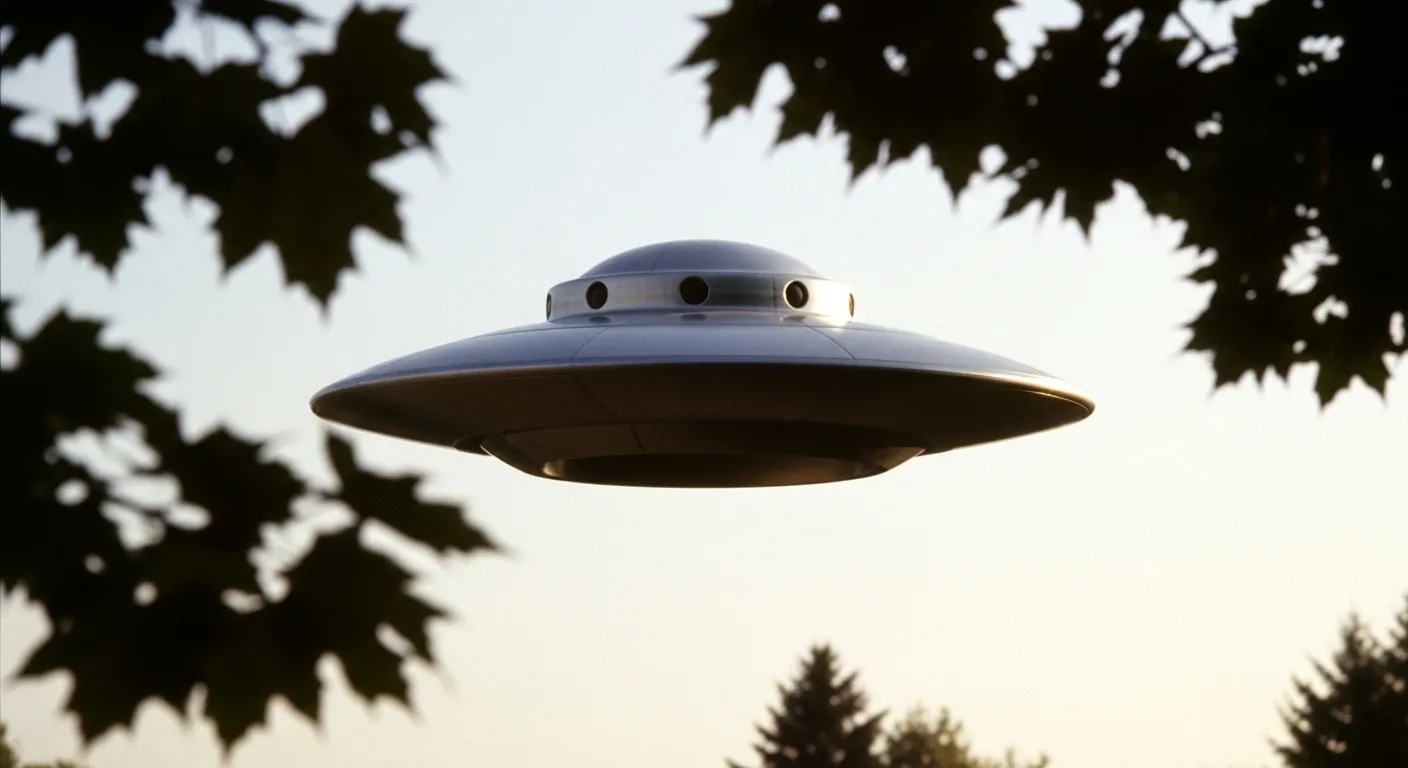
On the night of May 19, 1986, Brazilian Air Force jets were scrambled across multiple states to intercept a fleet of luminous objects tracked by civilian and military radars in one of the largest official UFO incidents in South American history.
A Coordinated Air Defence Response
On the evening of May 19, 1986, the air traffic control centre at São José dos Campos in the state of São Paulo registered an unidentified target on radar. Within hours, similar contacts were being reported by the centres at Brasília, Anápolis, and Manaus, along with confirmed visual sightings by civilian airline crews flying through Brazilian airspace. By the early hours of May 20, the Brazilian Air Force had scrambled five F-5E and Mirage III interceptors from three separate bases. Pilots reported up to twenty-one luminous objects manoeuvring at speeds and altitudes that the aircraft could not match, and the incident — known in Brazil as “A Noite Oficial dos OVNIs” — became the first occasion on which the Brazilian military publicly acknowledged scrambling combat aircraft against unidentified targets.
The event spanned multiple states and aviation sectors and produced one of the most extensively documented UAP files in the Brazilian archives. The military’s own subsequent disclosure, made in a press conference held by Brigadier Octávio Júlio Moreira Lima — then Minister of Aeronautics — three days later, took the unusual step of confirming that the objects were tracked simultaneously by multiple ground radars, by airborne radars, and by visual observation, and that the pilots involved had returned without successful interception.
The Sequence of Events
The first contacts emerged near São José dos Campos shortly after 7:00 p.m., when radar operators began tracking targets that did not correlate to filed flight plans. Civilian airline crews on the São Paulo–Rio corridor reported visible lights pacing or crossing their flight paths. By 9:00 p.m., the contacts had multiplied. The officer in command at the integrated air defence centre at Brasília authorised the scramble of a Mirage III fighter from Anápolis Air Base; further interceptors followed from Santa Cruz and Manaus.
Captain Márcio Brisolla Jordão, flying one of the Mirages, achieved both radar lock and visual contact on a luminous object north of Brasília. The object, by his account, evaded his approach by accelerating vertically and out of his sensor envelope. Captain Armindo Sousa Viriato de Freitas, flying an F-5E from Santa Cruz near Rio de Janeiro, reported acquiring a target on radar at high altitude that vanished from his scope each time he closed within engagement range. Captain Kléber Caldas Marinho, in another F-5E, observed up to thirteen lights in a formation that he was unable to maintain visual contact with at his aircraft’s maximum speed.
Manaus, in the Amazon basin and far from the southeastern population centres, reported its own simultaneous activity. The Manaus area control reported up to seven targets moving at irregular intervals across the upper Amazon airspace; the Amazonas regional aviation network logged multiple civilian crew reports of luminous objects observed from aircraft inbound from Belém and Caracas. The geographic spread of the contacts — across roughly four thousand kilometres of Brazilian territory in a single night — was, by the assessment of the Air Force command, beyond the operational range of any conventional source.
The Press Conference and Aftermath
On May 23, 1986, the Brazilian Air Force convened the press at the headquarters in Brasília. Brigadier Moreira Lima, Brigadier José Pessoa Cavalcanti de Albuquerque, and Brigadier Sócrates da Costa Monteiro presented an initial summary of the events. The conference was extraordinary in the candour of its language: the Air Force confirmed the multiple radar contacts, the visual observations, the failure of interception, and the unexplained nature of the targets. They explicitly declined to characterise the objects as either extraterrestrial or terrestrial in origin and committed to further analysis.
The promised analysis was less forthcoming. The official Air Force investigation report, eventually entered into the Operação Prato successor archives, ran to roughly 200 pages and concluded that the targets remained unidentified. Brigadier Moreira Lima would later characterise the May 1986 incident, in a 2005 interview, as the most consequential UAP event he had encountered during his command. The pilots involved, several of whom subsequently retired from active service, have given interviews to Brazilian researchers including Ademar Gevaerd of the UFO Magazine archive in Curitiba.
Skeptical Reanalyses
Skeptical analyses of the May 1986 events have generally focused on the question of radar artefacts and high-altitude balloons. A meteorological balloon launch was confirmed for the late afternoon of May 19, which some analysts have suggested might account for a subset of the southeastern radar contacts. The Brazilian skeptic Kentaro Mori has also raised the possibility of anomalous propagation effects on the older radar systems in service in 1986. These explanations, while plausible for some individual contacts, have not accounted for the full geographic spread, the pilot visual observations, or the apparent manoeuvring that the pilots reported in real time.
Other reanalyses have folded the events into broader patterns of South American UAP activity. The May 1986 night occurred against a background of ongoing Brazilian disclosures and was followed in subsequent years by the Operação Prato declassifications that revealed the late-1970s Air Force investigation of the Colares phenomena. Brazilian ufology, organised since 2005 around the Comissão Brasileira de Ufólogos, has continued to treat the May 1986 events as a foundational case for arguments toward formal UAP recognition.
The Significance of Disclosure
What distinguishes the Manaus and São José dos Campos events of May 1986 within South American UAP history is the speed and openness of the official Brazilian response. Few comparable cases anywhere in the world have produced ministerial-level press conferences within seventy-two hours of the events, and the candour of the Air Force’s initial communication created a precedent that subsequent Brazilian disclosures have intermittently honoured. The 2010 ratification of the “Sigma” protocols by the Air Force, which required all Brazilian military pilots to report UAP encounters through standard channels, was framed in part as a continuation of the 1986 institutional response.
The pilots, the radar operators, and the air traffic controllers who lived through that night have generally expressed confidence in what they witnessed and an institutional pride that the events were not buried. The objects, whatever they were, traversed Brazilian airspace at will and departed before dawn. They have not, by any verified record, returned in the same numbers since.
Sources
- Brazilian Air Force. “Relatório Final, Incidentes Aéreos de 19 e 20 de maio de 1986.” Brasília, 1987.
- Gevaerd, A. A Noite Oficial dos OVNIs. Curitiba: UFO Magazine, 2006.
- Moreira Lima, O. J. Interview, Veja, May 2005.
- Mori, K. “Reanálise dos Eventos de 1986.” Ceticismo Aberto, 2009.