Loring AFB UFO Intrusion
An unknown craft penetrated the airspace of this nuclear weapons storage facility for two consecutive nights. Military jets scrambled but couldn't catch the intruder that demonstrated superior capabilities.
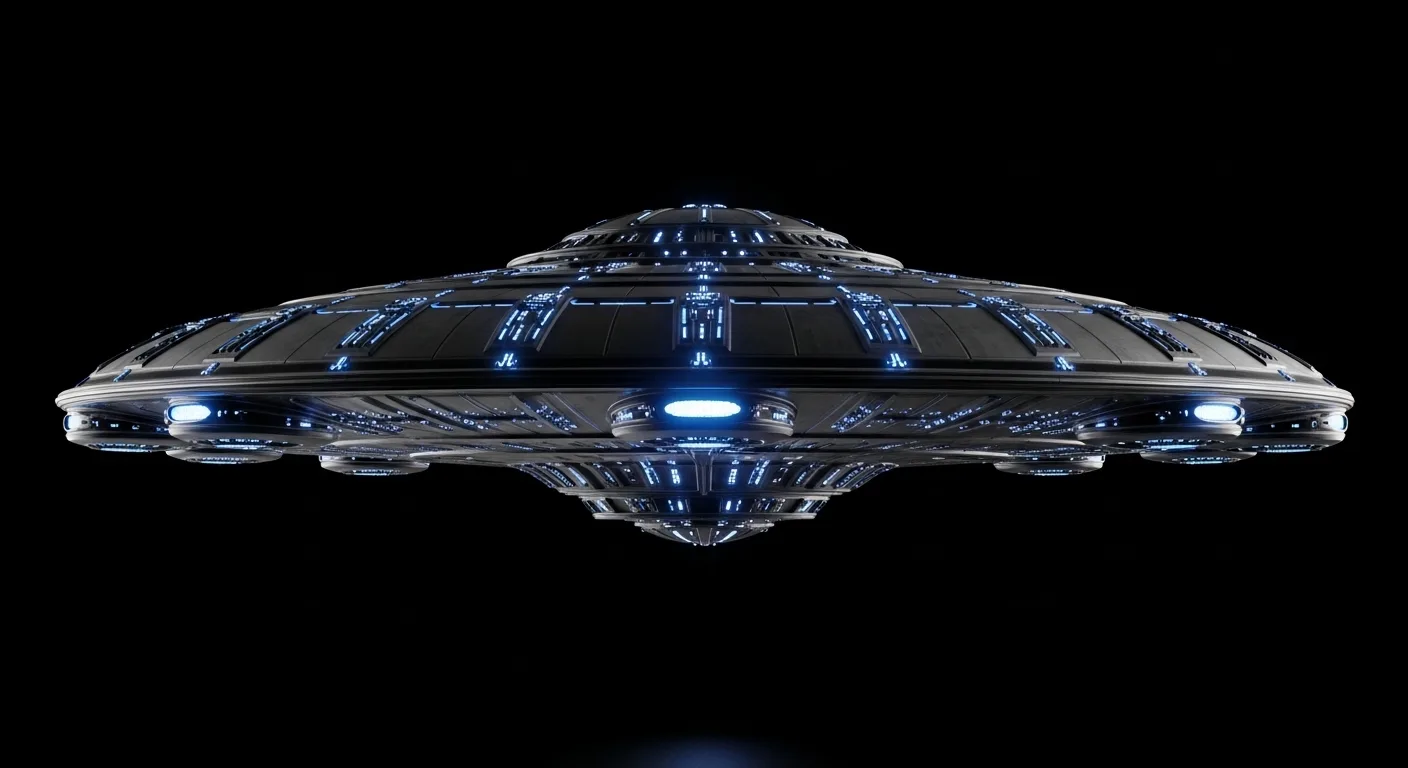
In the autumn of 1975, something probed the defenses of the United States Strategic Air Command. Over the course of several weeks in October and November, unknown craft penetrated the restricted airspace above some of America’s most sensitive military installations—bases housing nuclear weapons, intercontinental ballistic missiles, and strategic bomber fleets. The intrusions were documented in official military reports, confirmed by radar, witnessed by trained security personnel, and investigated at the highest levels of the American defense establishment. No satisfactory explanation was ever provided. The first and most dramatic of these incursions occurred at Loring Air Force Base in the remote northeastern corner of Maine, where on the nights of October 27 and 28, 1975, an unknown object repeatedly violated the airspace above one of the nation’s most critical nuclear weapons storage facilities while the entire might of the American military proved powerless to stop it.
The Fortress in the North
Loring Air Force Base was not a place one stumbled upon accidentally. Situated in Aroostook County, Maine, just eight miles from the Canadian border, the base occupied some of the most remote and sparsely populated terrain in the northeastern United States. The surrounding landscape was a vast expanse of forest, potato fields, and small towns, far removed from the major population centers of the Eastern Seaboard. This isolation was by design. Loring was a Strategic Air Command installation, home to the 42nd Bombardment Wing and its fleet of B-52 Stratofortresses—the massive eight-engine bombers that formed one leg of America’s nuclear triad.
More critically, Loring housed a Weapons Storage Area, or WSA—a heavily fortified, restricted-access compound where nuclear weapons were maintained and stored, ready for deployment at a moment’s notice. The WSA was one of the most heavily defended installations in the American military, protected by multiple layers of security including fencing, motion sensors, armed guards, patrol dogs, and sophisticated surveillance systems. The airspace above the base was designated as restricted, meaning that no unauthorized aircraft were permitted within its boundaries under any circumstances. Violations of this airspace would trigger an immediate and overwhelming military response.
The security protocols at Loring reflected the terrifying logic of Cold War deterrence. The nuclear weapons stored in the WSA were instruments of last resort, designed to be deployed only in the event of a catastrophic conflict with the Soviet Union. Their security was a matter not merely of military importance but of national survival. Any unauthorized presence near the WSA—whether on the ground or in the air—was treated as a potential prelude to a first strike, an attempt by an adversary to neutralize America’s retaliatory capability before launching an attack. The personnel assigned to guard these weapons understood that they were defending the foundation of global stability, and they took their mission with deadly seriousness.
Night One: October 27, 1975
The first intrusion began at approximately 7:45 PM on the evening of October 27, 1975. The base operations center received a report from security personnel that an unidentified aircraft had been detected entering the restricted airspace surrounding Loring AFB. The initial detection was made by radar, which showed a target approaching the base from the north at low altitude, moving slowly and deliberately toward the heart of the installation.
Security police teams were immediately dispatched to track the intruder visually. What they observed was profoundly unsettling. The object appeared as a bright, reddish-orange light, hovering at an altitude estimated between 150 and 300 feet above the ground. It moved slowly and deliberately, demonstrating a level of control that was inconsistent with a conventional fixed-wing aircraft at that altitude and speed. The object was tracked moving across the base perimeter and toward the Weapons Storage Area—the most sensitive location on the installation.
The response was immediate and dramatic. Loring went to full security alert, the highest state of readiness short of actual combat. Armed response teams deployed throughout the base, taking up defensive positions around the WSA and other critical facilities. The base commander was notified, and the chain of command began escalating the incident through the Strategic Air Command hierarchy. Every security protocol for an airspace violation was activated simultaneously.
Despite this response, the object continued its intrusion unimpeded. It hovered over and near the Weapons Storage Area for an extended period, apparently unperturbed by the military activity below. The security teams tracked it visually and on radar, documenting its position and movements, but they had no means of intercepting or engaging it. Loring’s own aircraft were bombers, not interceptors, and the base had no air defense fighters stationed on-site.
After approximately forty-five minutes of hovering and slow movement over the base, the object departed, moving away to the north toward the Canadian border and disappearing from both visual and radar contact. It left behind a base in turmoil—security teams on full alert, commanders demanding answers, and a paper trail of reports documenting an intrusion that should have been impossible.
Night Two: October 28, 1975
The expectation that the previous night’s intrusion had been an isolated incident—perhaps a lost civilian aircraft, a weather balloon, or some other benign explanation—was shattered the following evening when the object returned. At approximately the same time as the previous night, radar operators at Loring detected an unidentified target approaching the base from the same direction, exhibiting the same flight characteristics: low altitude, slow speed, deliberate movement.
This time, the base was prepared. Security teams were already on heightened alert, and the response was faster and more coordinated than the previous evening. But the result was the same. The object penetrated the restricted airspace, approached the Weapons Storage Area, and hovered in the vicinity for an extended period while armed security personnel watched helplessly from the ground below.
The repeated intrusion elevated the incident from a local security concern to a matter of national significance. Reports were transmitted up the chain of command to the Strategic Air Command headquarters at Offutt Air Force Base in Nebraska and to the North American Aerospace Defense Command (NORAD) at Cheyenne Mountain in Colorado. The commander-in-chief of SAC was personally briefed on the situation, and requests were made for fighter aircraft to intercept the intruder.
F-106 Delta Dart interceptors were scrambled from other bases to respond to the Loring intrusions. These were among the fastest and most capable interceptors in the American arsenal, designed specifically for the air defense mission and capable of engaging targets at extreme altitudes and speeds. Yet the interceptors were unable to catch or engage the unknown object. By the time the fighters arrived in the area, the object had departed, or it had maneuvered in ways that the interceptors could not match. The details of the attempted interceptions remain partially classified, but the available documentation makes clear that the military’s response was unsuccessful.
The Witnesses
The witnesses to the Loring intrusions were not casual civilian observers prone to misidentification or exaggeration. They were trained military personnel—security police, radar operators, control tower staff, and base command personnel—whose professional duties required them to accurately identify and respond to airborne threats. Their training and experience made them among the most reliable witnesses one could hope for in any aerial observation.
The security police who observed the object from ground positions provided consistent descriptions. They described a bright, reddish-orange light that appeared to be attached to or emanating from a structured object. The object demonstrated hovering capability—remaining stationary in the air for extended periods—followed by slow, deliberate movement. When it departed, it accelerated rapidly, moving away at speeds far exceeding those of any conventional helicopter or fixed-wing aircraft.
Radar operators confirmed the visual observations, tracking the object as a solid radar return that behaved unlike any known aircraft. The object appeared on radar at low altitude, moving slowly or hovering, then departing at high speed. The radar data corroborated the visual observations and eliminated the possibility that the witnesses had been observing some form of atmospheric phenomenon or optical illusion.
Control tower personnel provided an additional layer of confirmation. They observed the object both visually and on their own radar systems, and they confirmed that no authorized aircraft were operating in the restricted airspace during the intrusion. The tower had been in contact with all known aircraft in the area, and none corresponded to the unknown object.
The Documents
The Loring AFB intrusions are among the best-documented military UFO incidents in American history, thanks in large part to the Freedom of Information Act (FOIA), which has allowed researchers to obtain substantial portions of the official record. The documents that have been released paint a picture of an incident that was taken with the utmost seriousness at every level of the military chain of command.
The reports detail the sequence of events on both nights, including the times of radar detection, the positions and movements of the object, the responses of security teams, and the communications up the chain of command. They record the descriptions provided by witnesses, the radar data, and the unsuccessful attempts to intercept the intruder. They also document the investigation that followed, including the conclusion that the object could not be identified as any known type of aircraft, helicopter, balloon, or other conventional aerial platform.
Particularly significant are the communications between Loring and higher-echelon commands. The reports were transmitted to SAC headquarters, NORAD, and the National Military Command Center at the Pentagon. The level of attention that the incident received—reaching the highest levels of the American defense establishment—reflects the gravity with which military authorities regarded the intrusion. This was not a case that was shrugged off or buried in paperwork; it was treated as a serious security breach requiring investigation and response at the national level.
A Wave Across Strategic Air Command
The Loring intrusions did not occur in isolation. In the weeks following the October 27-28 incidents, similar unauthorized intrusions were reported at other Strategic Air Command installations across the northern tier of the United States. Wurtsmith Air Force Base in Michigan, home to another B-52 wing with nuclear capabilities, reported an unknown object in its restricted airspace on October 30, just two days after the second Loring intrusion. The object at Wurtsmith was described similarly—a bright light demonstrating hovering capability and extraordinary speed.
Malmstrom Air Force Base in Montana, home to Minuteman intercontinental ballistic missile silos, reported multiple intrusions during November 1975. Unknown objects were observed near the missile launch facilities, and in some cases, security teams reported that the electronic monitoring systems on the missile silos registered anomalies coinciding with the presence of the objects. These incidents echoed the famous 1967 Malmstrom incident, in which a UFO was reportedly observed near missile silos at the same base while multiple missiles simultaneously went offline.
The pattern was unmistakable: unknown objects were systematically penetrating the restricted airspace above America’s most sensitive nuclear weapons facilities, demonstrating capabilities that exceeded those of any known aircraft, and departing before they could be intercepted. The objects appeared to be specifically targeting nuclear installations, whether for surveillance, testing, or purposes that could not be determined.
The Nuclear Connection
The Loring intrusions contributed to a growing body of evidence suggesting a persistent and unexplained connection between unidentified aerial phenomena and nuclear weapons facilities. This connection had been documented since the earliest days of the nuclear age, beginning with a series of UFO sightings over the Los Alamos and Sandia nuclear laboratories in New Mexico in the late 1940s and continuing through the Malmstrom missile incidents of the 1960s.
The nature of this connection remains one of the most intriguing and troubling aspects of the UFO phenomenon. If the objects are extraterrestrial in origin, their apparent interest in nuclear weapons might reflect concern about humanity’s capacity for self-destruction—a theme that numerous alleged contactees and abductees have reported in their accounts. If the objects are advanced military technology from a terrestrial adversary, their focus on nuclear installations would represent an intelligence-gathering operation of extraordinary boldness and sophistication. If they are some natural phenomenon not yet understood by science, their consistent association with nuclear facilities would constitute an astonishing coincidence requiring explanation in its own right.
The military’s inability to intercept or identify the objects added a layer of strategic concern that went beyond the immediate security implications. If the restricted airspace above America’s nuclear arsenal could be penetrated at will by unknown objects, what did that imply about the nation’s ability to defend these weapons in an actual crisis? The question was troubling enough that it was reportedly discussed at the highest levels of the defense establishment, though the details of those discussions remain largely classified.
The Aftermath and the Silence
In the aftermath of the autumn 1975 intrusions, the military conducted investigations at each affected installation, producing reports that documented the incidents in detail while failing to identify the objects responsible. The investigations ruled out known aircraft, helicopters, balloons, and other conventional explanations. They acknowledged that the objects had demonstrated capabilities—hovering, rapid acceleration, evasion of interceptors—that were inconsistent with any known technology. And then, effectively, the matter was closed.
No public statement was issued about the intrusions. No press conference was held to explain what had happened at Loring, Wurtsmith, Malmstrom, or the other affected installations. The military’s silence was not surprising—acknowledging that unknown objects had penetrated the defenses of nuclear weapons facilities on multiple occasions would have raised alarming questions about national security that the defense establishment had no ability to answer. Better to say nothing than to admit that the most powerful military in the world had been unable to identify, intercept, or stop the intruders.
This silence persisted for years until FOIA requests by researchers began to pry loose the documentary record. The reports that emerged confirmed what the witnesses had long maintained—that something genuinely anomalous had occurred at these installations, that the military had taken the incidents seriously, and that no explanation had been found. The documents did not prove the existence of extraterrestrial visitors, but they conclusively demonstrated that the United States military had encountered something in the skies above its nuclear facilities that it could neither identify nor defeat.
Legacy of an Unanswered Question
The Loring Air Force Base intrusions remain among the most significant and best-documented UFO incidents in the official record. The combination of multiple witnesses, radar confirmation, documented military response, and a paper trail extending to the highest levels of the American defense establishment sets them apart from the vast majority of UFO reports. The object’s deliberate focus on the Weapons Storage Area—the most sensitive facility on the base—elevates the incident from a curiosity to a matter of profound strategic importance.
Loring Air Force Base itself was closed in 1994 as part of the post-Cold War base realignment process, and the site has been partially converted to civilian use. The nuclear weapons that once filled the WSA are long gone, relocated to other facilities as the strategic posture of the United States evolved. But the questions raised by the October 1975 intrusions have not been retired along with the base. What was the object that penetrated Loring’s defenses on two consecutive nights? Where did it come from? What was its purpose? And why was the most powerful military in the world unable to stop it?
These questions remain unanswered, suspended in the same ambiguous space between the known and the unknown that the object itself occupied as it hovered above the nuclear weapons storage area in the cold Maine night. The documents are in the archives, the witnesses have told their stories, and the mystery endures—a reminder that there are things in the skies above us that we do not understand, and that some of them seem to take a particular interest in the most dangerous weapons humanity has ever created.
Sources
- CIA UFO/UAP Reading Room — Declassified CIA documents on UAP