Washington, D.C. UFO Sighting (March 20th, 1967) — FBI Files
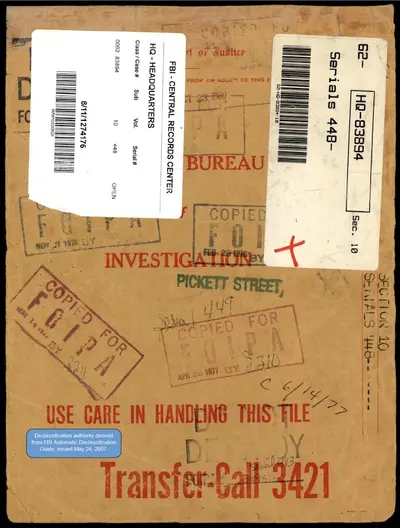
In March 1967, investigators documented a high-quality UFO film presented to Pentagon officials, later released through the PURSUE program.
Historical Context
The late 1960s represented a period of heightened atmospheric and geopolitical tension in the United States. During the height of the Cold War, the presence of unidentified aerial phenomena was often viewed through the lens of national security and the potential for advanced Soviet technology to breach American airspace. This era saw the United States Air Force conducting systematic investigations into Unidentified Flying Objects (UFOs) through programs such as Project Blue Book. While Blue Book focused on the scientific and aeronautical aspects of sightings, the Federal Bureau of Investigation (FBI) maintained a parallel interest in such reports when they intersected with the security of sensitive government installations.
The administrative handling of these reports followed established protocols. Field offices in cities such as Knoxville, Albuquerque, and Los and Angeles were tasked with routing sightings that could impact vital infrastructure to the Bureau’s headquarters. This centralized approach ensured that any phenomenon appearing near the nation’s capital or military hubs was scrutinized by federal authorities. The investigation of such objects often involved a distinction between atmospheric anomalies and potential technological threats, a distinction that remained a primary focus of government intelligence throughout the mid-twentieth century.
The March 20th Incident
On March 20, 1967, an incident involving an unidentified object occurred within the airspace of Washington, D.C. The details of this event were preserved in official files and remained classified for decades. The documentation regarding this specific sighting was eventually released to the public on May 8, 2026, as part of the Presidential Unsealing and Reporting System for UAP Encounters (PURSUE). Unlike many contemporary reports that relied solely on eyewitness testimony, this case is notable for the inclusion of photographic or video evidence of the unidentified object.
The primary details of the encounter involve the presentation of this visual evidence to high-ranking military personnel. Fred Steckling and Madeleine visited Colonel Freeman at the Pentagon for the express purpose of showing him a film of the UFO. Upon reviewing the footage, the Colonel’s reaction was recorded as highly significant. After reviewing the film multiple times, he stated that it was the best he had seen and remarked that he had never seen anything like it. The gravity of the footage prompted the Colonel to request that Steckling inform the University of Colorado UFO investigation study about the film, indicating an attempt to move the evidence into a scientific investigative framework.
Investigation and Classification
The released documents do not specify the total number of witnesses to the event, focusing instead on the interaction between the film’s presenters and the Pentagon official. The investigation of the film’s contents reflects the standard operating procedures of the era, where visual evidence was prioritized for further study by academic or specialized research groups.
As of the current release under the PURSUE program, all such records are designated as unresolved by the All-domain Anomaly Resolution Office (AARO). The federal government has maintained a neutral stance regarding the nature of the object, neither concluding that the event was anomalous nor that it was caused by conventional means. In the broader context of 1960s aerial sightings, researchers often considered several conventional candidates, including experimental aircraft, weather balloons—specifically those related to the Project Mogul series—and various atmospheric optical phenomena such as lenticular clouds or sundogs. Astronomical objects like the Moon, Venus, or meteors near the horizon were also frequently evaluated during this period. The March 20th case remains a subject of study due to the specific qualitative assessment provided by the reviewing officer.