Dechany, Yugoslavia UFO Sighting (spring 1964) — FBI Files
FBI files released in 2026 document anomalous frescoes in a Yugoslavian monastery depicting celestial figures operating streamlined, spacecraft-like objects.
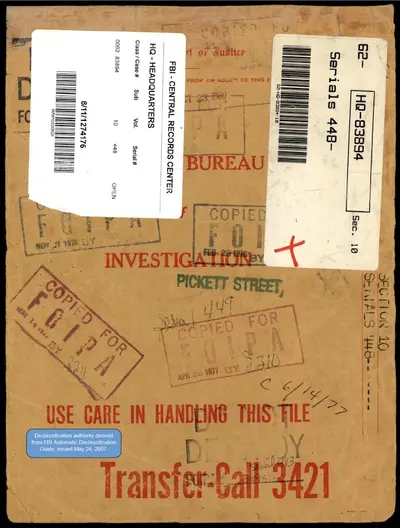
Background
During the spring of 1964, an unidentified-object incident occurred in Dechany, Yugoslavia, which was subsequently recorded by United States government investigators. The details of this encounter remained classified for decades until the documentation was released to the public on May 8, 2026, as a component of the Presidential Unsealing and Reporting System for UAP Encounters (PURSUE). This case emerged from the complex geopolitical landscape of the Cold War, a period characterized by intense aerial surveillance and heightened sensitivity regarding airspace incursions. The investigation of this specific event fell under the purview of the Air Force’s Project Blue Book or its predecessor programs, which were tasked with analyzing reports of Unidentified Flying Objects.
The documentation was filed with the Federal Bureau of Investigation, following established administrative protocols of the era. During this period, the FBI’s various field offices, including those in Knoxville, Albuquerque, and Los Angeles, were responsible for routing UFO reports to headquarters. This procedure was part of the Bureau’s standing protocols designed to monitor and protect vital installations and national security interests. The inclusion of a Yugoslavian incident in FBI files suggests the international reach of American intelligence monitoring during the mid-1960s, as the agency tracked phenomena that could potentially involve foreign technological advancements or atmospheric anomalies.
Analysis of the Dechany Documentation
The released documents focus on anomalous imagery discovered within the Dechany Monastery. The primary subject of the report concerns frescoes found within the monastic structure that appear to depict angels traveling within streamlined, spaceship-like objects. The imagery is notably specific; the lead vessel in the depiction contains a figure that resembles a pilot, and a subsequent ship in the sequence also features a figure positioned at the controls. Observers and investigators noted that the depictions bear a striking resemblance to modern jets, and the report mentions the visible reactions of onlookers within the artwork, who appear to be experiencing fear.
The documentation provides specific, fragmented notations that capture the confusion surrounding the discovery. The files contain the phrase, “Spaceships on the Dechany Crucifix, Sputniks in our frescoes,” and note that “the saints in the flying machines are in the position of pilots.” The report further characterizes the nature of these findings by stating they “baffle layman and specialist alike.” While the specific number of witnesses to the discovery or the original sighting is not specified in the released text, the focus remains on the interpretation of the historical artwork through the lens of mid-century aeronautical technology.
Classification and Resolution Status
The case is officially classified as a pilot or aircrew sighting, characterized by observations made from a cockpit during flight. This classification typically refers to the perspective from which the anomalous objects were perceived or the context in which the phenomenon was analyzed. However, the Dechany case is unique due to its reliance on the interpretation of ancient or historical religious iconography to identify modern aerial characteristics.
Under the current regulatory framework, all records released via the PURSUE program are designated as unresolved by the All-domain Anomaly Resolution Office (AARO) by default. The United States federal government has not reached a definitive conclusion regarding the nature of the Dechany incident. There has been no determination that the event was anomalous, nor has there been a conclusion that the phenomena were conventional. The government has not ruled out either possibility. In the broader context of 1960s aerial sightings, conventional explanations often included experimental aircraft, weather balloons—such as those used in the Project Mogul series—atmospheric optical phenomena like sundogs or lenticular clouds, and astronomical objects like Venus, the Moon, or meteors. The Dechany case remains an outlier due to its focus on the intersection of historical religious art and unidentified aerial phenomena.